
ATLANTA — A few months into 2026, hotel and travel experts revisited expectations for the year based on continued macroeconomic headwinds, promising performance results from February and muted excitement for the World Cup as a demand driver.
For the experts who dove into the data across two sessions at the 2026 Hunter Conference, expectations for the year stayed the course — the K-shaped economy continues to affect hospitality, and inflation and interest rate cuts loom large on what the industry is watching.

Hospitality amid the 'really weird times'
Kicking off "Key statistics shaping hospitality in 2026," Jan Freitag, CoStar's national director of hospitality analytics, said STR's forecast hasn't changed since January's presentation at the Americas Lodging Investment Summit. He explained that a lot of the macroeconomic trends that usually run parallel to hotel demand — such as gross domestic product in the U.S. — aren't doing that anymore.
"We live in some really weird times," he said. "Normally, GDP growth drives demand. That wasn't true last year, and normally, because we can reprice our hotel rooms every night, we're able to outrun inflation. That wasn't true last year either."
Freitag also pointed to the value of the U.S. dollar. Usually, when that dips, international inbound travel grows, but that didn't happen in 2025.
The K-shaped economy also continues to define the U.S. hotel industry, which translates to luxury and upper-upscale hotels as the only segments seeing growth across occupancy, ADR and revenue per available room. New factors, such as the conflict in the Middle East affecting gas prices, now also need to be factored in.
"We used to say, 'Oh, the tax refunds are going to really help the American middle class in order to do another trip for summer break or long vacation,'" Freitag said. "The problem is that the increase in the oil prices are arguably going to take that out, so we're not super optimistic that this is going to change."
In his presentation, Tourism Economics President Adam Sacks dubbed it a "schizophrenic economy." He pointed to a stagnant labor market, in which hiring and quit rates are both down, and a historic decrease in immigration. These factors, among others, are what's causing income brackets to perform differently.
"If you look at how much consumers are spending on discretionary goods — and hotel stays fall within that category of discretionary goods — the middle 60% of income members, their share of consumption going to discretionary goods has fallen steadily over the last six years, but particularly over the last six months," he said. "Meanwhile, that upper group of income earners, the top 20%, have actually shown real strength and share their discretionary goods, including retailers. It's not going to get better in the near term."
Sacks, however, did have an answer to Freitag's point on GDP decoupling with hotel performance.
"If you add in hotel room nights, cruise passenger nights and vacation rentals, it's just about coming up with GDP. So there's a different mix in overnight stays, but the relationship still holds," Sacks said.
World Cup realism

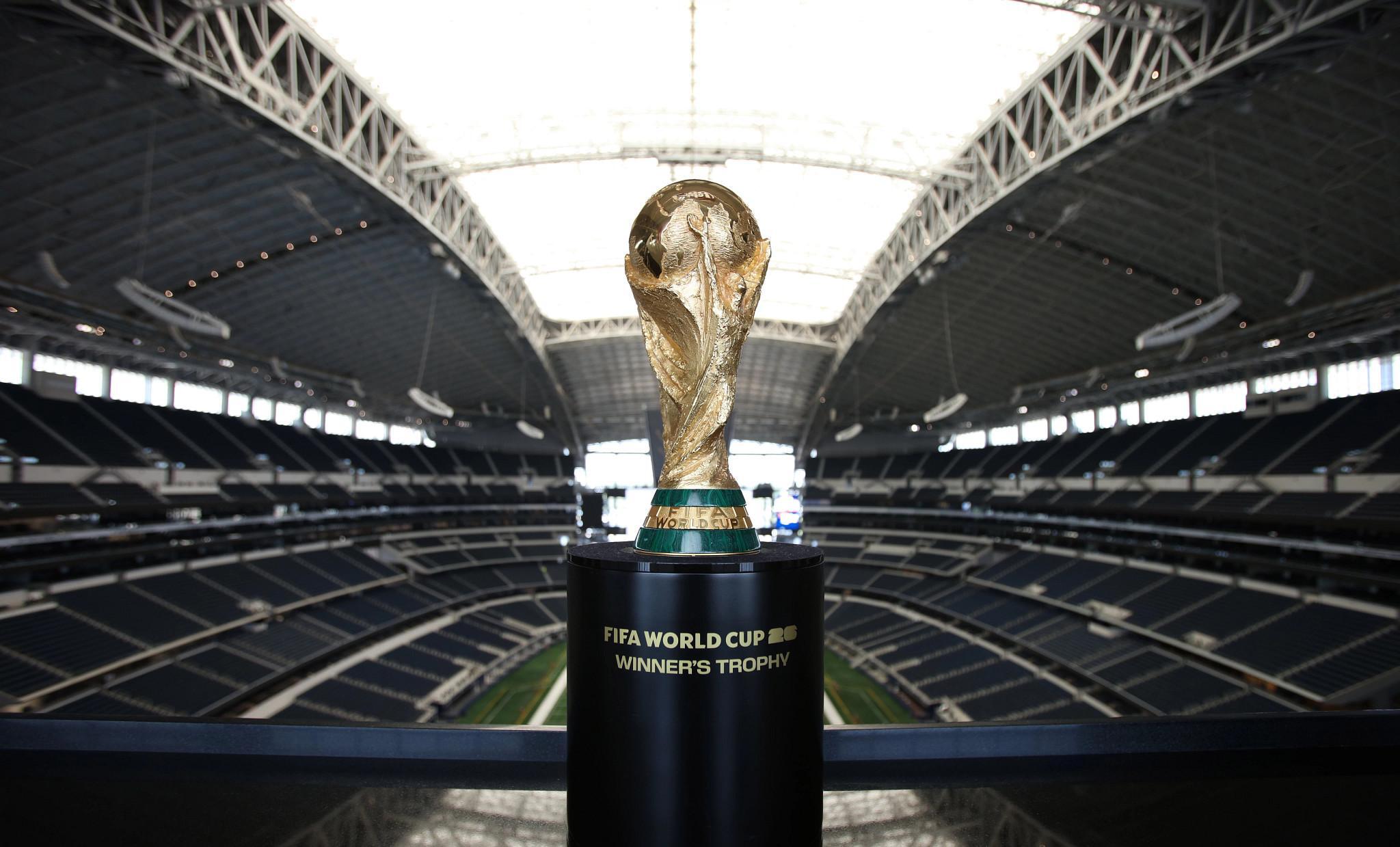
The World Cup as a demand driver for U.S. hotels continues to be a topic of conversation, even if hoteliers are being more realistic about the impact. International inbound travel is still challenged, but some markets — Kansas City, Dallas and New York City in particular — should perform well.
"It's not going to be 48 Super Bowls. Trust me on that," Freitag said.
Still, the World Cup weighs heavily on STR's 2026 RevPAR forecast.
"Our forecast has [RevPAR] up 0.6% — without the World Cup, it's 0.2%. So yes, there is some lift," he said.
According to STR data, some World Cup fans are more likely to affect the local economy than others, reinforcing the idea that some host cities will see a greater impact than others.
"If you're in the market that hosts Argentina, Ecuador, Uruguay, France, Belgium — yes, you are going to see tremendous impact because those fans like to travel and like to spend," Freitag said.

Hope for 2026
U.S. hoteliers who still continue to be cautiously optimistic have plenty to hold on to, especially considering February's demand performance, Freitag said.
"February was the strongest demand February ever," he said. "We sold more rooms this February than in any other February before."
Sacks pointed to corporate travel being up, inflation expected to continue to come down, wages rising and artificial intelligence growth as a boon to the U.S. economy. Maybe most importantly is that consumers are spending more on experiences over things. This means "the hotel industry can do more than just survive in the K-shaped economy," Sacks said.
"If you take everyone earning $100,000 or more that [accounts for] 70% of all spending on hotels," he said.
Additionally, millennials are acquiring wealth at a faster pace than previous generations, meaning they are more likely to travel and book hotels.
Kalibri Labs CEO Cindy Estis Green pointed to growth in the leisure segment, as well as in extended stay and luxury, which might balance out disappointing group and business transient demand that's been affected by high corporate costs.
"What we're seeing now is much more reliance on the leisure business, and we're seeing that Thursday to Sunday growth, and those are all actually very positive," she said.