
A chance assignment not long after 9/11 set artist Evan Joseph on a path to becoming one of New York’s go‑to real estate photographers.
A still-life painter who was an early adopter of digital techniques, he stepped in when a real estate client needed a photographer. He grabbed that chance to apply his experience with painterly composition with painstaking preparation — tweaking light, furniture and framing — to create images that evoke emotion and desire in property photography.
Decades later, in an era of artificial intelligence-perfect visuals, Joseph says the value lies in authenticity: capturing spaces as they are, and keeping enhancements subtle so the photograph reflects what a place genuinely feels like.
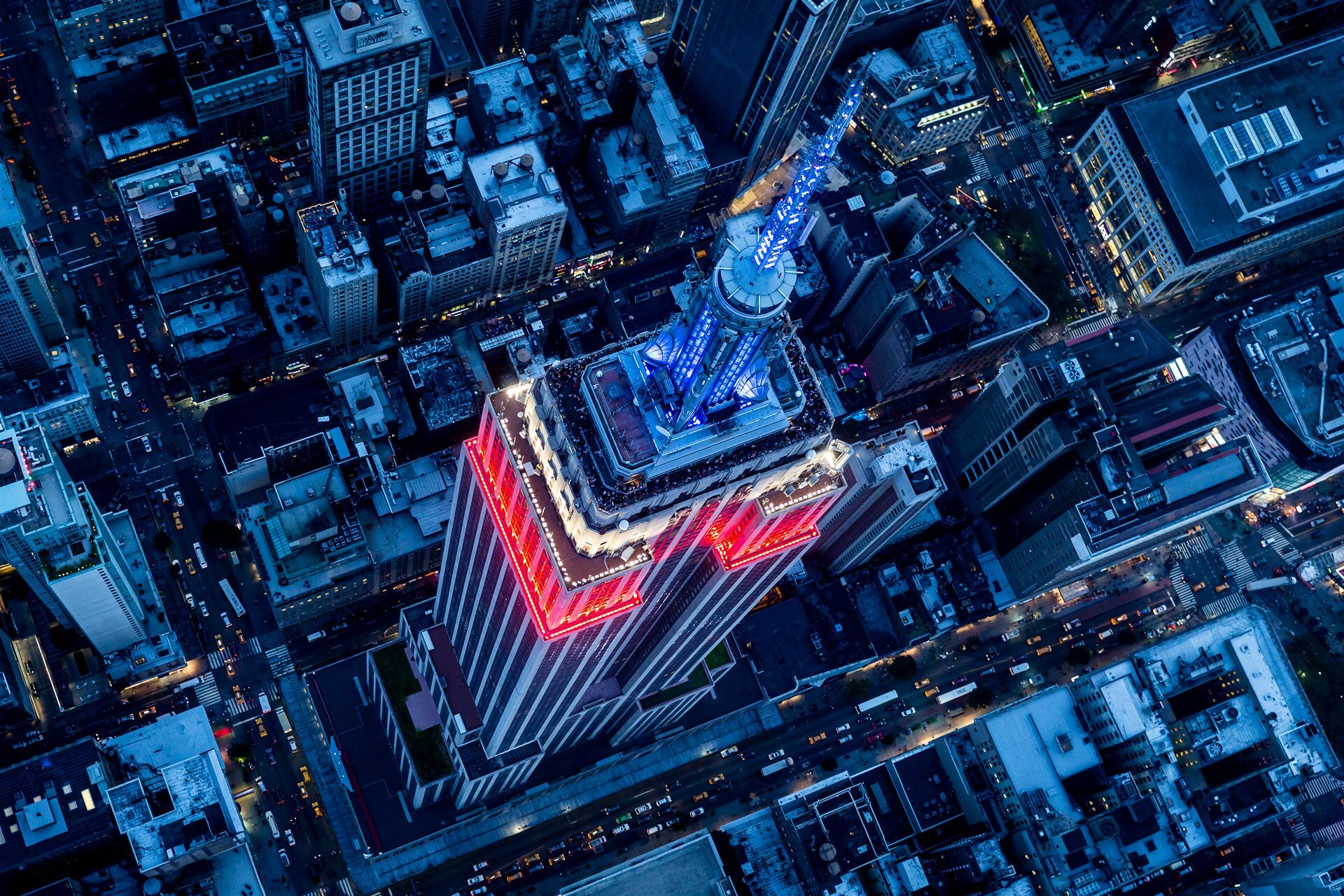
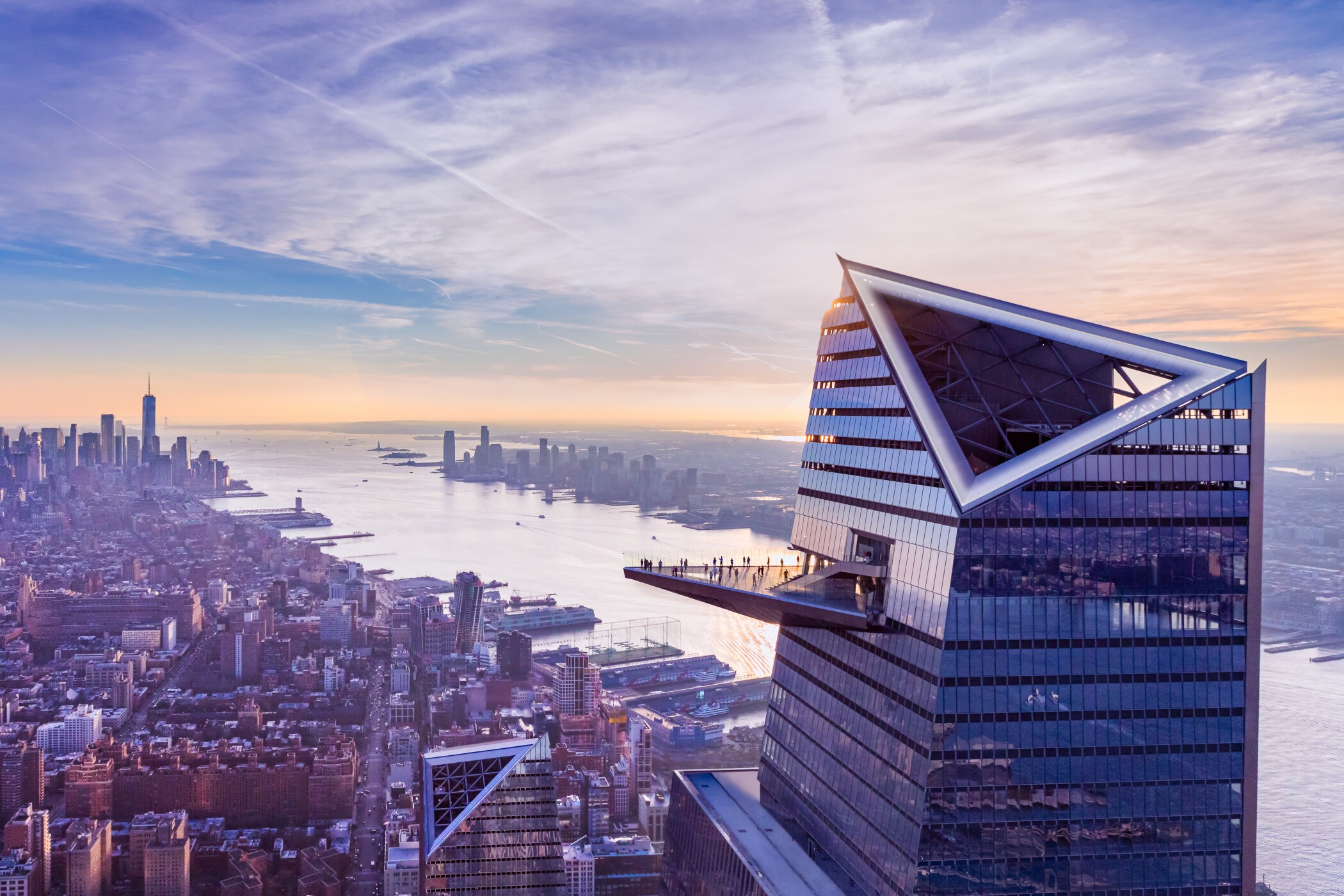
Joseph is often a common thread behind compelling images of the city’s most recognizable landmarks — from One World Trade Center and the Empire State Building to Hudson Yards and Rockefeller Center.
Trained in painting and drawing at Vassar College and the Slade School of Art in London before earning a master’s in digital media from New York University, Joseph has photographed high-profile developments, top-dollar listings and tourist attractions.
His portfolio includes Central Park Tower, billed as the world’s tallest residence, as well as the homes of celebrities including Taylor Swift and Sting.
“He is truly the best at what he does,” Elyse Leff, executive vice president of sales and marketing at luxury residential real estate developer Elad Group, said in an interview. Elad has worked with Joseph on various projects including The 74, its new luxury condominium development at 201 E. 74th St.
He “always has an eye for getting the best shot. He is able to capture the beauty and the essence of the space in a really nice way. … His creative eye — the way he introduces light, shadow and different elements — always elevates the images, which helps sell apartments.”
CoStar News spoke with Joseph about how he came to be one of New York’s most in‑demand real estate photographers. The conversation has been edited for length and clarity.
Your entry into real estate photography came almost by accident after 9/11. How did that happen?
I started an early dot‑com shortly before Sept. 11 when I was in grad school doing interactive media. It was funded by a local incubator. When 9/11 happened and we lost our office in the incubator right next to the World Trade Center, we turned to using our digital media skills to help create websites. One of our first clients was a New York real estate firm working on the first website it had ever built. They said, “Our photographer just quit. You know anyone?” I said, “I can do it.”
I’ve been taking pictures since I was a child. I used the camera as a sketchbook for my painting throughout my life. Photography has always been second nature to me.
How did that moment change your career, and how did early digital photography unlock what film couldn’t?
I took it very seriously and got into postproduction and shooting techniques — things no one had really done yet in this market. With Photoshop, I could more accurately represent what my vision was when I was taking the picture. At the time, people had never seen images like that, where the view and the interior were so perfectly married together. The light was so warm and inviting, and you felt like being in the space, and the lamps weren't all blown out, orange and crazy, like you see in old pictures from Architectural Digest in the '90s.

I've been shooting film since I was 11, but it's a much slower process. The ability to make those adjustments digitally with multiple overlapping images at multiple exposures is totally normal now, but it was revolutionary in 2001. Other real estate firms started reaching out. My business grew from there. Some photographers don't want to shoot real estate. They think it's beneath them. I think they are crazy. I love it, especially in New York, where real estate is like the local sport.
In an era where everyone has an iPhone, what still separates a professional photographer?
What distinguishes good photography from bad photography hasn't changed, regardless of the medium. It's all about your photographer's point of view. It’s all about perspective, framing and timing and all of the things that go into that. When I'm shooting a room, I'm probably touching every single thing in the room before I press the button. I'll touch and adjust every piece of furniture, every pillow, move things in and out, turn every chair, and find things from other rooms in the home. It's these microadjustments and compositional awareness that, in the end, make images really lock together and make them special.
How did your art background shape the way you approach real estate photography?
I'm a still-life painter. I can focus on the position of three apples on the corner of a table and paint that for three days. It's not just three apples on a table. It's the way the light hits them; the exact apples that I've selected; the way they relate to each other; and the negative space between them. It's the turn of the object. What happens if I put a little napkin behind it? Maybe there's a bottle that reflects the curve of the apple in a certain way at the neck of the bottle. These are the kinds of creative decisions that I make with my interior and real estate photography that make it unique to me.
What are you ultimately trying to achieve with those creative decisions?
It's all about evoking emotion. When I'm shooting for real estate, it's about creating desire. You want someone to look at that space and say, “Wow, I'd like to live there. I want to be in that space.” It should be transporting. It should create an atmosphere that's alluring, seductive even.
I always say that I have to fall in love a little bit in order to create really great photography. The process of preparing for a shoot is sort of me falling in love. It's about creating desire, romance, character and branding.
With AI and hyper‑real imagery everywhere, what are the possibilities you see in returning to film?
What AI has shown all of us is that authenticity matters. I've already started talking with some clients about shooting on film again. It's almost coming around full circle.
The point of creating imagery in a space is to demonstrate what the space feels and looks like. If authenticity doesn't matter, if actually being there and actually creating an actual photograph is not important, you could just use a rendering or an AI generated image. But if the point of doing the photo shoot is to convey what it actually is like to be there, you have to actually be there and actually make something that is real. I like to keep my digital interventions within my work within the realm of real. Part of my style is that the images don’t look overly manipulated, not over baked.
What's a good example?
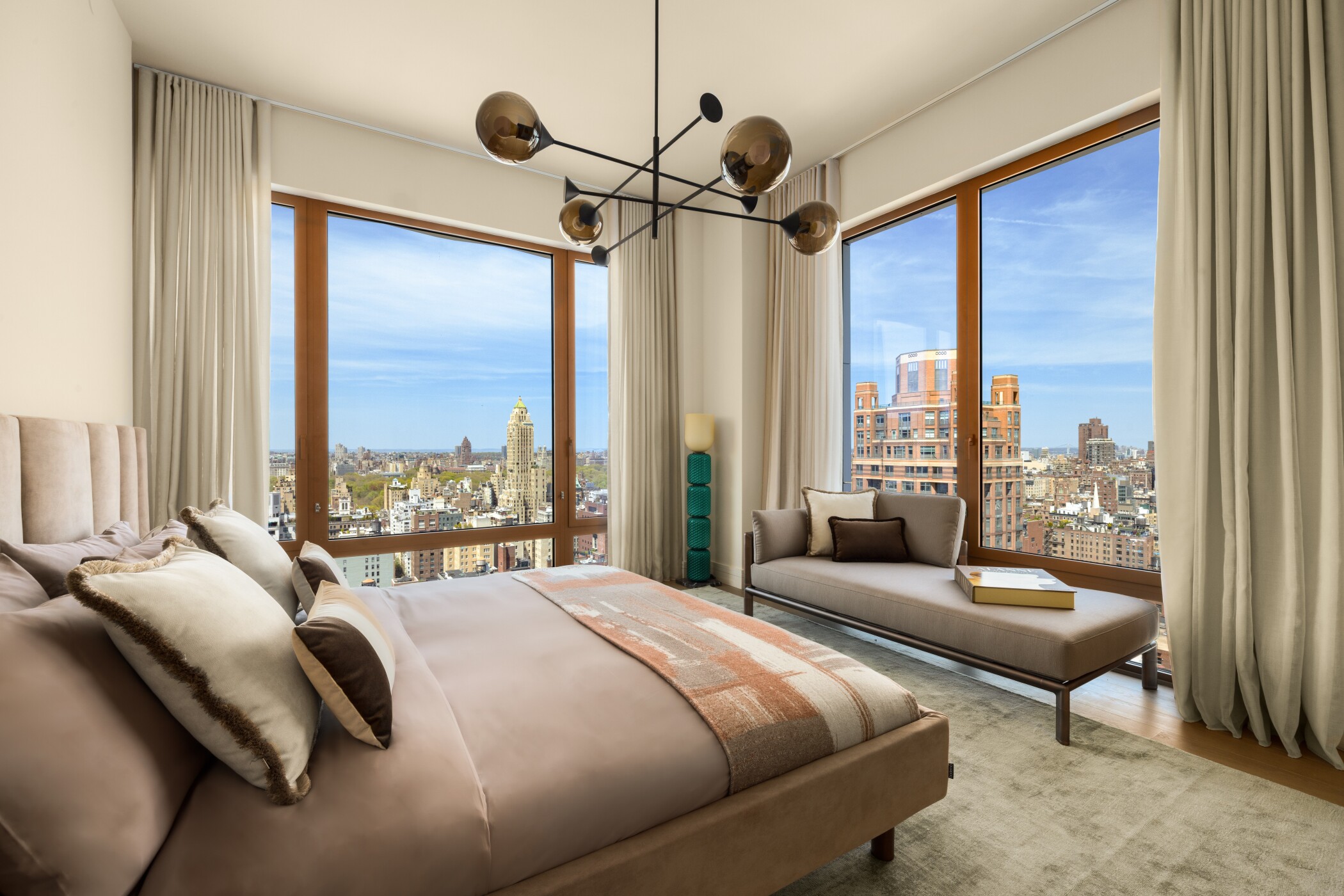
We discussed whether to make the sky bluer in some images that I shot for The 74. I can make the sky bluer, but I wouldn't replace it. There's a beauty to the sky. The way it was captured. There's something very real about that. It's maybe not idealized — that's what AI creates.
One thing I have learned about shooting New York City, from rooftops, observation decks, balconies, drones and helicopters, is that the city is spectacular in every condition. It's amazing when it's foggy. It's amazing when it's raining, it's amazing when it's dark. It's amazing when it's bright. It's amazing when the sun is shining through high clouds, when you know there's haze at the horizon, and when there's smoke from wildfires from Canada.
There is an incredible, rotating visual buffet to be had from any balcony in the city. It's different every minute of every day. All of those perspectives are beautiful.
What surprised you most about New York’s skyline, and how did you see design trends change over 25 years?
What surprises me the most about New York is how dynamic the skyline is and how quickly it changes. I look back at photos from my first gallery show, and the city looks completely different. The World Trade Center wasn't built. All of the buildings on 57th Street weren’t built.
Some building that is now a fixture of the skyline wasn't there or was wrapped in scaffolding.
Design-wise, there’s a move in both exterior and interior design towards ornamentation and away from minimalism. You can certainly see it over the past 15 to 20 years. The 74 is a perfect example. It’s not a glass box. It has this beautiful terracotta facade. It's a push and pull. Sure, there are new glass towers and they're spectacular, but there are also new buildings that use these beautiful, historically inspired exterior materials.
Inside, for a long time, everything was beige on beige. People were afraid of color and contrast. Now there's a move towards patterns, textures, wall coverings, artwork and materiality that I really enjoy, both personally and photographically, more to hang your hat on from a photography perspective.