
President Trump said his administration is requiring major technology companies to fully provide electricity for a burgeoning wave of data centers that are getting built nationwide to support artificial intelligence.
During his State of the Union speech, Trump said his administration has struck an accord with tech firms that he called a "rate payer protection pledge." It comes as data centers are spurring concerns over their heavy power usage.
Details about the firms signing agreements were not disclosed in the speech. But Trump said provisions call for tech firms to share a larger burden of electric supply costs to prevent driving up energy demand and expenses for residents living nearby. That includes the construction of their own power plants.
"This is a unique strategy that's never been used in this country before," Trump said. "We have an old grid. It can never handle the amount of electricity that's needed, so I'm telling them they should build their own plants and produce their own electricity."
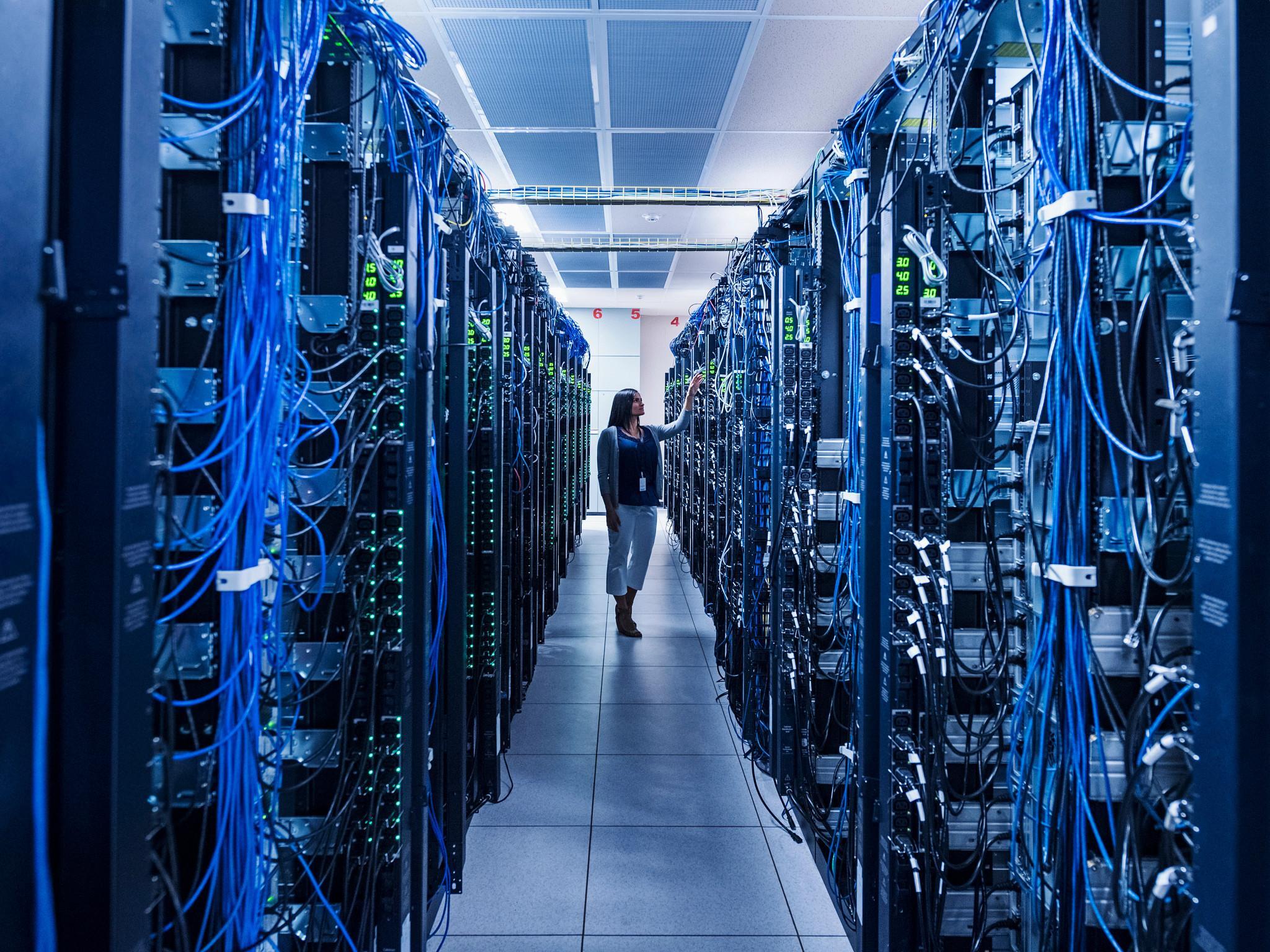
The remarks come as large data centers proliferate nationwide and as tech firms and other companies need to support the rising use of AI with power, data storage, water for cooling and other necessary systems.
Several major tech companies have been expanding their data center networks during the past two years, including Amazon, Microsoft, Google and Facebook parent Meta.
Energy demand concerns
Trump said "many Americans are also concerned that energy demand from AI data centers could unfairly drive up their electric utility bills." He added that "we're telling the major tech companies that they have the obligation to provide for their own power needs."
He added that "they can build their own power plants as part of their factory, so that no one's prices will go up, and in many cases, prices of electricity will go down for the community and very substantially down."
The policy "will ensure the company's ability to get electricity while at the same time, lowering prices of electricity for you and could be very substantial for all of your cities and towns. You're going to see some good things happen over the next number of years," Trump said.
Concerns have arisen in a growing number of communities that big data centers will tax the electrical grids of communities and drive up energy prices.
A report this week from brokerage Cushman & Wakefield said data centers in the Americas are entering a new phase defined by more structured, policy-driven selection and development. It added that regulatory frameworks are increasingly coming into play as governments examine the availability of electricity and other limited resources needed to support large data centers.

“Governments and utilities are playing a growing role in guiding development through power planning, zoning and resource management,” John McWilliams, Cushman’s head of data center insights, said in the report. “Even with these guardrails, demand remains exceptionally strong, reinforcing the long-term expansion outlook for both established hubs and emerging markets.”
Evolving policies
Cushman researchers said new and evolving policies focused on grid strain, natural resource use and broader infrastructure are affecting approval timelines for data center projects.
"In some cases, this has led to project delays, cancelled developments, or the removal" of certain types of zoning, the report said. "As a result, market expansion is increasingly shaped by policy frameworks and infrastructure capacity rather than demand alone."
Despite headwinds, Cushman said the data center development pipeline continues to expand.
By the end of 2025, the Americas reached 25.3 gigawatts of data center capacity under construction, with the majority located in the United States. One gigawatt can power more than 700,000 homes, according to estimates.


In its own report this month, real estate services firm JLL said Texas is poised to overtake Virginia as the world's largest data center market by 2030 with AI demand leading to expansion. At the same time, power constraints could reshape where and how North America's digital systems get built.
Data centers are increasingly being planned in rural and less populated regions of the U.S., though regional officials have said new power and other resources may still need to be brought into those areas to support burgeoning data center development.