
Formula One racing arrives earlier than usual in Montreal this weekend, and the city is already humming.
After decades as an event fixture in June, the race has now been permanently shifted to late May, a change that left hoteliers, restaurateurs and tourists quietly wondering whether cooler weather and spring rain might dampen demand. So far, it hasn’t. Terraces are open, crowds are building, and the city feels ready, they said.
On Peel Street, along Crescent and inside hotel lobbies and dining rooms, hotel and restaurant staff said they are bracing for the same surge they see every year.
The event runs from Friday to Sunday.
“This brings Montreal alive,” said Katia Piccolino, director of sales and marketing at the Ritz-Carlton Montreal, speaking as Formula One fans lined up outside hotels hoping to catch a glimpse of drivers coming and going. “It brings so much tourism, so much money to the city. It’s great for businesses, especially coming out of COVID. We’re booked a year in advance."

The Canadian Grand Prix remains the city’s largest annual tourism event, routinely attracting more than 350,000 spectators to Montreal over the three days. Tourisme Montreal estimates the economic impact at roughly $162 million, with more than $100 million coming from visitors outside Quebec. For a few days, the downtown core becomes a compressed global marketplace, where hotel rooms, restaurant seats and VIP tables turn over at prices rarely seen at any other time of the year.
The event has been staged in Montreal since 1978 and is secured on the calendar into the next decade. On race day, drivers hammer down the straight and dive into tight, unforgiving chicanes, braking late, skimming the curbs and pushing right up against the Wall of Champions. The margin for error is measured in inches.
Across the city, the pace mirrors it. A few days where everything tightens, fills and moves faster, before slipping just as quickly back to normal.
'This brings Montreal alive.'
Hotels are the first place where demand shows up. Downtown properties push toward near-full occupancy, often approaching 90% over race weekend, according to CoStar data. But occupancy is only part of the story. The real shift happens in pricing.
According to CoStar data, average daily room rates for Montreal hotels climb sharply during race days. In 2025, rates in Montreal jumped more than 150% year over year on peak nights, reaching roughly $630 to $650, while downtown properties pushed even higher, topping $800. Occupancy also spikes, climbing into the low 90% range on key race days.
Advance booking data for this year’s event shows a similar pattern despite the calendar change, with downtown hotels pacing close to 90% occupancy for the core weekend dates and running well ahead of last year in the days leading into the race.
Bigger than a sports event
That concentration of spending is what transforms the weekend into something bigger than a sports event, sources in the hospitality sector said.
Andrew Lutfy, CEO of Carbonleo, which owns the Four Seasons-linked ecosystem around Ogilvy, described the event as one of the defining moments of the year for luxury operators.
“Those four or five days around the Grand Prix can make the year for some restaurants," he said in an interview. "It’s about 1% of the calendar driving close to 25% of profits, with everything packed into one intense stretch."
Hotel rooms fill at premium rates. Corporate entertaining explodes. Restaurants run at capacity from lunch into late-night hours, with average spending per customer rising sharply.
The economic impact radiates outward. Moneris data shows restaurant revenues rising about 45% and bar sales more than 40% during Grand Prix week, compared with a typical period. The city sees a chain reaction of spending, with international visitors, corporate clients and local regulars all spending in the same compressed window.

For hotel staff, the surge begins long before race weekend.
Michael Koopman, a concierge at Le Mount Stephen, said the Grand Prix remains the busiest stretch of the year for Montreal’s hospitality industry, with bookings locked in months ahead of time. Hotels and restaurants are often reserved a year in advance, as visitors line up for what has become the city’s unofficial start of summer.
“For Montreal, it’s the biggest event,” Koopman said. “It’s when restaurants open their terraces, people start going out, and you feel the summer coming, slowly but surely.”
From his desk, Koopman watches the constant buildup. Guests begin reaching out six or seven months ahead of time, often asking for restaurant reservations long before they finalize their travel plans.
“People write to us all the time,” he said. “As someone who works in a hotel, it’s the busiest time of the year.”
'People want to splurge'
On Peel Street, Sandra Ferreira said she sees the surge in visitors and locals up close. Her family’s restaurant has lived through the Grand Prix for decades, including the public disputes of recent years that saw terraces temporarily shut down by inspectors, a conflict that spilled onto social media and forced a broader conversation about how the city hosts the event.
“Grand Prix is definitely quite a thing for us, and it’s been part of our yearly tradition for many years,” said Ferreira, a second-generation executive with the group. “We do two to three times what we do on a usual weekend, if not more. People want to splurge. They want to have an experience.”
That experience now runs on two tracks. Tourists fill the city, but locals play a bigger role than outsiders might assume. Ferreira said many of her restaurant’s seats are booked by regular Montreal customers who treat the weekend like a ritual.
“It’s a time of year when our regular clients want to celebrate. They want to be part of the festivities,” she said. “We’re not chasing volume. People book a full three-hour experience, four-course menu, DJs. Quality is important.”
The earlier May timing added a layer of uncertainty this year, especially for operators used to a June rhythm tied to Father’s Day and warmer weather.
“We were worried,” Ferreira said. “We didn’t know what would happen. But looking at reservations, it seems like it’s going to be good.”
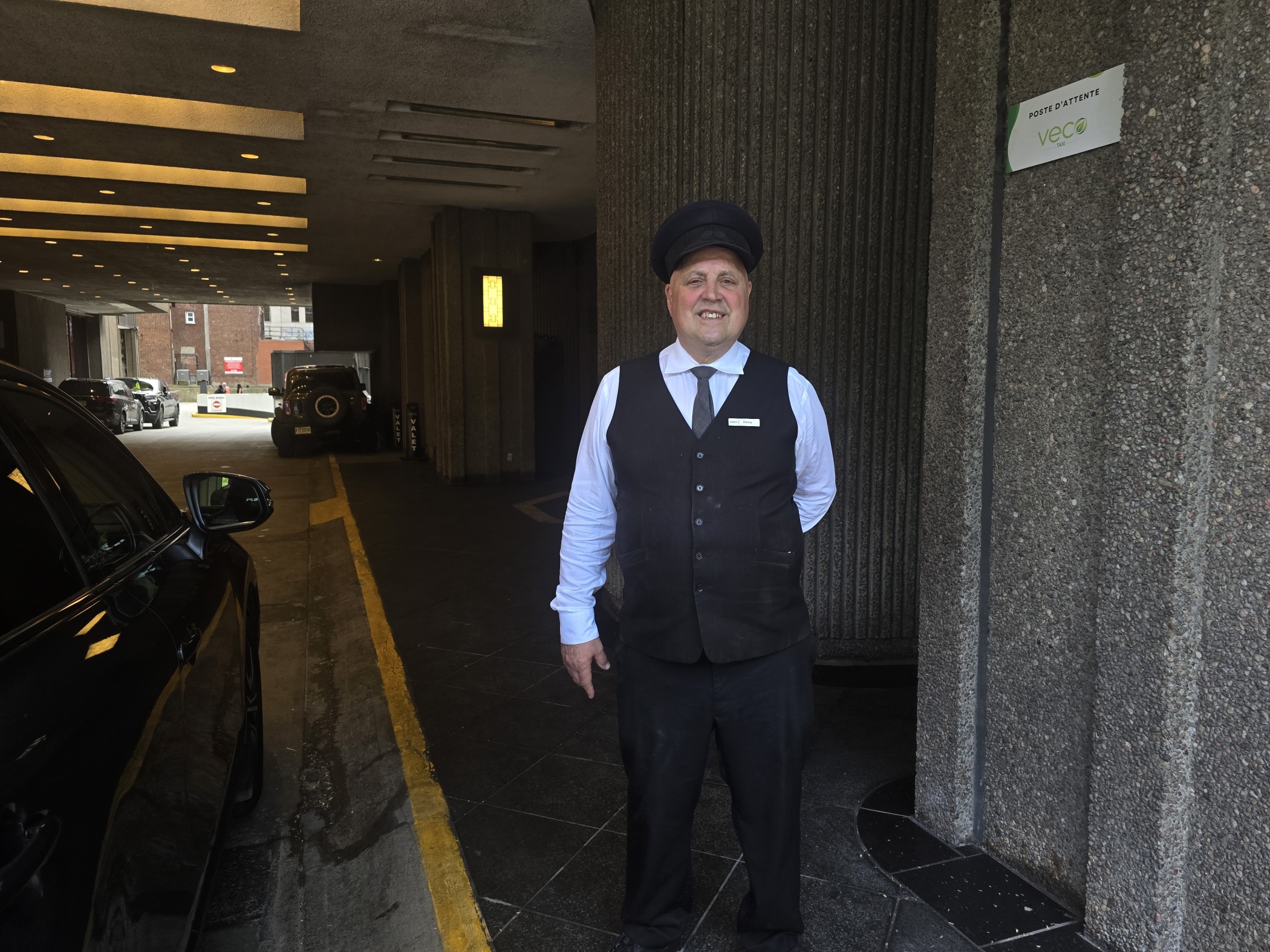
The hotel front line tells a similar story.
Danny Castrilli, a doorman at the Omni Mont-Royal who has worked nearly five decades in the business, watches the influx every year from the same vantage point.
“It’s super busy, very lucrative,” he said. “Most of [the guests] come from Europe. The teams, the sponsors. They go all out. Big parties, open bars. They spend a lot of money here."
For concierges and front desk staff, preparations for the weekend begin months in advance. Requests for restaurant reservations can begin six or seven months ahead, with hotels and top dining rooms effectively sold out long before engines fire on Sunday.
The impact extends well beyond luxury venues. At street level, new operators are getting their first taste of the event. Joey Robb, co-owner of the Peel Pub, said the weekend is shaping up to be a defining early moment for the bar.
“People are happy and the city comes alive," Robb said. "Montreal is a passionate place, whether it’s hockey, football, baseball or F1. It brings good vibes.”
'Really a rate story'
Economists tend to frame the Grand Prix as a short-term boost to the system.
Jan Freitag, national director of hospitality analytics at CoStar, said some other large events often shift demand as much as they grow it. Corporate travelers stay away to avoid higher prices and congestion. But Formula One is different.
“It’s a global event people travel for,” he said. “You see an influx of international travelers. The story is really a rate story. Room rates are going to increase.”
Freitag said the long-term value lies less in the immediate boost than in exposure. The race projects Montreal to a global audience, something cities hope converts into future tourism.
“The default reaction is that more tourism is good,” he said. “There’s strain on infrastructure, it can get crowded, but the marketing impact is what people are hoping for.”

Montreal’s Formula One weekend brings in a large international crowd and kicks off the city’s busiest stretch, said Claude Parenteau, a concierge at the Sofitel. “It’s always the start of the summer for Montreal,” he said. “We get this international clientele, and the hotel gets really busy.”
Guests often plan well ahead, he said, with some confirming their return for the next race as they check out.
“It’s like our Roland-Garros or Coachella,” Parenteau said. “People come here to go out, to eat at the best places, to see the city. They’re looking for the top restaurants, the bars, the nightlife, all of it.”
Parenteau described the city’s broader draw in simple terms.
“Montreal is Canada’s playground,” he said. “In the summer, there’s always something happening. Festivals, music, events outside, things on the island. You don’t run out of things to do."