
Hudson Pacific Properties once gave its soundstage business top billing. Now, the West Coast firm that's also an office owner is shifting the studio side of its operations out of the spotlight as the entertainment industry moves through one of its most uncertain periods in decades.
Los Angeles-based Hudson Pacific spent much of the past decade expanding aggressively into entertainment real estate, assembling one of the country’s largest portfolios of modern production campuses as demand for streaming content soared.
Now, the company is cutting costs at its Quixote production services division, considering asset sales and negotiating to refinance debt tied to its Hollywood studio portfolio as it navigates what Chief Executive Officer Victor Coleman describes as a “reset year” for film and television production.
“We’ve already made some effective decisions to lower expenses on that business and there are more to come,” Coleman said of the division as he spoke last week at the Citi Property CEO Conference in Hollywood, Florida.

The strategy reflects a broader shift rippling through the global studio real estate market after a pandemic-era boom in soundstage construction collided with strikes, tightening streaming budgets and slower production volumes.
The real estate investment trust's struggling studio business meant Hudson posted a net loss of nearly $278 million in the fourth quarter of 2025. To offset that, Hudson officials are working to shore up cash and highlight the better-performing office side of its business.
The company "has deliberately refocused investor attention on office," Joe Dickstein, a REIT analyst at Jeffries who covers Hudson Pacific Properties, told CoStar News. He added that the company's office segment makes up 87% of Hudson's revenue, a percentage that's set to expand as the market improves and occupancy grows.
The pivot to showcase office "aligns better with what investors are willing to underwrite, particularly amid enthusiasm for AI‑driven demand," Dickstein said. That also "positions any studio improvement as upside 'option value' rather than a valuation drag. That said, investors are unlikely to fully move on until studios are demonstrably flat, not just guided that way."
Growing a portfolio
There's no guarantee the moves will provide a fix. Hudson faces competition that ranges from studio operators such as Hackman Capital Partners, Cinespace and East End Studios to media giants including Disney, Warner Bros. Discovery, Fox Studios and Paramount Skydance, companies that both produce content and control major studio lots.
Such firms have been forced to reckon with declining soundstage occupancy following the pandemic and the 2023 writers' and actors' strikes. Nonprofit industry tracker FilmLA reports soundstage occupancy in the low-60% range. That is well below the roughly 90% levels seen during the 2020 streaming boom, when soundstage business was buzzing.
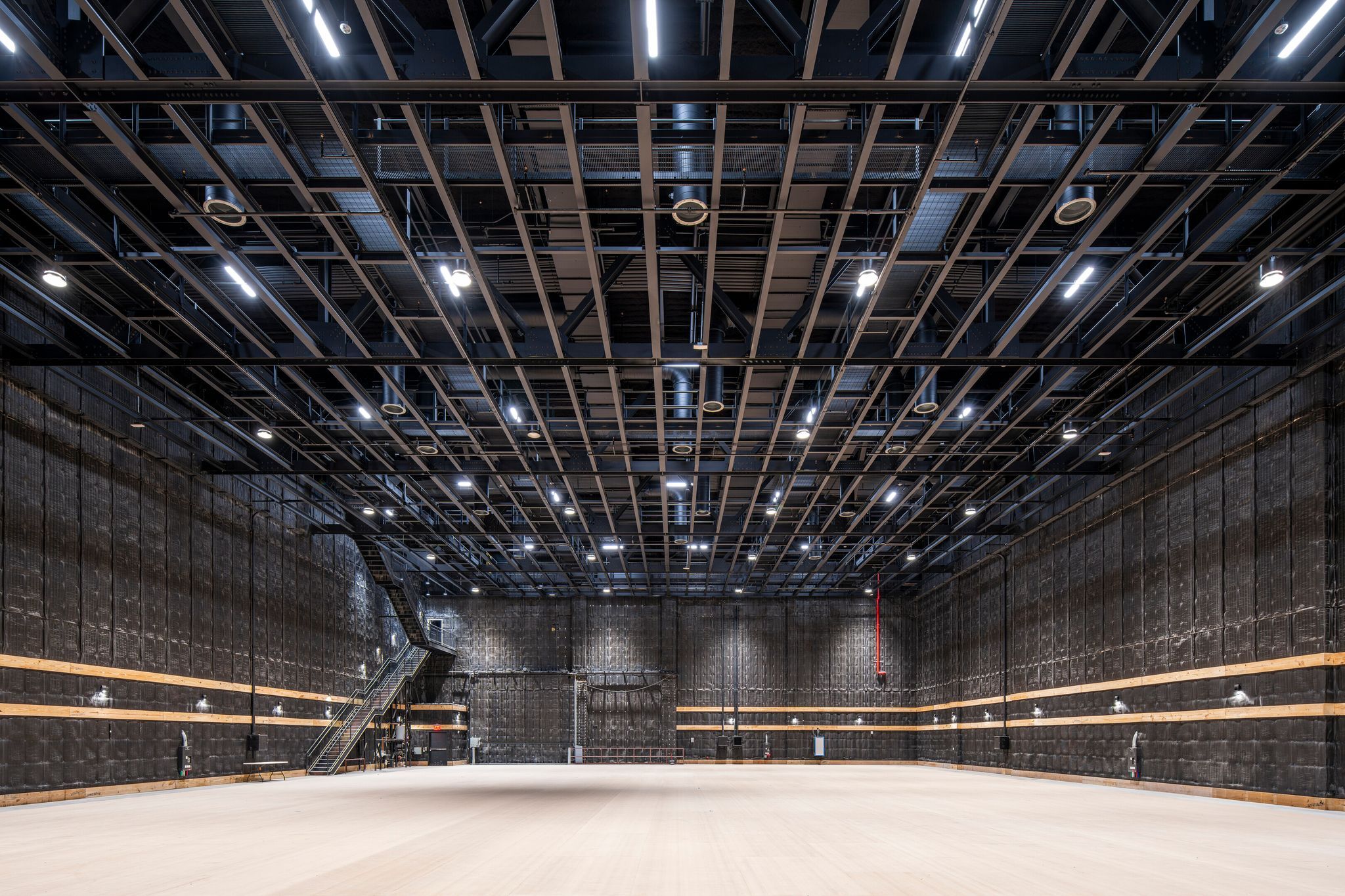
During that surge, Hudson acquired or built some 2 million square feet of entertainment real estate through its Sunset Studios platform, including facilities in Hollywood, the San Fernando Valley and the company’s newly opened Sunset Pier 94 Studios complex in Manhattan. The company also acquired production services firm Quixote in 2022, expanding beyond real estate ownership into equipment rentals, transportation fleets and other logistics used by film crews.
That diversification helped Hudson Pacific capture more revenue during the streaming boom, when production demand surged across North America.
Today, Hudson's planned restructuring comes as film and television executives are cautiously optimistic about a production rebound in 2026 in Los Angeles and across the U.S.: A survey by data firm ProdPro last month showed expectations for higher output than in 2025, even as labor talks and industry consolidation remain risks.
Quixote reset
At the center of Hudson Pacific’s restructuring plan is Quixote, the production services platform with revenue that fluctuates directly with filming activity.
Unlike the company’s Sunset Studios real estate portfolio, which generates long-term lease income, Quixote relies on day-to-day production demand for equipment rentals, transportation fleets and other logistical services used by film crews.
Hudson officials wrote down the value of Quixote during the final quarter of last year, substantially contributing to the company's net loss.
"Management has been clear that Quixote remains the primary sentiment overhang — one the market assigns little to no, if not negative, value," Dickstein said. Hudson Pacific declined to comment beyond Colman's remarks.
Over the past year Quixote stages operated at 53.3% occupancy, far below the utilization rate of Hudson Pacific’s Hollywood studio properties. Still, Hudson hasn't completely written Quixote off. It has a goal of cutting expenses and getting the segment to break even by the end of the year.
Because many of Quixote’s assets carry little or no debt, Coleman said during last week's remarks, the company retains flexibility to restructure the division, sell assets or reposition operations depending on how production demand evolves.
The company holds leases tied to Quixote operations including a 40,000-square-foot facility in McDonough, Georgia, according to CoStar data.
Hudson Pacific has already exited several smaller production markets including Albuquerque and Louisiana as activity shifts back toward major industry hubs.
Studio strategy shifts
Coleman said Hudson Pacific is beginning to see early signs that production activity is stabilizing at its highest-quality studio properties in Los Angeles and New York.
At the company’s Hollywood studio properties, trailing 12-month occupancy reached 86.2%, reflecting continued demand from major streaming platforms and production companies.

“The two barbells of the country, Los Angeles and New York, are really doing much better than anywhere else when it comes to production,” Coleman said.
He said the industry is increasingly retreating from smaller incentive-driven markets that expanded rapidly during the streaming boom but have struggled as production budgets have tightened.
States such as New Mexico, Georgia and Louisiana built stages and expanded tax credits to lure productions, but activity in many of those markets has slowed more sharply than in traditional industry hubs.
California and New York have since increased their own incentives in an effort to keep projects closer to the industry’s historic creative centers.
Debt, assets and consolidation
Hudson Pacific is also reshaping its balance sheet as it navigates the production downturn.
Coleman said the company may raise between $200 million and $300 million through targeted asset sales — primarily offices — while redeploying capital toward its strongest-performing properties and reducing leverage.
The firm is also negotiating with lenders on a refinancing of the commercial mortgage-backed securities loan backing its Hollywood Media Portfolio ahead of its August 2026 maturity. The portfolio includes three studio campuses and five adjacent Class A office buildings totaling about 2.2 million square feet leased to tenants including streaming giant Netflix.


Dickstein said a loan extension appears to be the most likely outcome in today’s debt market because studio properties are specialized assets of which lenders are generally reluctant to take control.
An extension could give Hudson Pacific time to negotiate a longer lease with Netflix, whose agreement runs through 2031 and is a key factor in the portfolio’s long-term credit profile, he said.
Hudson Pacific is also evaluating certain studio properties for potential sale, including Sunset Glenoaks Studios in Sun Valley, which Coleman described as a “disappointment.”
Analysts say the property faces weaker demand because it sits outside Hollywood and Burbank, the two San Fernando Valley production clusters that typically attract the strongest leasing activity.
Meanwhile, as some investors raise concern over media consolidation and its impact on real estate, Coleman pointed to the proposed merger between Paramount and Warner Bros. Discovery as a sign of demand for high-profile entertainment assets.
“These are sophisticated groups buying billion-dollar platforms,” he said. “They’re not operating under the assumption that the production business in Los Angeles or New York is disappearing.”