
Peakline Real Estate Funds is moving early to capitalize on the next phase of the federal opportunity zone tax-incentive program, launching a fourth fund ahead of new incentives set to take effect in 2027.
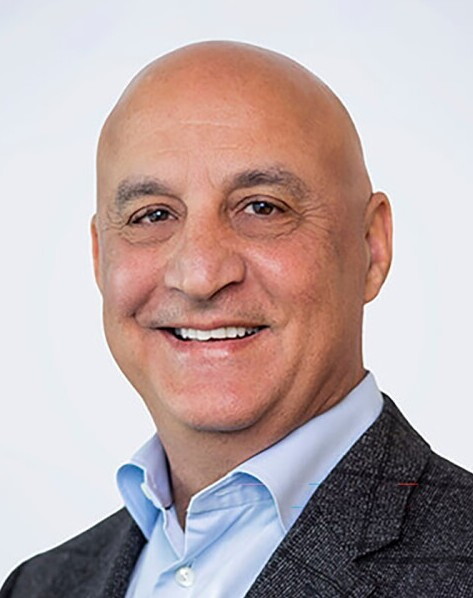
The private, Chicago-based real estate investment firm, led by co-founder Michael Miller, is targeting up to $1.3 billion in capital for its latest qualified opportunity zone fund, positioning itself among the first major sponsors to raise money in anticipation of the program’s overhaul and elimination of some sunset provisions.
The federal opportunity zone program, created by the 2017 Tax Cuts and Jobs Act, is designed to spur private investment in economically distressed communities by offering tax incentives to investors. Investors can defer and potentially reduce or eliminate capital gains taxes by reinvesting those gains into designated areas through qualified opportunity funds.
Peakline’s new fundraising effort comes as lawmakers reshape the opportunity zone framework. The updated program, often referred to as Opportunity Zones 2.0, is expected to establish the incentive as a permanent part of the federal tax code.
Peakline’s strategy reflects both the firm’s history and shifting policy dynamics. Across its first three opportunity zone funds, Peakline has deployed about $1.2 billion in equity toward roughly $4 billion in total project costs. That volume places it among the top five opportunity zone fund sponsors nationally by equity raised, according to Novogradac, a national certified public accounting firm.
National multifamily developer
Peakline has multiple projects, mostly multifamily, under construction in opportunity zones across the country, including The Ace, 295-unit mixed-use development along a key stretch of Arthur Ashe Boulevard in Richmond, Virginia.
Looking ahead, Miller said the next phase of the program could coincide with a surge in capital gains from anticipated high‑profile initial public offerings, such as SpaceX and Anthropic, expanding the pool of eligible investment capital.
“There’s a lot of capital gains, and you don’t want the capital gains to sit on the sidelines,” Miller said. “You want the capital gains to go back into the economy.”
Early positioning may prove critical. While state governors are not expected to begin nominating new qualifying census tracts until July 1, Peakline is already building a pipeline of projects it expects to align with future designations. The firm is also looking to leverage existing land holdings that could support second-phase development if those areas are reselected.
“If I was a governor and saw a zone attracting investment, why wouldn’t I want that to continue?” Miller said.
The firm is effectively repeating its playbook from 2018, when it launched its first opportunity zone fund as the program was still largely untested. At the time, investors were committing to a fund with limited clarity around deployment.
“Originally it was a blind pool. Nobody really understood it,” Miller said. “Now it’s a much clearer story for investors.”
Strategic shift this time around
The fourth fund introduces a structural shift. For the first time, Peakline is dividing its strategy between two distinct pools of capital, one focused on metro markets and another targeting lower-density development.
The metro strategy will concentrate on urban and suburban properties, including multifamily, mixed-use and select industrial projects. The second strategy, labeled rural, is designed to target lower-density residential, industrial and energy infrastructure opportunities in areas expected to qualify under updated designation criteria.
Miller said the rural label can be misleading, describing the approach as more about development density than geography. Industrial logistics assets, in particular, are expected to play a larger role than in prior funds.
“A lot of the manufacturing, warehousing and logistics uses can fit well in those lower-density locations,” he said.
The bifurcated structure reflects differences in the incentive framework. Under current proposals, investments in rural zones would qualify for a larger tax benefit, including a 30% basis step-up after five years, compared with 10% for metro projects. Rural strategies are also expected to face fewer acquisition constraints, potentially broadening the investable universe.
Despite those advantages, Miller said tax considerations remain secondary to project fundamentals.
“We’ve been doing this for 45 years, and we focus first on the underlying real estate,” he said. “The tax benefits are incremental to the return, but the driver is still tenant demand and market fundamentals.”
From big cities to smaller markets
Policy changes may also shift where capital ultimately lands. Research from the Federal Reserve Bank of San Francisco found that the original opportunity zone program directed roughly $100 billion of investment nationwide but tended to concentrate capital in already improving urban areas, with less penetration into rural or deeply distressed communities.
The revised framework aims to address those gaps by tightening income thresholds for eligibility and increasing incentives tied to rural investment.
Peakline expects those changes to open new development opportunities in secondary and tertiary markets. Miller pointed to areas such as Youngstown, Ohio, where a combination of suburban and lower-density zones could support additional build-to-rent and apartment projects.
Within that context, the firm’s early fundraising push represents a calculated bet: that capital will once again move quickly once the rules are finalized, and that sponsors with both existing pipelines and experience will be best positioned to capture it.
Peakline expects to begin deploying capital from the new fund in January 2027, in line with the anticipated timeline for the updated program.