
The data center gold rush is colliding with a hard reality: Building or investing now requires far more capital than many developers can raise.
As demand for artificial intelligence and cloud computing accelerates, construction costs for modern data centers have surged. Facilities these days require massive upfront spending on land, power support systems and specialized construction, with large campuses often running into the billions of dollars. Industry estimates peg total capital needs at as much as $1 trillion over the next five years.
That spending burden is narrowing the field of viable developers. Access to capital — more than geography or technical know‑how — is increasingly determining who can build, how fast and at what scale, according to recent reports, filings and deal documents.
Going forward, only the highest-quality operators with proven execution capabilities will secure financing on favorable terms, said Raul K. Martynek, CEO of data center operator DataBank, in his 2026 outlook.
"Financing will become increasingly difficult," he wrote. "There are more data center developments and companies in existence today than at any other time in our sector's history. What do they all have in common? They all need cash to build."
Major players, such as tech giants, are likely to continue building while newer entrants feel the squeeze first. Many of the developers and recently launched data center operators that flooded into the sector over the past two years "will find it increasingly difficult to secure the capital needed to advance their developments," Martynek said.
For many operators, the message is stark: scale up quickly, sell or step aside.
Recent activity illustrates how quickly capital has become the decisive advantage. Developers lacking scale are selling assets, merging with larger firms or shelving expansion plans altogether, even as institutional investors pour more money into the sector.
S&P Global Ratings described the dynamic this spring as an "arms race."
"In the U.S. alone, we project average spending on data center construction of more than $70 billion per quarter from 2025 to 2028," the bond rating firm said. "Numerous firms are hoping to enter the sector, and those with access to capital and experience in securing land, power and permits will be better positioned for success."
REITs pull back on data centers
The capital divide has been particularly visible in the real estate investment trust sector.
Two sister REITs sponsored by Australia‑based HMC Capital — StratCap Digital Infrastructure Trust and DigiCo Infrastructure REIT — have pulled back on U.S. data center investments amid rising development costs and their sponsor's refocus of capital closer to home. Both REITs fall into the category of new entrants, as neither is more than 2 years old.
StratCap, a New York‑based nontraded REIT, hired a financial adviser to explore strategic options after raising just $31 million over the past year, despite being registered to raise up to $575 million. The REIT had to dip into its own cash to fund a portion of its distributions rather than cash from operations.
Representatives of the REITs did not respond to CoStar News' requests for comment.
Earlier this year, StratCap reported a real estate net asset value of $37.8 million, the lowest among 20 monthly reporting nontraded REITs tracked by CoStar.
The contrast with larger peers is stark. Blue Owl Digital Infrastructure Trust, another nontraded REIT, raised $1.61 billion in 2025 — roughly 52 times what StratCap raised over the same period.
The money that REITs raise can be used to develop new data centers or acquire existing facilities. Undercapitalization is costing firms time and flexibility just as competition intensifies, analysts said.
"If they aren't raising sufficient capital quickly, they're going to miss out on opportunities," Luke Schmidt, vice president of research at investment research firm Blue Vault Partners, told CoStar News.
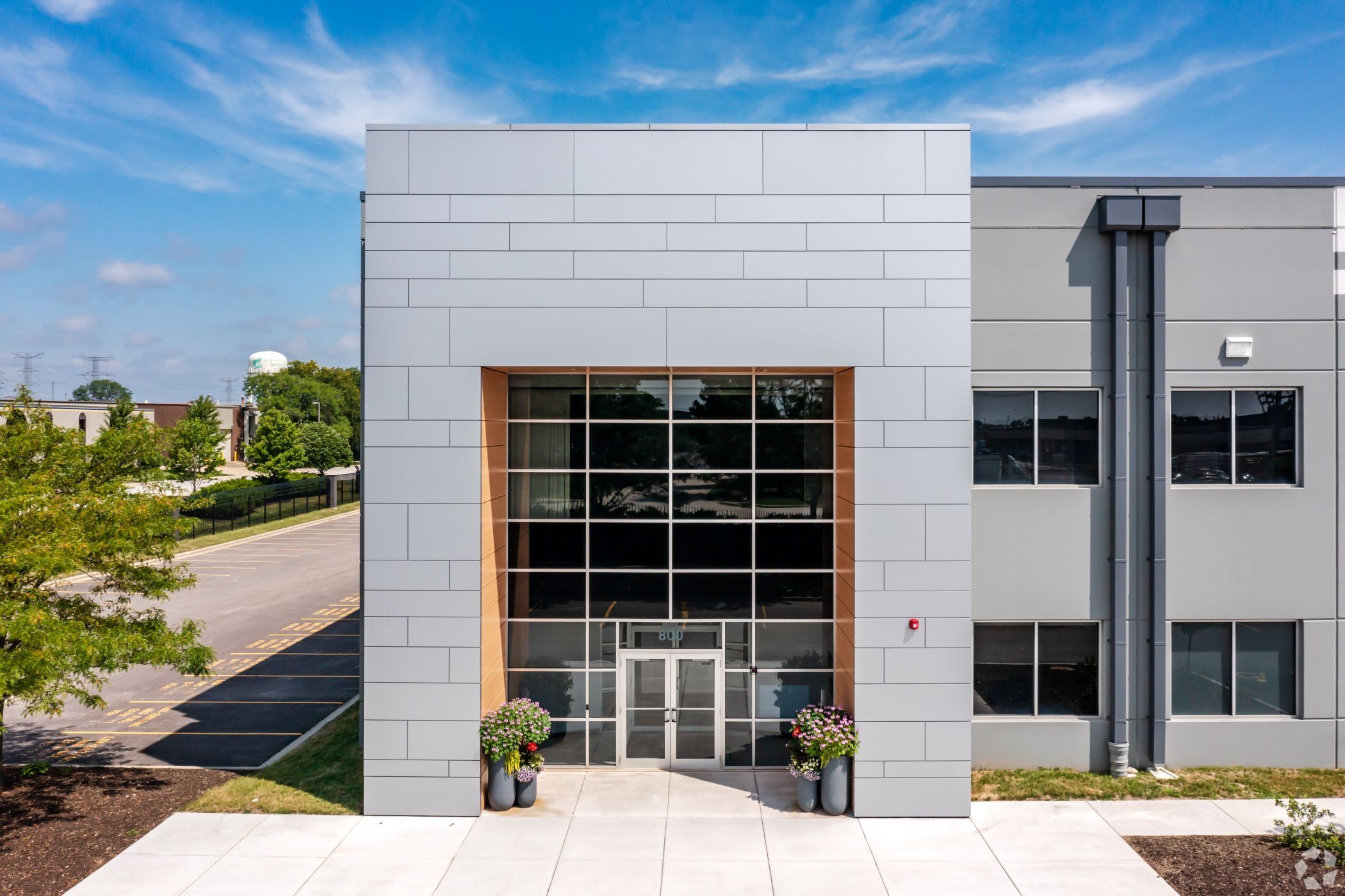
To generate liquidity, some firms are selling assets instead of expanding. StratCap sold 48 wireless towers for $55.1 million, while DigiCo agreed to sell its Chicago‑area data center for $750 million and is exploring additional dispositions in Los Angeles. The two REITs also withdrew plans last month for a new 49.5‑megawatt project in Monterey Park, California.
Small vs. large investors
Similar pressures are driving consolidation across the industry. Over the past year, small and midsized operators have sold stakes or platforms to institutional investors with deeper balance sheets, reflecting the difficulty of funding large‑scale development internally.
Last August, Stream Realty decided to sell a majority stake in Stream Data Centers to New York-based asset management giant Apollo for an undisclosed amount. "They had the capital and resources to help grow Stream Data Centers," Stream's CEO Chris Jackson told CoStar News at the time.

That same month, Hivelocity sold its colocation services business in Chicago and Miami to Digital Realty, one of the world's largest data center operators.
A year ago, Nova Infrastructure completed a majority investment in Dallas-based DartPoints. Nova's investment included a significant capital infusion designed to expand DartPoints' footprint.
Each transaction points to the same conclusion: Scale can now determine survival.
Large investors, meanwhile, are leaning into the capital intensity. Blackstone highlighted the advantages of scale in filings tied to its planned $1.75 billion data center REIT launch, noting that size allows firms to pursue large acquisitions, weather development delays and absorb rising costs. Since 2018, Blackstone has invested roughly $225 billion in digital infrastructure transactions, including more than $150 billion tied to data centers.
Smaller investors without access to large sources of capital are unlikely to disappear entirely, but their options are narrowing.
"Varying rates of workload-dependent demand growth for data centers across the industry coupled with a variety of data center types — ranging from smaller edge and enterprise data centers to powered shells, retail colocation, wholesale colocation, hyperscale and built-to-spec — present multiple opportunities for investors and developers to participate in the market at a level that aligns with their appetite," John McWilliams, Cushman & Wakefield's head of data center insights, told CoStar News in an email. "Just as risk profiles will differ across many of these subcategories, so too does the mix of capital pursuing them."