
In the 1930s, a limestone tower rising over the Chicago River was on the cutting edge of offices, becoming the city’s first major building constructed over active railroad tracks. Nearly a century later, the art deco landmark at 2 N. Riverside Plaza is again a symbol of change.
This time, the building is a test case for how aging office structures across the United States might find new relevance in a weakened leasing market. It's pairing historic preservation with decidedly 21st‑century draws — including a bowling alley, live music, guitar lessons and a farmers market — aimed at luring workers back into the office.
After 50 years under one owner, the former home of the Chicago Daily News is being repositioned by new landlords betting that preservation, public space and the unexpected amenities can help extend the life of legacy office towers as hybrid work upends downtown demand.
Blue Star Properties has begun renovating the 26‑story structure in an effort that reflects a broader push by office owners nationwide to make older buildings feel less like pass‑through workplaces and more like destinations.
The building last sold in 1975, when it was bought by late billionaire Sam Zell, and changed hands again last year at a price reflecting broader distress across the office sector. Craig Golden’s firm and fellow Chicago investor Wolcott Group paid just over $25 million for the tower last July. Their goal now is to honor the property’s roots while retooling it for a second century of use.
Alongside the ornate grillwork, marble‑clad walls and decorative elevator doors, Blue Star plans to introduce amenities more commonly associated with lifestyle developments and hospitality venues than historic office stock. Golden is also working to secure Chicago landmark status for the building, a move that would end decades of uncertainty and permanently protect it from demolition — an option Zell once explored, along with adding another tower on the adjacent riverfront plaza.
“We’re trying to modernize something while paying respect and giving a nod to what the original builders built,” Golden told CoStar News.


Upcoming changes will reflect Golden’s involvement in affiliated hospitality company 16” on Center, which operates live music venues, restaurants and bars such as the Salt Shed, Empty Bottle, Thalia Hall, Longman & Eagle and the From Here On food hall.
Plans at 2 N. Riverside include new food and retail for tenants and commuters passing through the property, as well as making snacks and drinks available from a new space in the public plaza.
Place to play guitar, bowl some frames
For tenants, changes will be focused on creating a broader community within the building where tenants can socialize, learn to play guitar, bowl a few frames on an upcoming four-lane alley or buy produce at a farmers market.
Designed by noted architecture firm Holabird & Root and completed in 1929, the building is known as the first in Chicago built over railroad tracks, with innovative features such as a special venting system for railroad locomotive exhaust, according to a city report submitted to the Commission on Chicago Landmarks. The public plaza has the distinction of being the first privately developed open space in the city and one of the first nationally, according to the report.

The sale to the Blue Star venture last year followed the 2023 death of Zell, who ran his real estate empire out of the historic property. The $25 million price was a steep discount to the $65 million loan on the building from an affiliate of Voya Investment Management to Zell’s Equity Group Investments. The pricing reflects today’s challenging office leasing conditions.
Landmark status would open the way for Class L historic tax credits, which would provide a 12-year break on property taxes valued at about $28 million. Those tax breaks can be passed on in the form of lower overall rents for tenants, allowing older buildings to compete in a tight leasing market.
“It’s good for the tenants, good for us," Golden said. "The prior owner didn’t want to landmark it because they had entertained tearing it down. I love this type of buildings because they really express who Chicago is, and I’m not that ambitious to build a skyscraper.”
After some early leasing successes, just under 30% of the tower remains vacant, according to Blue Star.
Blue Star and Wolcott Group previously teamed up to redevelop a historic building at 125 S. Clark St. After buying it for $28 million in 2015, creating the popular Revival Food Hall and leasing most of the office space, they sold it to German’s Commerz Real for more than $196 million in 2018.
No plans for historic mural
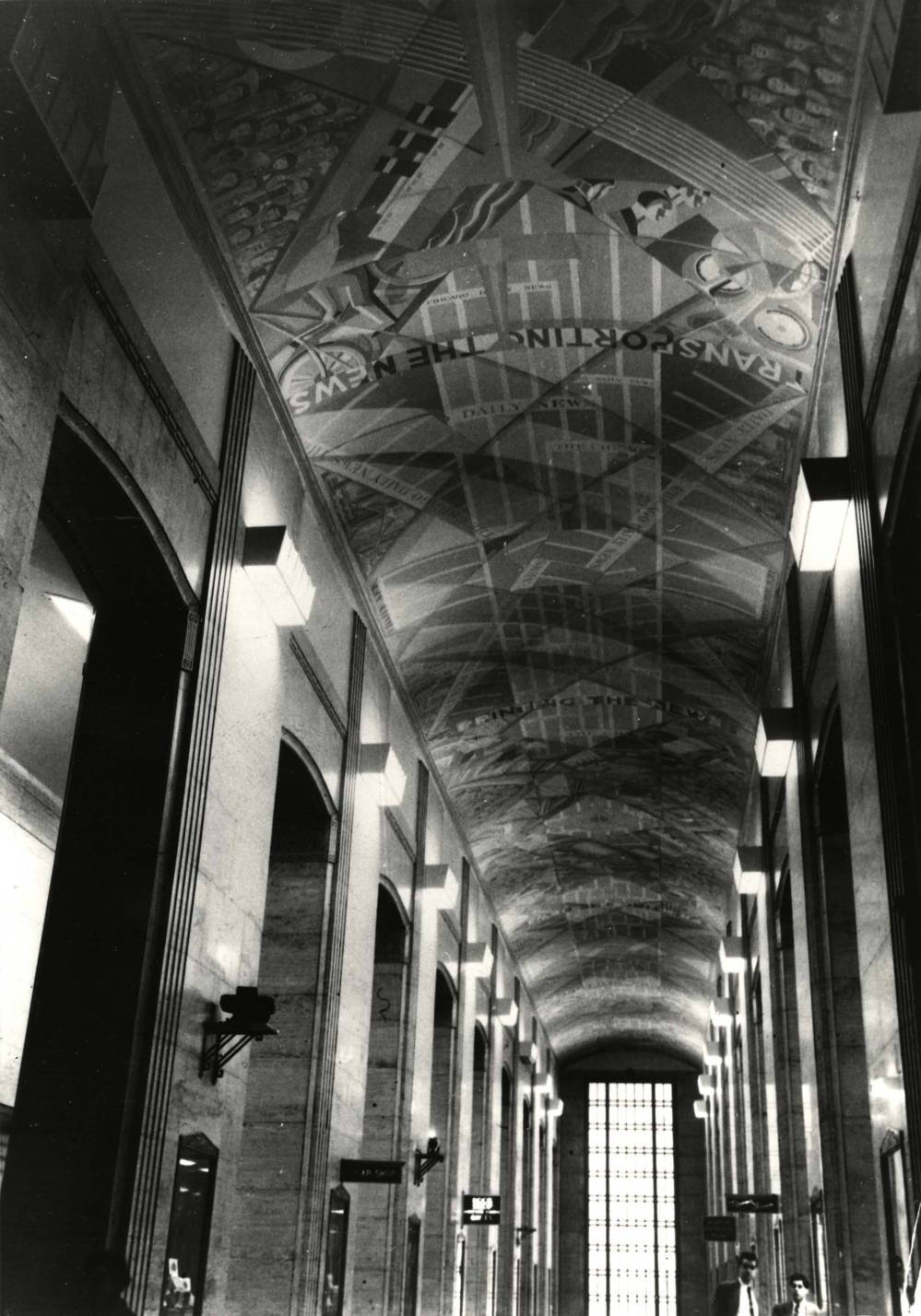
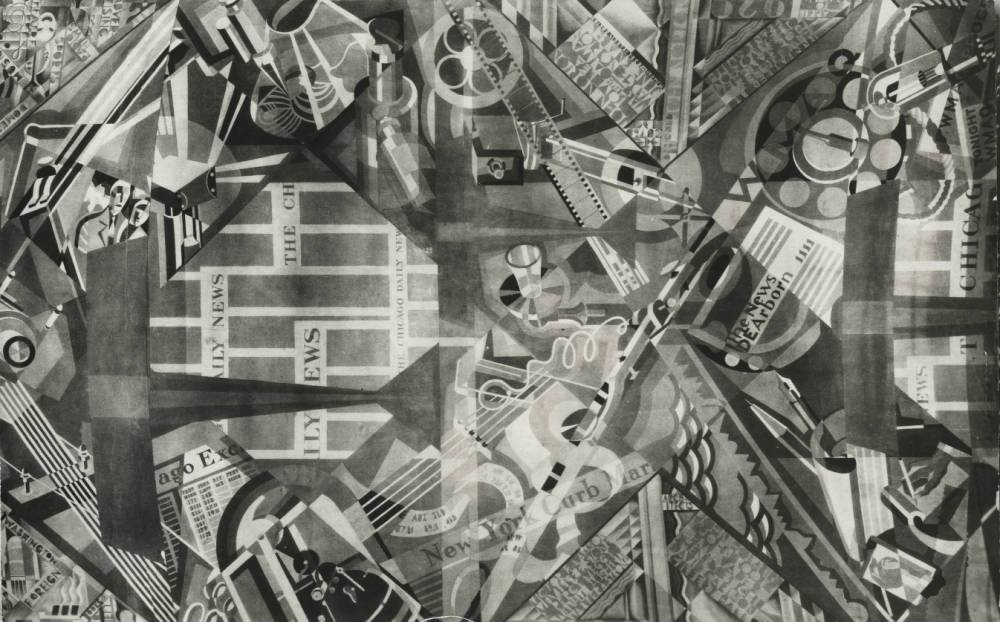
Although Blue Star is known for embracing historic elements of its project, the fate of a massive John Warner Norton mural that once topped the pedestrian concourse, known as “Gathering the News, Printing the News, Transporting the News,” remains tenuous years after it was removed.
The Daily News, once staffed by the likes of Carl Sandburg, Ben Hecht and Mike Royko, operated out of the building until 1960. The newspaper folded in 1978.
In its regular “What’s That Building?” feature, radio station WBEZ recently reported that Ward Miller, executive director of Preservation Chicago, found the mural in storage in a building in the Bridgeport neighborhood on the South Side.
Ownership of the mural came with the building purchase, but Golden told CoStar News that he has no immediate plans to try to reassemble the mural.
Golden said he has not seen the mural and is unsure whether it is in good enough condition to be salvaged. He described the likely cost of such a project “financially unencouraging” without completely ruling out the possibility.
“We have so much to do here, so it’s just not on our radar,” Golden said.
The arched roof on the concourse is now painted white, and Blue Star plans to put up new, art deco-style light fixtures.
Windows into the past, glimpses of the future
Updates are becoming visible to tenants and commuters who pass through the building’s walkway connecting the 97-year-old structure to trains at Ogilvie Transportation Center, one of the busiest commuter‑only rail stations in the United States.
Display windows offer hints of the building’s past, such as decades-old Daily News pages and decorations from long-ago Zell parties with political and economic themes.
Previews of the building’s future include a display of bowling shoes and construction work on future storefronts alongside longtime tenants such as Jimmy John’s, Dunkin’ and a newsstand.
A 16” on Center brand, the Good Ambler, is expected to open a bakery and grab-and-go restaurant on one space this spring.
Blue Star is seeking other food and retail tenants for spaces including a former bank branch in the concourse.
“The idea is to make this, with a nod to the art deco architecture, more of a streetscape,” Golden said. “It was very tired when we took it over. This gets a whole lot of traffic, and people are either coming to work or going home.
“We want to make this area, which we’re calling The Pass, look more like somewhere that you want to be rather than an afterthought.”

Within the main structure, a former printing press area on the second floor is being converted into a huge lounge and amenity area. Blue Star is cutting large holes in the roof of the area that extends out from the main structure to bring in more sunlight.
“It was really fun to bring it back to where you can see the steel girders, and we’re putting in skylights,” Golden said. “It should change the whole feel of the place.”
The tenant gathering area will have a circular coffee bar, furniture, bowling alley, music room with instruments that can be borrowed and an auditorium.
Programming will range from professional talks to magic, comedy and music acts in the space, Golden said.
“What I want to do is appeal to the employers who want to provide a better and more enriched professional life,” Golden said. “We do compete with working from home and the commute. Here, if you take the train in, you can wear your slippers.
“If you like this sort of thing, here is a historic building that’s a little more bespoke. We would like to lean into the idea that you can come here and do a lot of different things.”