
Spirit Halloween has opened roughly 1,500 temporary stores across North America each of the past few years, with a staggered rollout from August through early September. In early November, immediately after Halloween on Oct. 31, the pop-ups close.
Retail brokers and analysts say the operation reflects years of planning, specialized leasing expertise and relationships with shopping center landlords that help fill vacant storefronts on a temporary basis. The stores, with their trademark orange-and-black “Jack the Reaper” signs, are so ubiquitous that they’ve become a pop culture punchline.
Spirit Halloween may be the most visible example of pop-up retail, materializing in vacant storefronts each fall before disappearing weeks later. Its annual expansion also offers a window into the leasing practices that help make temporary retail work.
“There’s a lot of institutional knowledge and personal relationships at play here. ... That’s hard to replicate as it takes years to build.”
“The Spirit Halloween real estate team is extremely savvy and, over time, they’ve created a very strong network of landlords and agents who they can approach and who sometimes approach them,” Neil Saunders, a retail analyst and managing director at GlobalData, said in an email to CoStar News. “There’s a lot of institutional knowledge and personal relationships at play here — rather in the same way that off-price retailers like TJX have very deep connections in their buying teams. That’s hard to replicate as it takes years to build and it’s a people thing.”
Retail landlords have reasons to welcome seasonal tenants. Spirit Halloween gives owners a way to generate income from vacant storefronts while they continue searching for permanent tenants.
The stores can help bridge a vacancy for a few months, but they do not solve the longer-term challenge of finding permanent occupants for empty space.

The arrangements are structured to protect landlords. Spirit Halloween’s leases typically include termination provisions that allow owners to cancel the deal before the season begins if a long-term tenant emerges, according to Urban Edge Properties leasing executive Scott Auster.
“Spirit’s agreements include a no-penalty kick-out clause that favors the landlord,” Rudy Milian, a retail consultant who heads Woodcliff Realty Advisors, said in an email. “Landlords are never forced to turn away a permanent tenant for Spirit.”
“Landlords are never forced to turn away a permanent tenant for Spirit.”
The planning begins months before Halloween. Spirit Halloween leasing team member Andrew Scruggs described the process on LinkedIn:
“Early Q1 is when we: identify vacancy that won’t realistically lease by summer; plan around permanent tenant deals (not compete with them); structure short-term leases that improve center traffic and optics; eliminate dark space during peak retail months,” Scruggs said. “By the time August rolls around, the smart decisions were already made.”
More than a seasonal retailer
Beyond landlord relationships, Spirit Halloween has advantages that many pop-up retailers lack. The company is backed by Spencer Spirit Holdings, parent of Spencer’s Gifts, the mall retailer with more than 600 stores. Spencer provides year-round logistics, warehousing and other operational support.
“Spirit Halloween isn’t a small-scale temporary tenant trying to survive on Halloween or Christmas occupancy,” Milian said.
Several retail industry professionals said Spirit Halloween has its own leasing team, separate from Spencer’s. The retailer, known for novelty merchandise, recently agreed to acquire fellow mall chain Hot Topic.
Pop-ups require a different skill set than traditional stores, David Hinkle, principal and co-founder of The Outlet Resource Group, told CoStar News. He recalled working on his own pop-ups — when the retail concept was new — with a broker alongside Spirit Halloween founder Joe Marver in the 1990s in California. At that time, Marver was operating only six Spirit Halloween stores, according to Hinkle.
Other retailers operate pop-ups, often as pilot programs, but not like Spirit Halloween. For example, streaming giant Netflix tied them to hit shows such as “Stranger Things” over several years in different cities to test out concepts for its permanent entertainment-shopping venue, Netflix House. Netflix ultimately launched roughly 40 such pop-ups around the world. Similarly, this summer Dick’s Sporting Goods debuted a pop-up store in the Hamptons in New York to gauge whether it should spin off any of its brands — such as Walter Hagen golf apparel — into standalone chains.
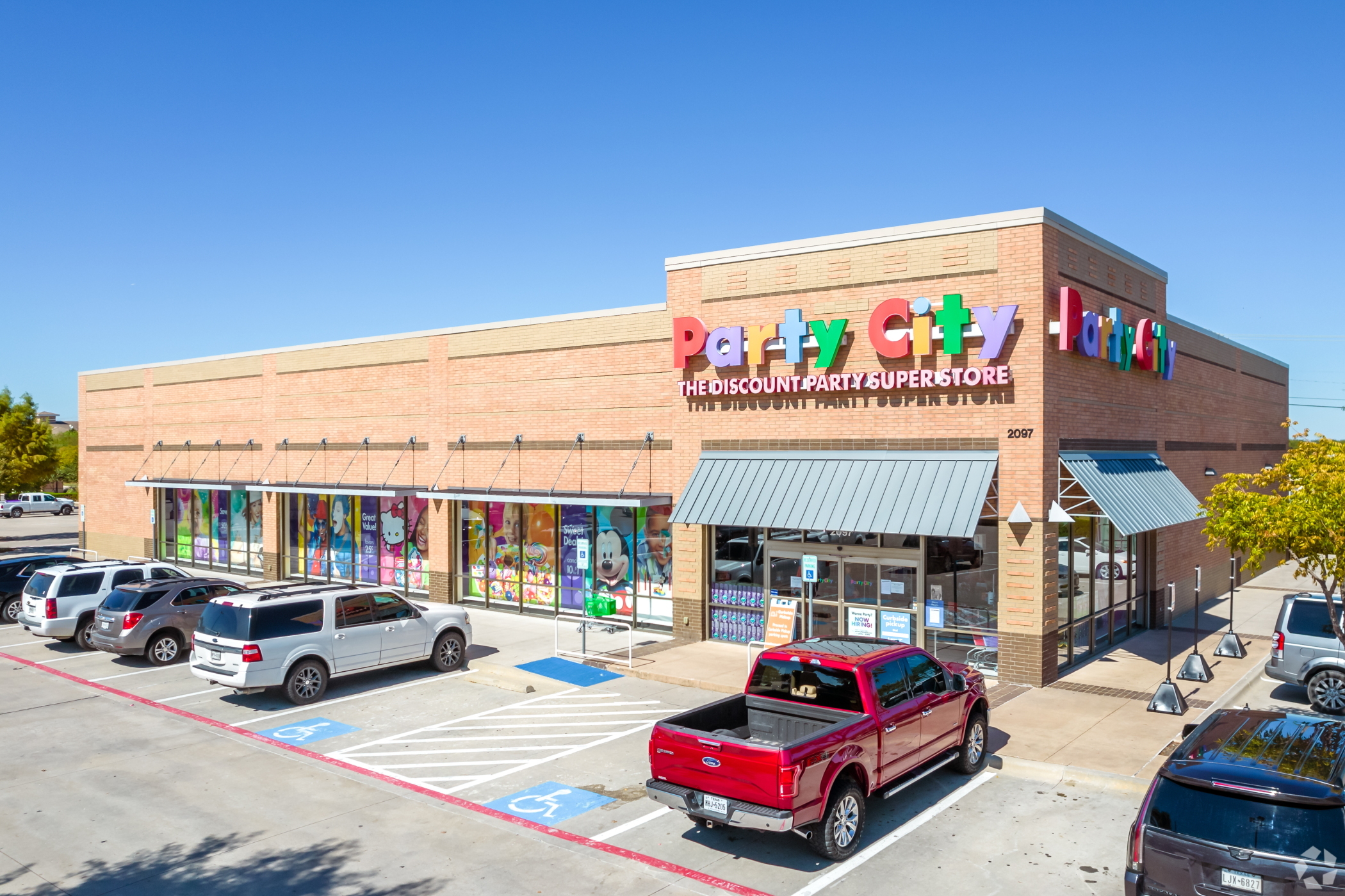
Spirit Halloween has found locations in space left vacant by retailers that went out of business after filing for bankruptcy, including Party City, once its fiercest direct competitor. That chain used to launch its own temporary standalone stores, Halloween City, but never as many as Spirit Halloween. In addition to former Party City locations, Spirit Halloween has taken a lot of former Joanne store sites.
The National Retail Federation pegged Halloween spending at an estimated $13.1 billion last year. Amazon, Walmart, Target, HomeGoods, Michaels, Home Depot and the dollar stores are among those aggressively seeking a piece of the action.
Finding 1,500 stores
The Spirit Halloween leasing team prepares for its pop-up rollout well in advance of the summer. It has booths at the ICSC retail trade group conferences in both New York in December and Las Vegas in May, meeting with landlords.
Per its website, Spirit Halloween said its preference is for stores in power shopping centers, strip centers, freestanding locations, major downtown sites and major malls surrounded by a national retailer mix. It aims to set up in towns that have a population of more than 35,000 people living within a 3-to-5-mile radius and a count of at least 25,000 cars a day. The temporary stores range from 5,000 to 50,000 square feet.
Opening roughly 1,500 temporary stores annually requires a large real estate, logistics and staffing operation, according to Spirit Halloween.

The model works because Halloween “creates a concentrated, predictable period of demand, allowing Spirit to activate vacant space that might otherwise sit empty while giving landlords flexibility to continue pursuing long-term tenants,” Spirit Halloween said in an email to CoStar News.
Spirit Halloween offers an immersive experience and entertainment — using animatronic displays that surprise and scare some shoppers — alongside selling costumes, toys, masks and home decor. The chain has a loyal following; an estimated 3,000 people showed up for the Aug. 1 debut of its flagship store in Egg Harbor Township, New Jersey.
Up and running in less than a week
Shopping center landlord Urban Edge has a handful of Spirit Halloween stores this year, versus about a dozen a year ago, according to leasing chief Auster.
“It’s less than we used to have because we just don’t have as much vacancy as we used to have,” he said. “The amount of business we’re able to do with them is a function of availability, obviously.”
In Urban Edge’s portfolio in New Jersey, there’s a Spirit Halloween in a former Charisma Furniture store in Woodbridge Commons; in a former Esporta Fitness location at the Plaza at Cherry Hill; and at Hanover Commons in a former Saks Off 5th store.
Spirit Halloween requires not only vacant retail space, but also “spaces that are in a suitable condition for them to operate,” according to Auster.
“We might have a vacancy, but if it doesn’t have air conditioning, if it doesn’t have bathrooms, if it doesn’t have lighting, it’s really not going to be something that works for them,” he said. “They can’t spend the amount of capital that they would need to get a space up and running and still be profitable.”
Consultant Milian echoed that assessment on how the chain operates.
“Spirit doesn’t spend a lot of money to upgrade the interior space for temporary occupancy,” Milian said. “The team deploys standardized fixture kits, pop-up walls, plug-and-play [point of sale] systems and banner kits. A team can transform a vacant big box store into an operational unit in less than a week and break it down in two days afterwards.”
Between tenants
Urban Edge will meet with Spirit Halloween to discuss what availability it has in its portfolio. In some cases, the landlord has a lease in place, but the retailer is still getting approvals from a municipality to open and there’s a lag time for it to actually open, Auster said.
“We look at the schedule and say, ‘You know what? We could still squeeze in the Spirit Halloween deal on this one before we have to turn over possession’” to the permanent tenant, he said.
Levin Management has Spirit Halloween pop-up stores in several of its shopping centers this year, according to Sidney Singer, vice president of leasing for the Plainfield, New Jersey-based firm. It has the temporary stores in a former Big Lots in Clifton, New Jersey, for example.
The period between August and October is “an appealing window” for landlords to work with Spirit Halloween because permanent retailers typically want to open in the fall or spring, Singer said. Spirit Halloween’s pop-ups serve as a filler between those periods, according to Singer.
Hinkle, the Outlet Resource Group executive, recalled doing leasing for pop-up stores when he met Spirit Halloween founder Marver, who founded the retailer in 1983. Hinkle said he and Marver were doing the same thing, but at that time temporary stores were a new concept and they were both trying to share notes, create guidelines and figure out the nuances between permanent and short-term leasing.
Spirit Halloween isn’t stopping at Halloween. It’s looking to own another holiday. This year it’s slated to open 44 Spirit Christmas pop-up stores, up from about 30 last year. It’s an opportunity to extend the Spirit Halloween space it occupied through the Christmas season with some landlords. Urban Edge already plans to have a Spirit Christmas pop-up replace the Spirit Halloween store that’s now open at Woodbridge Commons.