
NASHVILLE, Tennessee — Business travel has long been an essential part of hotels' demand mix, but the segment has yet to return in full force from the pandemic.
The business travel segment is active and growing, but the current environment makes it a challenge for hotel revenue managers to form strategies.
During the "What's next for business travel" panel at the 2026 Hotel Data Conference, CoStar Group Director of Hospitality Market Analytics Didio Pequeno said that across the top 25 office markets, office demand has largely declined while office rent has increased. That increase in rent is due largely to a flight to quality.
“A lot of the office space that is currently being leased is being skewed toward the higher end of the market,” he said. “In the past, a lot of class B and C buildings would lower rates to fill occupancy, but nowadays they're having a hard time getting tenants, even when there's those lower rates.”
Another reason office rents are high is because of the concessions landlords are making, such as free rent and construction allowances, Pequeno said. It’s akin to a hotel reservation for five nights at $500 a night but the fifth night is free. Even with the rent increases, however, many of these office markets haven’t been able to keep up with the pace of inflation.


Teleworking rates in 2019 were about 6.5%, but then because of the pandemic, those rates increased and peaked at about 35% in May 2020, he said. Since then, that rate has leveled out at about 23% year to date in August. There was a dip in early 2025 due to the federal return-to-office order.
The increase in teleworking rates led to a reduction in average office visits, and office visits bottomed out in early 2020 before steadily increasing until they leveled out over the past year or two, Pequeno said.
“Weekday [hotel] transient demand has followed a very similar trajectory, and that may be an indication that office visits have really started to approach stabilization or have already stabilized,” he said.
The core days of the week for business travel demand in hotels are Monday, Tuesday and Wednesday with shoulder days of Sunday and Thursday, he said. In recent years, the shoulder nights have grown the most.
The increase in teleworking and the reduction in average office visits has led to a decline in office demand, but, conversely, weekday transient hotel demand has continued to grow. There isn’t much correlation between office demand and weekday transient hotel demand because performance varies wildly.
Some markets that have had a dip in office demand as well as a dip in weekday transient hotel demand, such as Los Angeles or San Francisco, he said. Others have seen office demand decline while they’re top performing markets for weekday transient demand, including Atlanta, Phoenix and Detroit.
There is better alignment between weekday transient hotel average daily rate and office rent growth, dating back to 2019, he said. The best-performing markets have been Las Vegas and Miami, which achieved the highest weekday transient ADR and highest rates of office rent growth.
“These trends have been driven by inflation, office leasing strategies and a flight to quality that has driven up rents,” he said.
Business traveler behavior
Hotel revenue managers must focus on how much business on the books will appear in the next two weeks, said Karen Carroll, vice president of revenue strategy and e-commerce at hotel management, ownership and consulting company GF Hotels and Resorts. Pre-pandemic, revenue managers could look to the 90-day bookings pace to tell them about how their month would end.
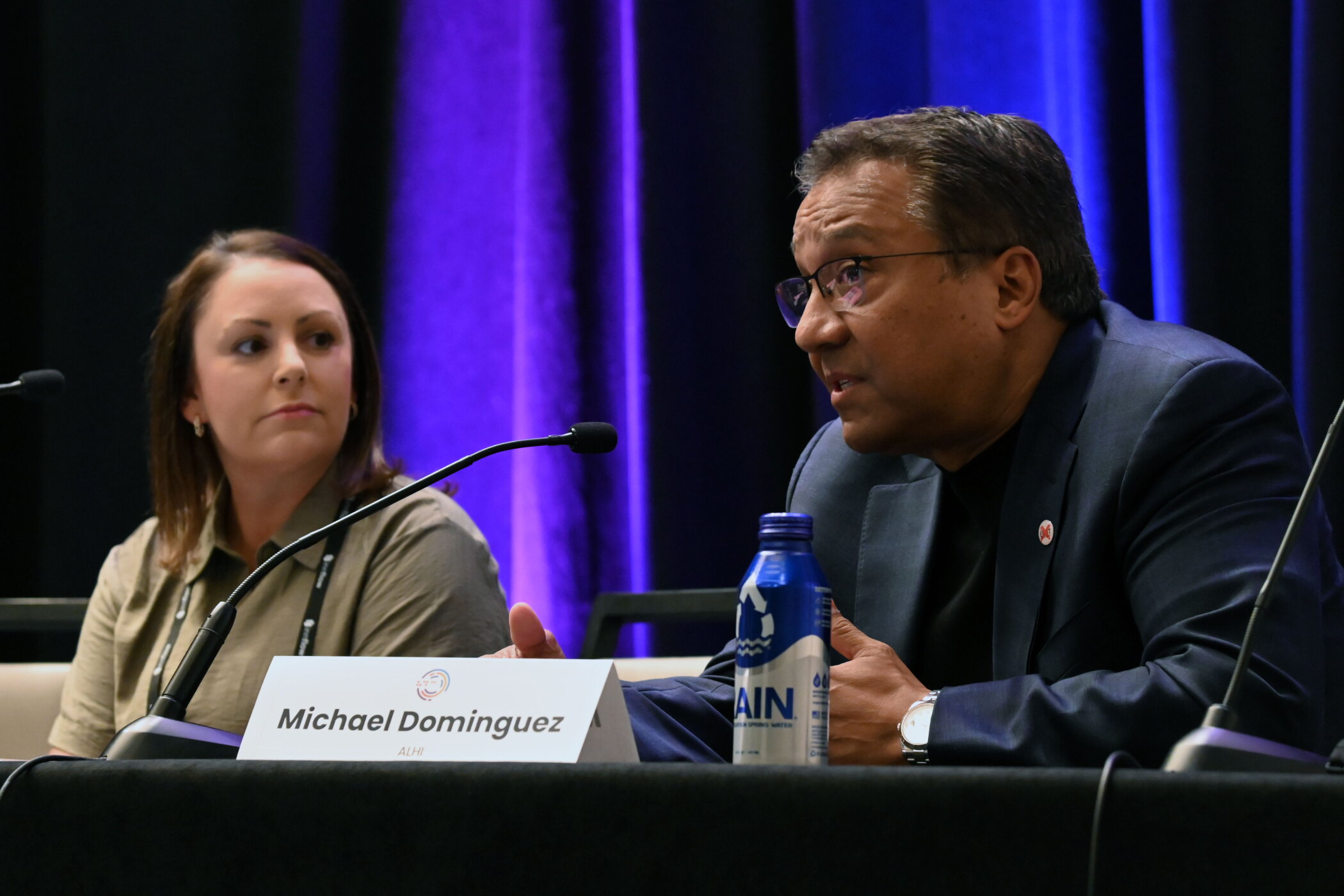
“Nowadays, in our environment, it’s a little bit different,” she said. “You have to look at those business travelers and the demand that often materializes within a two-week window.”
The hotels that are succeeding in this aren't necessarily those that can detect the shifts in business, she said. Revenue managers can get the data to show what’s really happening, but it’s about how the team will act on it faster than the next hotel.
“It’s been the challenge that we face,” she said.
When looking at which days it’s less expensive to travel, Pequeno said he found airfare to be more expensive on Sundays and Mondays. There are more discounts for Tuesdays and Wednesdays.
How long business travelers stay in a market can depend on the market itself, he added. For example, business travelers to Nashville often tack on an extra day or two.
Even when employers are back in the office, it’s often not for the full week, said Michael Dominguez, president and CEO of global hotel sales organization Associated Luxury Hotels International. His company used to have Friday morning meetings, but not anymore. The meetings now occur on Mondays to take advantage of the front end of the week.
There was also a realignment of air service during the pandemic, and regional destinations were hit a little harder, because it’s both about where the traveler is going as well as where they’re from, he said. As someone who travels every week, Dominguez tries to avoid Sunday night flights, but sometimes there are no other options.
“I do think that’s a little bit of the redeployment of the airline inventory and our lack of new planes because Boeing’s well behind right now, and they’re trying to catch up,” he said.
Meeting business travelers’ needs
Business travelers are adding in more personal experiences and touches to their trips, as indicated by the growth of shoulder nights, Pequeno said.
“I think that does provide hotels with an opportunity, even if you cater to more corporate accounts and business travelers, to treat yourself almost as a lifestyle brand and make sure you’re providing a travelers with a really unique and cultural and local and authentic experience,” he said. “Give the traveler reasons to come back outside of just business.”
When it comes to wellness at a hotel, having a health club doesn’t check the box anymore, Dominguez said.
“Can I do free weights? Do it. Do I have a Peloton? Do it. Do I have the right equipment?” he said. “Now it’s an expectation. It’s no longer an exception.”
It’s important to study the locale and know who’s coming as a business traveler, Dominguez said. If a hotel’s guest mix is 10% East Coasters, but the last decent flight to the region is at 3:30 p.m., why is the check-out time at 11 a.m.?
“If that's the audience you want, how can you help them?” he said. “I know what this does for housekeeping, so you have to think it through. But I don’t think we’re doing that. I think we’re treating everybody equal and we’re treating the environment the same.”
For the traveler, it’s a difference of having to check out, check their bags and then find a place to take a Zoom call versus staying in their room an extra hour and a half without it being a big deal, Dominguez said.
“If you could offer that, then you get to own it because you’re saying we understand you, we are trying to make your life a little easier,” he said.
Hoteliers are all looking to capture business travel, particularly the business clients who would give them the stronger life cycle of an account, Carroll said. Acts of service can go a long way, such as handwriting them a note, getting them some water or even asking how their day was.
“I think a lot of those things go a long way, and that’s how we’re going to be successful,” she said. “That’s how we’re going to beat the competitor next door, by providing that service and making sure that we’re taking care of those people so they want to come back every single week.”