
Kilroy Realty has sold a pair of Hollywood apartment projects in a top-dollar deal that signals both a portfolio pivot and a lesson in the limits of live-work-play development.
The Los Angeles-based real estate investment trust sold nearly 400 rental units across two mixed-use properties to Advanced Real Estate for $202 million, marking the largest multifamily sale in Los Angeles this year and one of the biggest commercial trades overall, according to CoStar data.
The move pushes Kilroy further out of the apartment business as it joins a growing list of investors shedding noncore assets to focus on their primary property types — in this case, office and life science.
Kilroy ventured into multifamily in the 2010s to try its hand in mixed‑use redevelopment, as several U.S. investors — such as CIM Group, Jamestown and Related Cos. — looked to turn underutilized real estate into synergistic hubs: Residents of an apartment building could walk to work at the office tower next door, then stop at a nearby restaurant or store after.
Such was the strategy in Hollywood, where Kilroy transformed former media and studio sites into integrated projects combining luxury apartments with adjacent office buildings leased to tenants including Netflix.

But while the apartments leased up at the top of the market, that demand did not fully translate to the office components, prompting Kilroy to cash in on the residential side and refocus on its core business.
“We determined these buildings would be good sales candidates given the lack of synergies with the office as well as the depth of demand for high-quality apartments,” Executive Vice President and Chief Investment Officer Elliot Trencher said on the company’s first-quarter earnings call.
Hollywood buildout
Kilroy’s Hollywood push began in 2012 with its acquisition of the historic Columbia Square campus on Sunset Boulevard.
The firm redeveloped the site from a former CBS radio‑and‑television studio and office campus into a mixed‑use complex anchored by offices and a roughly 200‑unit apartment tower, later expanding the strategy with a second project on Vine Street. That follow‑up development culminated in the 20‑story Jardine tower, completed in 2021 with 193 units alongside new office space.
Together, the projects created one of the few true live-work-play clusters in Hollywood, pairing high-end apartments with modern office buildings and curated retail.
But the residential component never delivered the office demand Kilroy had anticipated. Executives said strong apartment leasing did not materially spill into the nearby offices, blunting the mixed‑use thesis.
That dynamic — coupled with strong investor appetite for high‑end apartments — led Kilroy to sell the residential pieces, which the company’s chief investment officer said lacked sufficient synergy with its office portfolio, and recycle the capital back into core office and life‑science assets.
Kilroy still owns the office portions, including a fully leased building and another that remains partially vacant, and is working to lease up those spaces as media and entertainment demand stabilizes.
Mixed-use reality
Kilroy’s experience in Hollywood underscores that live-work-play strategies do not translate evenly across geographies.
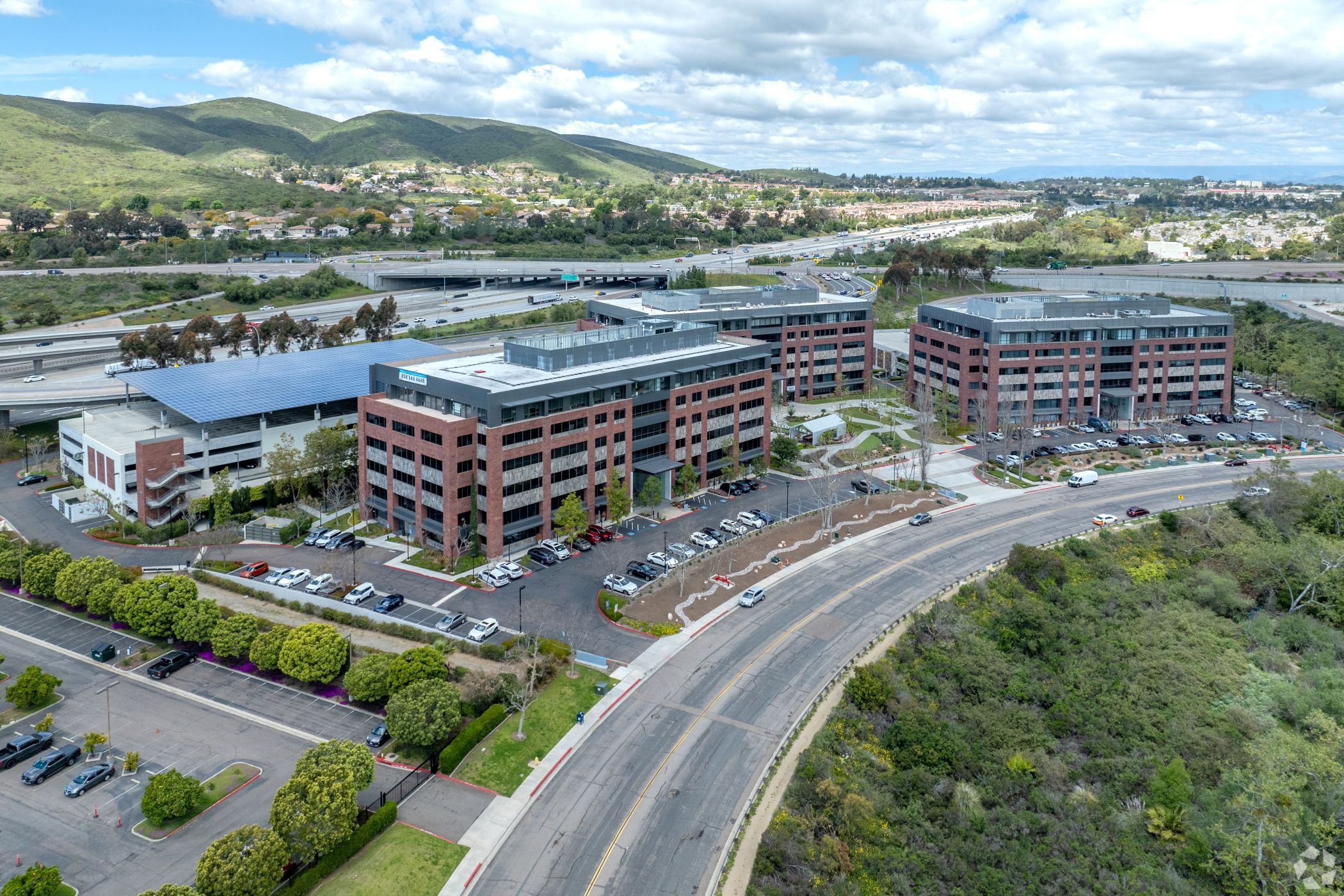
The firm has seen stronger results at its One Paseo development in San Diego, a 23-acre campus where apartments, offices and retail operate as a more cohesive ecosystem.

“Our residential exposure is now limited to One Paseo Living, which we view as a core long-term holding given the significant synergies across the campus,” CEO Angela Aman said on the earnings call.
In more compact, walkable markets such as San Diego or Washington, D.C., mixed-use developments have commanded premium rents and stronger tenant demand.
Los Angeles presents a different challenge, with a more fragmented, car-oriented layout that can dilute the benefits of clustering uses in one location.
“Live-work-play only works when the environment is genuinely walkable and inviting,” said Catherine Yeh, CoStar’s director of market analytics for Los Angeles. “Human-scale streets, active storefronts and high-quality public spaces are what turn a mixed-use project into a place people actually use throughout the day.”
Industry research backs that up: Office space in amenity-rich mixed-use districts can command roughly 30% higher rents and lease faster than traditional buildings, according to a report from JLL, but only when density and connectivity support the model.
For example, Washington, D.C.’s The Wharf — a 3.5 million-square-foot waterfront district completed in phases from 2017 to 2022 — has thrived thanks to a dense, walkable design that blends housing, offices, hotels, retail and public spaces. The project now commands some of D.C.’s highest office and apartment rents and draws huge crowds year-round, including nearly 100,000 people at its annual cherry blossom festival.
“Companies are flocking to vibrant, mixed-use areas with synergies among diverse property types that create a sense of energy and engagement," said Jacob Rowden, senior manager of U.S. office research at JLL, in a report.
Office and apartment renters are prioritizing such mixed-use complexes following the pandemic "and subsequent push and pull of remote work," Rowden added, noting that "lifestyle market nodes represent the office market of the future.”
Strategy pivot
Kilroy’s sale fits into a broader pattern of investors narrowing their focus after years of diversification, with the Los Angeles REIT using the Hollywood exit to double down on its bread and butter: office and life-science properties. Executives have framed the move as capital recycling, shedding assets that no longer align with the company’s core strengths.
That kind of retrenchment is playing out across the REIT universe. W.P. Carey, for example, has moved to spin off or sell its entire office portfolio to concentrate on industrial and warehouse properties, a shift the company said would sharpen earnings and lower its cost of capital.
Peakstone Realty Trust has been selling off its remaining office buildings to become a pure-play industrial REIT, using the proceeds to pay down debt and focus on faster-growing logistics and outdoor storage properties.
Kilroy’s strategy is more selective than absolute. The company says it is not abandoning mixed-use development altogether but will only pursue projects where residential clearly reinforces demand for its offices.
That lens is shaping decisions in San Francisco, where Kilroy has floated multiple redevelopment options including housing and offices for its massive Flower Mart project, a sprawling shuttered wholesale market in the city's artificial intelligence hub of SoMa.
Those scenarios remain under evaluation, with executives stressing that any residential component would move forward only if it meaningfully supported a planned office campus.
Buyer bet
For Advanced Real Estate, the acquisition represents a bet on Hollywood’s long-term fundamentals at a moment when new apartment supply has slowed.
The deal expands the firm’s portfolio to nearly 13,000 units and deepens its footprint in Southern California infill markets.
“With the World Cup and the Olympics coming to Los Angeles, along with movie and television production returning to the region, we feel the future looks bright for Hollywood,” Advanced President Paul Julian said in a statement.

Advanced plans to manage the properties in house, giving it flexibility to adjust leasing and operations as market conditions evolve.
With fewer projects breaking ground and global events set to draw attention to Los Angeles, the firm is betting that constrained supply and rising demand will support rents — even as sellers like Kilroy step back to refocus on what they know best.
For the record
The transaction was brokered by JLL’s national multifamily team, led by Senior Managing Director Blake Rogers, along with Senior Director Dillon Bergum and Managing Directors Alexandra Caniglia and Kip Malo. Financing was arranged by JLL Capital Markets, which secured two separate Freddie Mac loans totaling $141.4 million.
CoStar News National Office Reporter Katie Burke contributed to this story.