
Macerich is betting big on malls by reshaping its portfolio, trading up to higher‑quality centers, refilling vacant anchor space with more dynamic tenants and banking on a renewed embrace of the retail property centers long maligned by Generation Z shoppers.
To lure those consumers born in the late 1990s through the early 2010s, the Santa Monica, California-based real estate investment trust has been one of the most active U.S. mall owners in the past year for doing big deals to reshape and reposition its holdings.
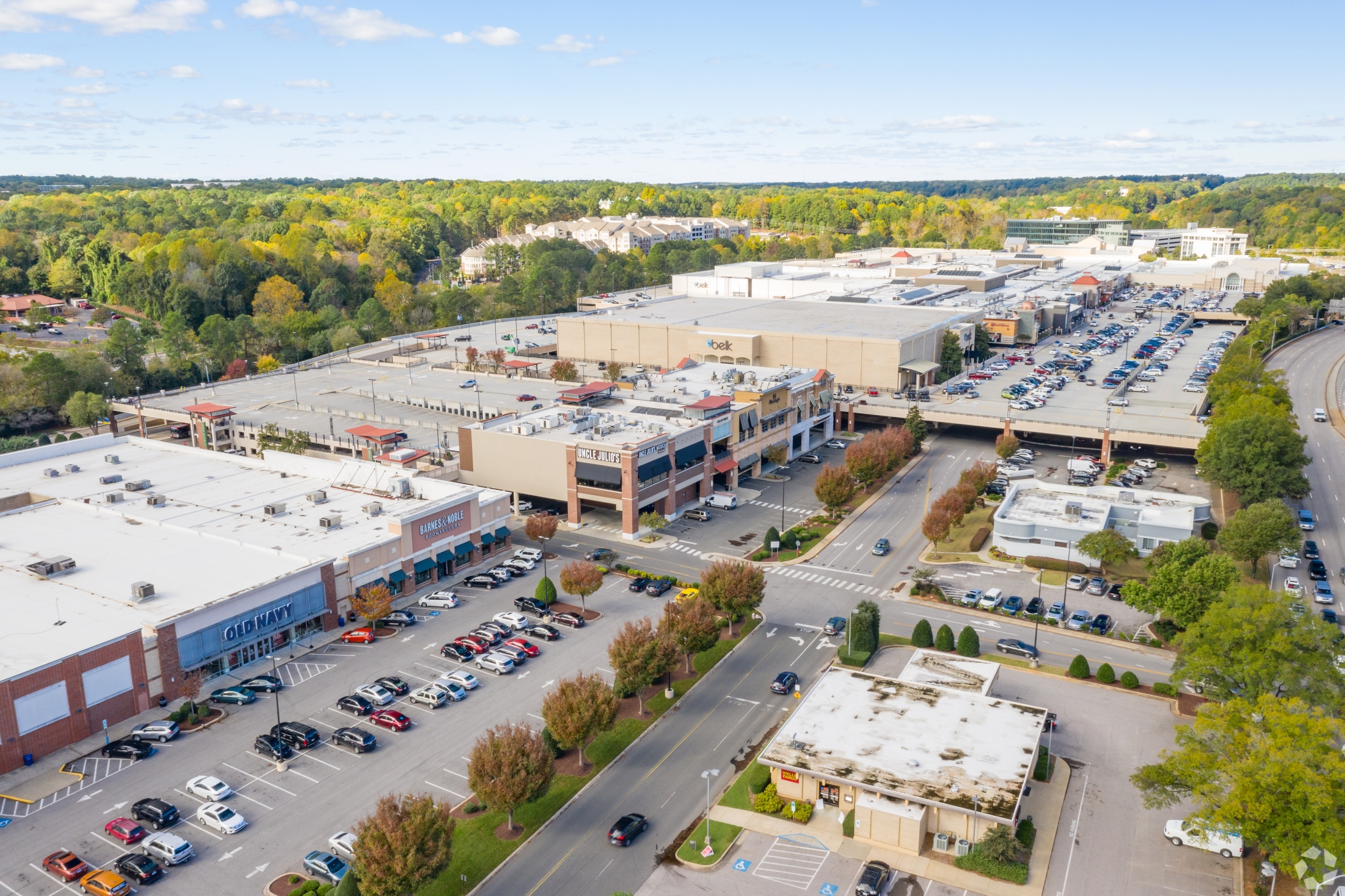
Macerich announced a major acquisition on Wednesday, saying it bought the 1.5-million-square-foot Annapolis Mall for $272 million, paying $260 million for the core property and $12 million for an adjacent 13.1-acre vacant Sears parcel. Less than a year ago, in another big-ticket purchase, the REIT acquired the 1.3-million-square-foot Crabtree Mall in Raleigh, North Carolina, for $290 million.
Macerich's Path Forward plan — with a target date of 2028 — also includes shedding underperforming properties, like selling Lakewood Center, a 2 million-square-foot mall in the Los Angeles area, for $332.1 million in August last year. And the landlord said it's not done with deals.
Even as the national retail landscape shifts, Macerich's prime focus has been on doubling down on a traditional sector, enclosed malls. It's also seeking "transformative" tenants to drive foot traffic as it refreshes its portfolio through selective acquisitions and sales.
Macerich is on an aggressive push to reduce debt and recycle capital by acquiring strong malls in affluent markets and dumping no-growth or slow-growth malls. The game plan is similar to that of CBL Properties, the Chattanooga, Tennessee-based retail REIT that's been selling and buying properties as it streamlines and upgrades its portfolio. The process is similar to one that fellow mall landlord Unibail-Rodamco-Westfield undertook and largely completed in the United States.
There are risks. Macerich is holding steady on the viability of malls even as open-air lifestyle centers and grocery-anchored shopping venues have grown in popularity with both consumers and investors. And the upgrades and new tenants it brings to malls might not generate the sales expected.
Macerich's Path Forward blueprint, which it unveiled two years ago, includes not only filling vacant anchor space with high-demand tenants but also deleveraging its balance sheet; concentrating on its "Fortress" and "Steady Eddy" malls; and actively selling noncore, low-performing properties. This plan is where the recent Maryland purchase fits in.
"We're seeing a real bifurcation in the mall landscape right now — high-quality centers are getting stronger, while underperforming assets are being phased out," Cory Scott, Macerich's executive vice president of asset management, said in an email to CoStar News.
"Annapolis firmly falls into that first category and is well-positioned to evolve from a good center into a great one," he said. "A key driver of this momentum is Gen Z, who are returning to physical retail with a clear preference for experience, discovery and in-person purchasing."
Gen Z seen shopping, socializing
There's been lots of buzz about Gen Z members forsaking e-commerce to flock to their local malls to shop and socialize. Macerich has even formed a committee to study that age group, according to Jack Hsieh, the REIT's president and CEO.
The committee's "focus is on helping us gain insight on how to transform and elevate our centers through winning loyalty of the Gen Z customer without losing the current dominant millennial and Gen Xers that visit our centers," he said Wednesday on the company's first-quarter earnings call.
Hsieh laid out his view of the retail landscape and the future of enclosed malls on that call.

"I've gained more confidence and belief in the resurgence of Class A regional malls and their ability to consolidate trade areas and to become even more relevant to customers and tenants," he told Wall Street analysts.
"The mall industry has had to battle decades of overbuilding, the Amazon effect, anchor-store closures, and major inline tenant consolidation and bankruptcies, the global financial crisis and COVID. It's wreaked havoc on the U.S. mall industry, where only 895 enclosed malls currently remain," he said.
But there's a silver lining, according to Hsieh.
"Tenants have seen a demonstrated improvement in their omni-channel strategy with good physical stores," he said. "With the 236 Class A regional malls today, we have multiple strategies and targets for anchor tenants — numerous inline, international, domestic and experiential tenants that can drive customer traffic to our centers."
Macerich owns roughly 41 million square feet of real estate, primarily interests in 39 retail centers. It acquired the Annapolis Mall from a joint venture that involved a Kildare Partners' fund, Centennial Real Estate Co. and Atlas Hill Real Estate. The group bought the property in August 2024 from URW for $160 million and in 20 months boosted its tenant roster and lease pipeline, which Macerich said attracted it to the property, as well as its location.
"Macerich acquired the Annapolis Mall as part of a strategic move to dominate the retail corridor east of Washington, D.C., which complements Macerich's Tysons Corner Center," retail consultant Rudy Milian said in an email to CoStar News.
The list of new tenants or those that have signed leases but not opened at the Annapolis Mall yet include Dick's House of Sport, opening a 116,000-square-foot store at a former Nordstrom space this summer, Uniqlo, Offline by Aerie, Tesla, Abercrombie & Fitch and Dave & Buster's. And existing tenants, including Lululemon, have decided to expand their presence.
Goal: Fill empty anchor space
"Leasing vacant anchor space is critical to Macerich's transformation strategy," according to Doug Healey, the REIT's senior executive vice president of leasing. The company has commitments to fill 30 of those vacant spaces, Hsieh said, "over 2.9 million square feet that is expected to generate over $750 million in sales."
Macerich offered a number of case studies of its track record in bringing tenants to vacant anchor space. It has been aggressively enlisting Dick's House of Sport — large-format stores that are interactive, letting shoppers try on gear onsite — to fill those empty locations at its malls.
It has commitments from the retailer for 10 spots, according to Hsieh. For example, in the first quarter, it lined up Dick's House of Sport as a tenant for its Los Cerritos Center in California, Healey said. Macerich expects that the retailer coming to the Annapolis Mall will revitalize and spur leasing in the wing where it's located.

"What's really exciting for our team is that 52,000 square feet of prime space ... center court, opposite Uniqlo, which is soon to open, and where Dick's is opening in August," Hsieh said. "We think that's going to give us a lot of opportunity to get some really good merch retailers in that corridor."
Dick's House of Sport recently opened at Freehold Raceway Mall in New Jersey, and "that center has experienced increased traffic and vibrancy in the former vacant Lord & Taylor wing and is enabling us to leverage more leasing throughout the center," according to Hsieh.
Vibrant replacement tenants for anchors "are catalysts to unlock productivity in entire mall wings and drive inline leasing," he said.
The strategy has also worked at Chandler Fashion Center, according to Hsieh. A Scheels sporting-goods-and-entertainment store took over Nordstrom's former space at that mall in late 2023. Since then, the mall's trade area has increased over 40% and overall traffic at the center is up over 20%, Hsieh said.
"Today, not only has the Scheels' wing dramatically [been] elevated, the entire center is experiencing elevated tenancy and transformation," he said.
Macerich is also optimistic about prospects for the Sears site in Annapolis.
"That Sears parcel, we believe, is very valuable," Hsieh said. "There's already a number of anchor discussions that are taking place, and there's definitely residential options as well. We're going to evaluate that pretty carefully as to the best course of action."
The site is "on the most heavily trafficked corner of the property and provides optionality for future retail, mixed-use or alternative development," according to Hsieh.

Property sales underway
So far Macerich has sold about $1.3 billion in properties, representing about two-thirds of its initial disposition target, according to Chief Financial Officer Dan Swanstrom. The REIT expects "to sell or give back $300 million to $400 million of additional noncore assets, outparcels and land by the end of this year," he said on the earnings call.
In a note, Piper Sandler, the multinational investment bank and financial services company, said that there are "many moving pieces that need to come together" for Macerich to achieve the 2028 goal for its strategy, but that effort "is aided by the healthy tenant credit environment and the demand for productive malls."
According to Truist, Macerich intends to complete an investment plan totaling roughly $40 million of leasing capital — incentives to attract new tenants and to make improvements — to maximize the growth potential for Annapolis Mall's net operating income, or NOI, an indicator of a property's profitability by subtracting operating expenses from its total revenue.
The REIT will be seeking out new tenants at the ICSC retail real estate convention later this month in Las Vegas.
"Over the course of three days, we have more than 300 scheduled meetings with 250 different retailers, spanning legacy retailers, international retailers, entertainment and experiential concepts, food and beverage, health and wellness, and emerging brands," Healey said. "We are confident that the activity coming out of this convention will translate into incremental leasing growth, which will continue to strengthen our already robust leasing pipeline."
For the record
West Point Partners advised Annapolis Mall's sellers in the transaction.