
Cleveland Clinic's eye care center is now the site of a different type of procedure, one that involved construction with extreme precision.
Architects at HGA and Bostwick Design Partnership devised a way to connect the original building that houses the Cleveland Clinic's eye care center with a recently completed new structure — a 3-sided glass atrium that serves as the main lobby for both buildings.
The atrium is part of the nonprofit group Cleveland Clinic’s $172 million effort to improve facilities for its medical programs for the treatment of eye diseases and vision disorders. The effort includes the construction of a new 150,000-square-foot facility, called the Jeffrey and Patricia Cole Pavilion that opened last year, and the renovation of the Cole Eye Institute’s original 130,000-square-foot building.
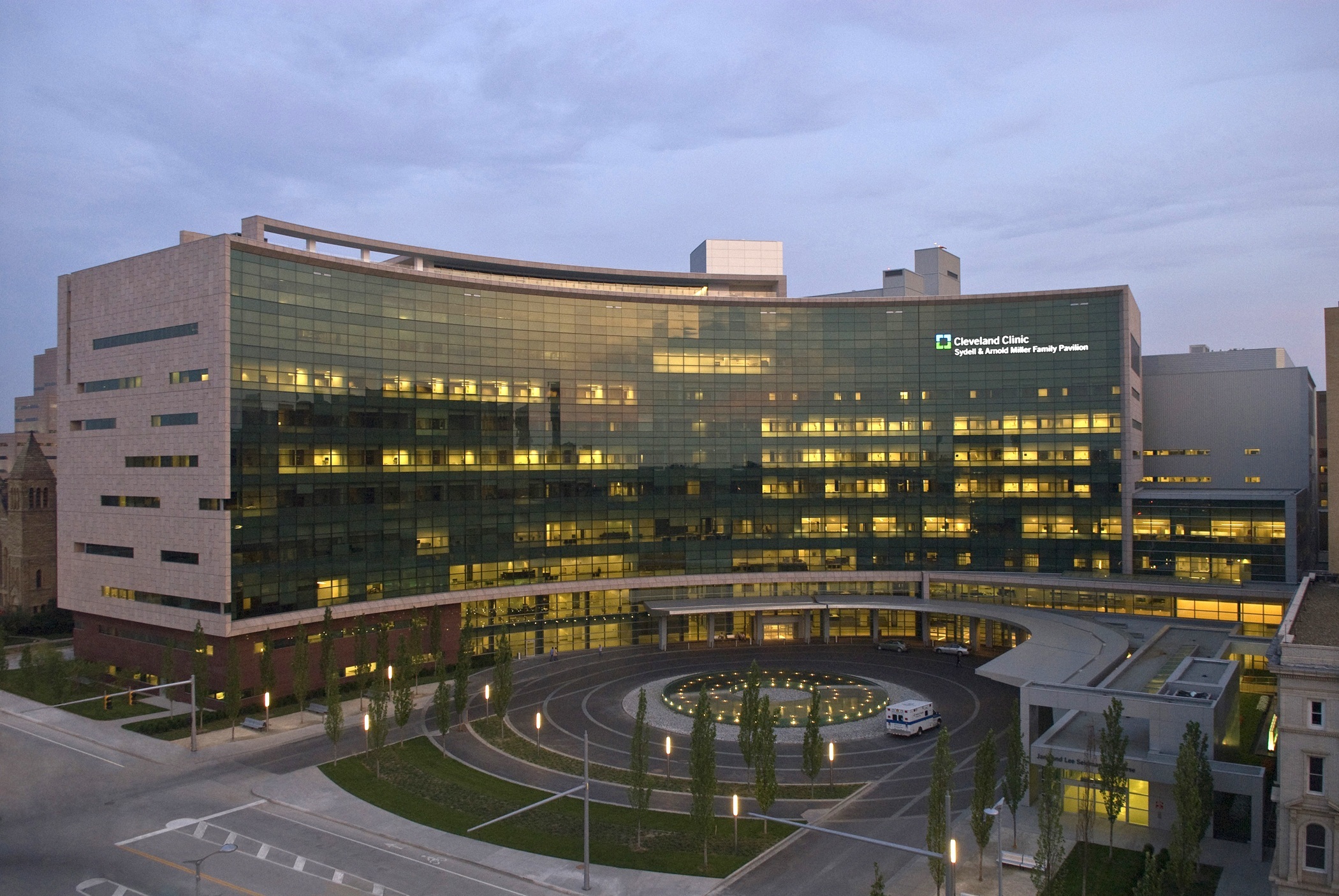
The Cole Eye Institute is located on the Cleveland Clinic’s main campus in the Fairfax district of Cleveland.
Cleveland Clinic leaders wanted the new and renovated buildings to be seamlessly linked. The clinic’s team of architects, HGA and Bostwick, proposed a new structure to connect the two buildings both from a visual standpoint and a practical one. The atrium provides the structural connection and also serves as the main patient lobby.
The extensive use of glass exterior walls helps fill the atrium with natural light, a benefit to patients with vision issues, according to an HGA architect who worked on the project.
“The interplay of light and shadow aids patients with low vision by increasing contrast and minimizing glare, facilitating smoother navigation and improved object recognition,” Bryce Hubertz, a senior project designer at HGA, told Healthcare Design, an online news site.
In addition to a common waiting room, the new and original buildings are connected by bridges that span both sides of the atrium. The bridges link the upper floors of the original building and the new, 4-story pavilion.
Other features of the expansion and renovation include 60 outpatient exam rooms, eight operating rooms, procedure rooms and administrative space, according to the clinic.
The Cleveland Clinic’s main goals for the project were “improved patient flow, shorter wait times, [the ability to use] upgraded technology and equipment, modular spaces for future growth and expanded research integration for advanced diagnostics and treatment,” according to Cleveland-based Bostwick, the architect for the original building.
The Jeffrey and Patricia Cole Pavilion at the Cole Eye Institute was funded in part by a $31.5 million gift from the Coles. The Cole Eye Institute serves about 400,000 patients yearly.
For the record
HGA was design architect and Bostwick was architect of record and interior designer. Whiting-Turner is general contractor.