
The likely impact of a prolonged war between Iran, the United States and Israel is the dominant concern for investors in Europe's three biggest real estate markets, France, Germany and the United Kingdom. But while financial markets and sentiment have already been depressed by the conflict, piecing together the impact on activity so far has been less easy.
CoStar News teams in each country look at the data and talk to industry participants to compare and contrast what is happening.
A review of the first quarter investment figures finds France suffering from a dramatic tail-off in activity while Germany and the United Kingdom have both performed relatively well; the consensus is that the impact of the war is yet to meaningfully feed into decisions. The reasons for this are complicated but there are shared themes emerging. Practitioners in all the countries expect the impact of the war on the global economy and, in particular, financial markets spooked by volatile energy prices to hit activity more clearly in the second quarter. This increases if it becomes clear that there is no end in sight in the near term.
There are also obvious red flags in each country that suggest they are, in separate ways, exposed to the inflationary impact of rising energy prices and to declining sentiment towards real estate. North American investors, for instance, have dramatically reduced investment in the United Kingdom in the first quarter. At the same time there are opportunities in Europe's three largest and most liquid property markets.
France's 'catastrophic' quarter
Investment in commercial real estate fell sharply in France in the first quarter of 2026, reaching only €1.9 billion, according to Immostat data. And while they were impacted to varying degrees, no sector was spared from the collapse: minus 35% for retail, minus 47% for offices in the Paris region, minus 61% for regional offices and minus 63% for logistics. Even residential real estate, excluded from Immostat statistics, declined by minus 38%, a drop felt across all its sub-segments.
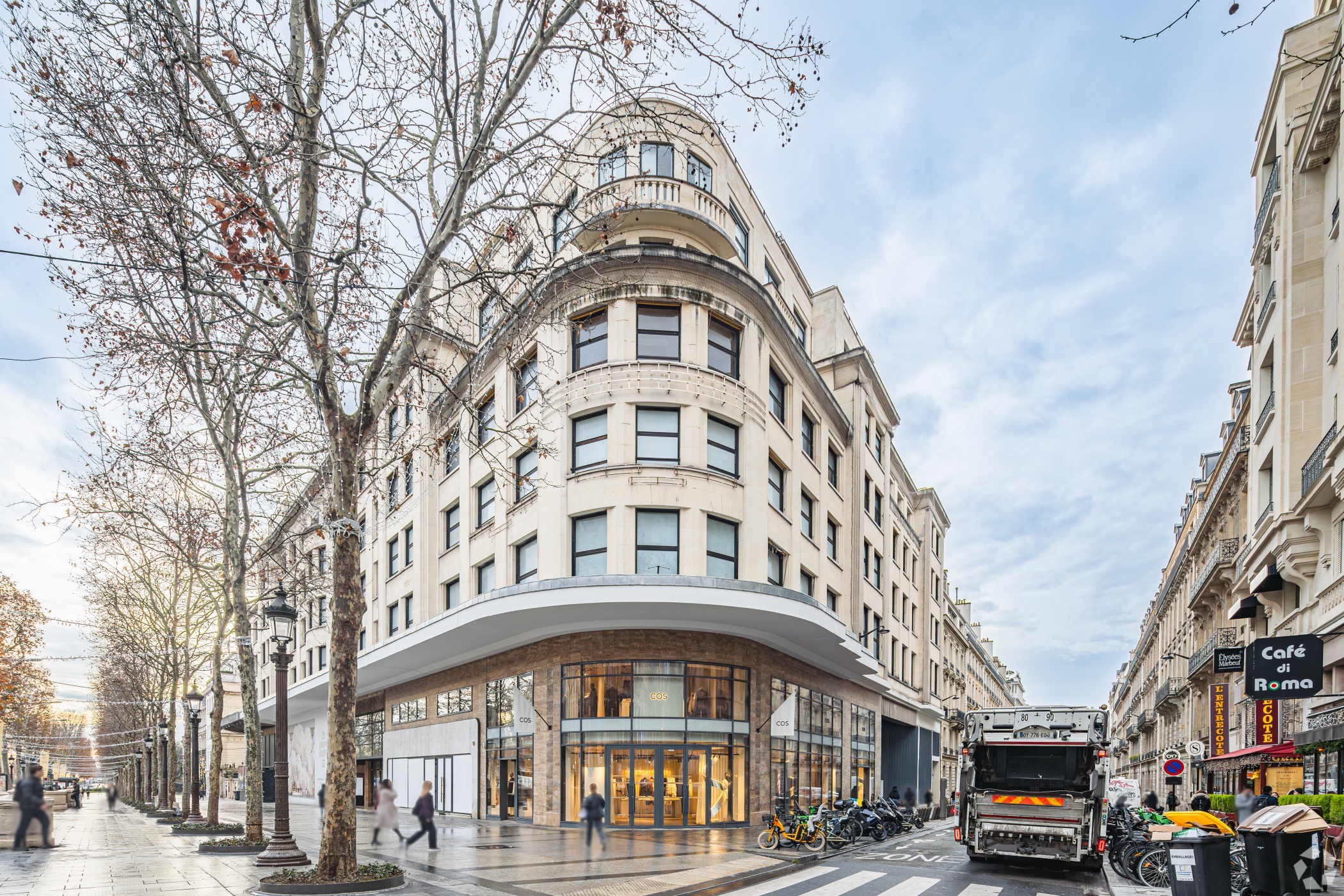
“All asset classes are down,” confirms Nicolas Verdillon, managing director investment properties at CBRE France, before adding: “Not only have volumes been halved compared with last year, the number of transactions has also been halved compared with last year, across all asset classes combined.” The market was thus primarily driven by very large transactions. He continues: “Fifty percent of the volumes invested in Q1 2026 are single-asset transactions of more than €200 million, whereas normally we rather talk about 15 to 20%.” These include, for example, 91 Champs-Élysées, acquired by Mimco and Foncière Renaissance for €320 million from Urssaf; or 83 Marceau, the Paris headquarters of Goldman Sachs sold by SFL to Hines for €242.5 million.
But while it may be easy to point the finger at the Iranian crisis to explain investors’ loss of interest in French real estate, this is not (yet) the primary cause of this downturn. “For a sale to be completed in France, it takes around five to six months between the start of marketing and its conclusion,” says Franck Poizat, co-head of the industrial division at BNP Paribas Real Estate Advisory France.
“From the autumn return and the confidence vote that put an end to the Bayrou government, we very quickly observed a form of wait-and-see attitude on the part of many clients.” In his view, the real estate market therefore paid the price in Q1 2026 “for a catastrophic second half of the year on the political front in France,” and the weak figures are “only the consequence of political, fiscal, and therefore economic uncertainty," in France.
Verdillon also notes a lack of confidence in the dynamics supporting the real estate market among investors: “It is the occupiers who pay the yields and the profitability of investments. However, we are observing a downward consolidation of rental pressure, and even Paris intramuros [central district] is suffering from this phenomenon.” While prime rents still reflect very ambitious levels, “the average rent for good-quality space nevertheless tends to consolidate downwards,” he adds. This inevitably poses a problem for many investors, who hoped to replace the loss of interest rate compression as a value-creation lever with rental growth.
A reckoning to be expected in H2 2026?
When projecting the rest of the year, one can expect a certain rebound in France in the second quarter 2026 given the many large-scale transactions during April. These included: 29–33 Champs-Élysées, acquired by Black Swan Real Estate, Bain Capital and Revcap from Icade for €402 million; the disposal by Covivio to Blue Owl Capital of a 49% stake in a tertiary portfolio of three assets occupied by Thales in Vélizy, which valued the whole at €503 million and the acquisition by DWS of 39 Colisée, in the Paris central business district, for €137 million. Another important deal was the Magnetik office building by Batipart Europe and Sofidy, bought for around €130 million from LaSalle Investment Management and JPMorgan Asset Management, not to mention the sale of Proudreed’s industrial portfolio to funds managed by Blackstone, a transaction that could be signed in the coming weeks, according to sister publication Business Immo's sources.
But the French real estate market, like the rest of the global economy, will not be able to escape the harmful effects of the Iranian conflict. “We had started the year with a more attractive financial environment, with inflation under control and banks rather favourable to refinancing at acceptable costs,” Nicolas Verdillon also suggests. The Iranian crisis, by adding around plus 50 basis points to the swap rate as well as between 40 and 80 basis points to the French 10-year OAT [government bonds], had the effect of recompressing the risk premium at the very moment when the Paris office prime yield seemed to be crystallising between 4.15% and 4.30%.
“The underlying macroeconomic and geopolitical factors suggest that the market could move toward a decline in yields, as the risk premium is falling back to between 45 and 50 basis points on the Paris office market. and it would make sense for it to approach 75 to 100 basis points.”
This is bound to have an impact on real estate valuations, confirms Antoine Grignon, head of capital markets at Knight Frank France: “We have, however, seen a fairly immediate impact of the crisis in the Middle East on the prices quoted today in tenders, at around plus 25 to plus 50 bps, which follows the trend in OAT yields and financing costs.”
As a result, whereas at the beginning of the year, Knight Frank France was forecasting an outcome of around €15.5 billion for commercial real estate investment in France in 2026, which would have represented an increase of 15 to 20%, the British broker projects in a recent study three distinct scenarios, all downward, depending on the evolution of French bonds: €13.4 billion (minua 9%) if the OAT returns to 3.6% during the second half of 2026; €12.8 billion (minus 13%) if it rises to 4.1% at year-end; and €12.6 billion (minus 14%) if it were to reach 4.4%. The effects of this worst-case scenario would be even more significant in 2027, with projected investment volumes of €8.3 billion (minus 34%).
“Investing means having confidence in the future, and it is currently difficult to project oneself into it,” regrets Grignon. “As a result, we are seeing fewer short-term capitals today and more and more investors seeking predictable cash flows.” All are reasons why “more prudent and more selective" describes potential buyers.
Deals are still in progress, but patience will be needed
However, one should not believe that the French real estate market is completely at a standstill, he insists; his team “has rarely had so many mandates, across all asset classes.”
This observation is also shared by Franck Poizat: “We have launched several marketings since the beginning of the year, and the number of offers as well as the valuation levels have been fairly satisfactory. The result is that at the start of this year, the logistics market has been more animated by small and medium-sized deals rather than by large portfolios.” Indeed, several market professionals consulted by Business Immo confirm that capital is available in the French market, following the substantial fundraising efforts carried out by many investors in 2025.
Among the deals that could drive activity in the French real estate market over the rest of the year are: 22 Champs-Élysées, sold by BNP Paribas Asset Management Alts and Norges Bank Investment Management; 277 Saint-Honoré, put up for sale by Goldman Sachs Asset Management and Immobel; or the four residential buildings of the Paris Trocadéro business centre, to be marketed by Blackstone in the coming months.
However, the uncertainty still surrounding the evolution of the Iranian conflict and its potential repercussions on the macroeconomic environment, and therefore on the evolution of real estate valuations, means that all deals “take much longer” to market, says Grignon. And any delays currently incurred could well have a severe impact on investment volumes in the third and fourth quarters of 2026. “In the previous cycle, you could launch a sale in September and hope to sign a preliminary agreement in December," he says. "Even though we are only in April, if an investor does not launch their deal now, they will have little chance of selling it before the end of the year.”
Germany's bounceback slows
The economic outlook in Germany began to slowly improve, starting in the fall of last year as a result of the new federal government’s planned investment of billions, and accordingly the German real estate investment market got off to a solid start in 2026.
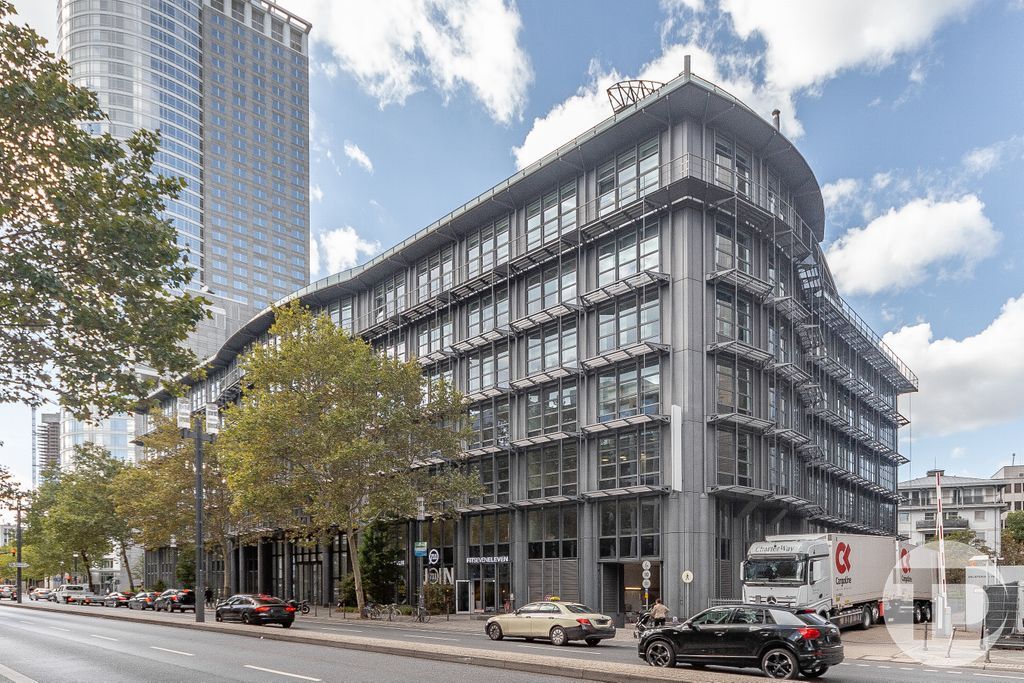
Transaction volume in the first quarter rose to nearly €9 billion, representing a 5% to 20% increase over the previous year’s figure, depending on the calculations of various brokerage firms. Although the acquisition of Cofinimmo by Aedifica alone accounts for nearly 10% of this volume, the respectable result was also driven by a significant increase in the number of transactions to 390.
The outbreak of the Iran war in late February immediately resulted, via energy costs, in a jump in Germany’s inflation rate from 1.9% to 2.7%. The interest rate market also reacted sharply: the five-year swap climbed by 65 basis points to 2.99%, and 10-year mortgage rates rose by 38 basis points to over 4%. Because the yield on 10-year German government bonds temporarily climbed to more than 3%, the highest level since 2011, the risk premium for an office real estate investment relative to German government bonds fell to just 146 basis points, after standing at 210 basis points at the end of 2024 and 159 basis points at the end of 2025, according to JLL’s calculations.
According to real estate brokers, the escalation in the Middle East has not stifled the investment market. BNPPRE reports that “a whole series of transactions” have been signed since the beginning of March. According to JLL, transaction processes that have already been initiated are continuing. Savills has so far identified only isolated cases where investors are pausing their acquisition programs or renegotiating ongoing transactions. However, when asked, the brokers did not provide figures on signings in March.
So even if the war has not yet left clear marks on the investment market, it has certainly dampened the outlook. Economic institutes have more than halved their gross domestic product growth forecasts for this year to about 0.6%, and recent surveys by NordLB or BF-direkt in the real estate sector indicate a slump in sentiment. The Federal Statistical Office has just announced a welcome increase in building permits for apartments in January and February, but the GdW, the Federal Association of German Housing and Real Estate Companies, fears that this trend will grind to a halt due to rising construction costs. Even if the situation in the Middle East were to ease soon, “restoring damaged production facilities for building materials would take at least three months,” according to the association.
For Nabil Mabed, head of value-add real estate at PGIM, the rise in energy costs represents the most significant impact of the war on the sector. On the other hand, he believes the effect on inflation, growth, and interest rates will be less dramatic than it was following the war in Ukraine. "The major difference with the war in Ukraine is that this situation started in an environment in which interest rates were extremely low, where cap rates were extremely low and demand extremely high" after COVID-19.
Adalbert Pokorski, founder and managing director of residential investor Greenwater Capital, fears massive disruptions in supply chains. The consequence, he says, is that project developers will postpone or halt their projects. “Institutional capital will act even more cautiously than it already has. As a result, the pipeline for new residential construction is drying up completely once again,” says Pokorski. “In particular, securing financing for project developments has become more complex, which further hinders the realization of urgently needed construction projects,” adds Sören Gröbel, director of living research at JLL Germany.
Alexander Lackner, chief executive of the investment firm Neworld, acknowledges that expectations for a market recovery have indeed dimmed significantly. On the other hand, growing global uncertainties could shift international investors’ focus back toward Europe, and Germany in particular. “We’re hearing from investors that, by international standards, the German real estate market is perceived as a comparatively stable and reliable location,” says Lackner. “The crisis is actually strengthening Germany’s status as a safe haven. That was different two or three years ago, when it was said that the U.S. or even Asia would overtake Germany as a location,” adds Marco Högl, head of residential capital markets at Savills. This is certainly true in the short term. Should the conflict persist for a longer period, such as the COVID-19 crisis or the war in Ukraine, the implications remain unclear.
The UK: still too soon to know
While investor sentiment has clearly been affected by the conflict in the Middle East, it has come too late to meaningfully hit first-quarter commercial real estate investment activity in the United Kingdom. The clear decline in North American investment, with European investment into the United Kingdom surpassing North American for the first time since 2019, is a red flag though.
Lambert Smith Hampton's United Kingdom Investment Transactions report found that total investment volume in the first quarter reached £10.8 billion. That is well below the record £21.6 billion recorded in the final quarter of 2025, suggesting that an anticipated strong recovery in deals this year has already run out of steam. Nevertheless, the figures were 16% higher than the first quarter last year and only 13% below the five-year quarterly average, and there is no clear evidence as of yet that the war has dampened activity.
LSH points out that although the outbreak of conflict in the Middle East at the end of February unsettled financial markets, transaction activity held up through the remainder of the first quarter. The number of deals above £1 million was broadly in line with average levels and improved as the quarter progressed. March was the quarter’s strongest month for deal count and volume, rising 11% and 31% respectively on February.
In its latest figures Savills says the ongoing conflict in Iran has resulted in investment volumes falling when compared to previous quarters, with "uncertainty rising amongst investors, leading to completion" delays.
Its preliminary United Kingdom first quarter investment turnover is estimated to total £9.8 billion, 41% below the five-year average for the first quarter. It adds: "The heightened caution amongst investors has been reflected in our prime yields, with eight sub-sectors removing their downward arrows from the previous month, albeit there has been no outward prime yield movement recorded."
There is a gathering concern in the market that the damage to global energy infrastructure will increase inflation, in turn hitting consumer prices, capital costs, and investor confidence.
Tom Robinson, director at boutique real estate debt adviser Bircroft Private, says volatility in lending rates is understandably slowing activity. "The three-year SONIA (Sterling Overnight Interest Average) benchmark swap rate lifted 100 basis points immediately on the war beginning. They dropped 25 basis points on 8 April following the brief reopening of the Strait of Hormuz but have since moved back up. It is understandable that people do not want to fix in debt right now given the volatility in swap rates."
There are also indications that the activity is being propped up by factors that will be exposed to the war if it continues for a lengthy period of time.
Activity at the larger end of the market remained strong, with 11 deals above £200 million but most of these deals had been expected in 2025. The largest was Unite Group’s £723 million acquisition of listed student homes developer peer Empiric Student Property. Other major acquisitions were Redical's £270 million purchase of the Merry Hill shopping centre in the West Midlands and Daibiru Corporation's acquisition of a majority stake in the long leasehold interest of Warwick Court in the City of London from Mitsubishi Estate for around £300 million.
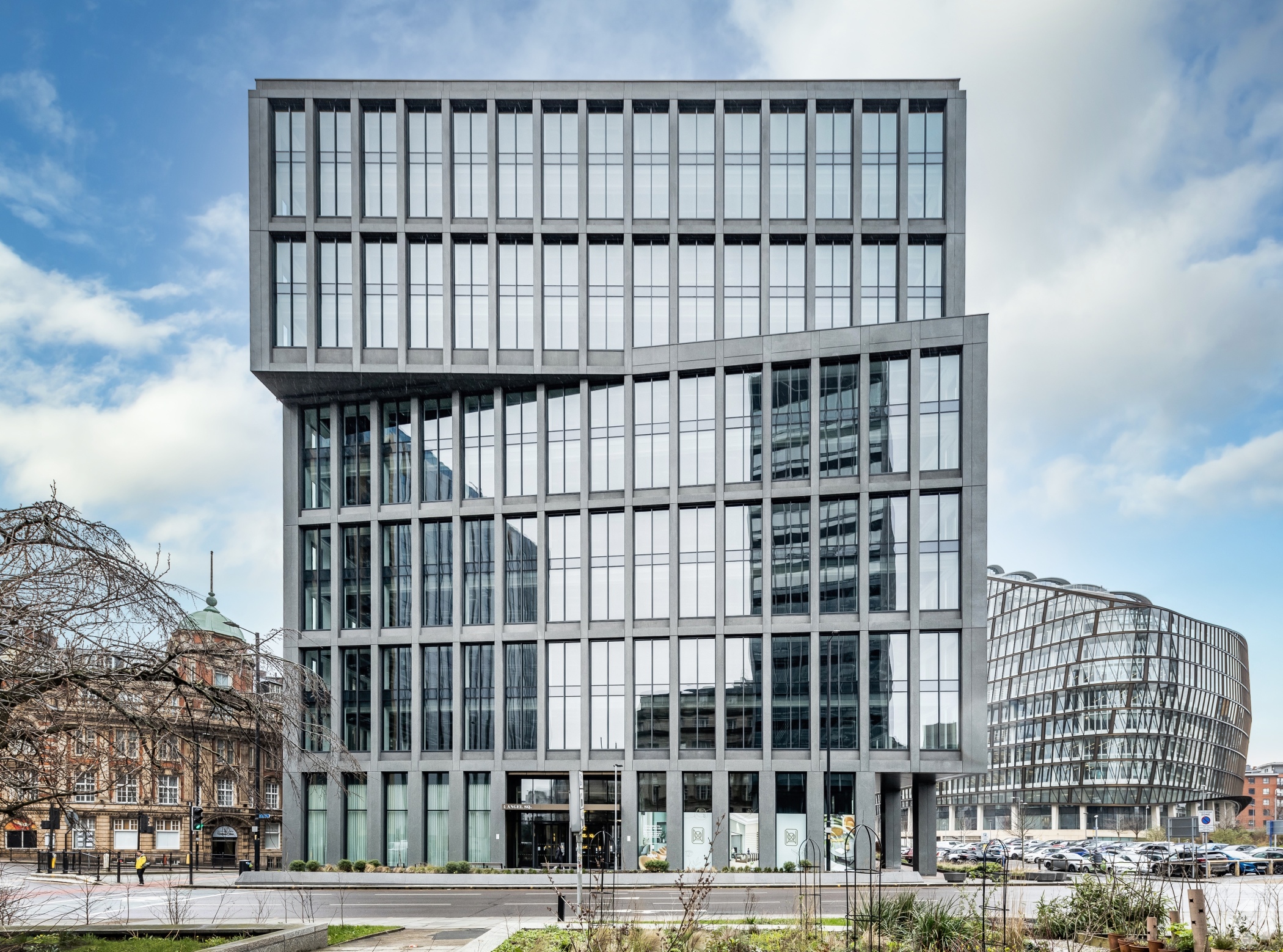
In a positive note, transactions in the UK regions doubled quarter-on-quarter for offices to £612 million, the highest since the final quarter of 2023 helped by several £50 million-plus transactions, the largest being BNY Mellon’s £114 million purchase of 4 Angel Square, Manchester. Shopping centre investment was also the highest for a decade according to Savills, at £418 million transacted, a rebound on the £19 million recorded in the first quarter of 2025.
On the other hand, the typically booming industrial and logistics sector had muted quarters.
Overseas capital continued to be critical, accounting for £5.1 billion, or close to half of total investment, reports LSH. However, North American investment fell to a 10-quarter low of £2 billion, LSH reports, while European investment rose to a six-year high of £2.1 billion, surpassing North American investment for the first time since 2019.
Domestic buying activity, by contrast, fell after a strong final quarter of 2025. Institutional investment totalled £1.1 billion, 29% below average, and the trend towards net selling resumed, with first quarter disposals reaching £1.3 billion. Quoted property company investment came in at £910 million, 18% below average, according to LSH.
The adviser says the conflict has so far only had a small impact on pricing if at all. Its cross-sector average prime yield moved out by eight basis points to 5.63%, reflecting 25 basis points outward movements for both regional offices and budget regional hotels, to 6.75% and 5.50% respectively. The All Property average transaction yield also moved out slightly, by 2 basis points to 6.67%.
By sector, office investment performed best relative to the final quarter of 2025, with total investment of £3.1 billion, up 31% on the same period last year.
Retail investment overall totalled £1.2 billion, which was 32% below trend and 35% lower than the final quarter last year. Industrial and logistics activity weakened following a strong end to 2025, with first-quarter volume of £1.4 billion the lowest since the final quarter of 2023 and 55% below average, LSH reports. This was particularly the case in distribution warehouses, where the £507 million volume was the lowest in almost nine years.
Ezra Nahome, CEO of Lambert Smith Hampton, says that while the outbreak of conflict in the Middle East has clearly affected sentiment, it is still too early to know how events will unfold over the coming weeks and in turn what that will do to commercial real estate activity. "Even if a workable resolution is reached quickly, rising inflation, higher gilt yields and increased finance costs have altered the backdrop for 2026. Few are expecting a major downturn, but talk earlier in the year of yield compression now seems wide of the mark."
Nahome believes renewed uncertainty over pricing will weigh on activity in the second quarter but nevertheless says he is "quietly confident that once stability returns" the market will recover momentum relatively quickly.
He also believes United Kingdom property continues to offer compelling fundamentals. "Recent global instability only reinforces the appeal of secure income-producing assets, while the UK stands to benefit from its position as a global safe haven. At the same time, constrained supply of high-quality space across the market should continue to support rental growth, even if occupier demand softens in a more challenging economic environment.”
And on the critical other part of the equation, occupier demand, there is even less evidence of the war causing a pause in decision making.
According to DTRE, in industrial there was 7.45 million square feet of take up across the United Kingdom, the strongest first quarter since 2022 and 19% up on the pre-COVID boom quarterly average.
Knight Frank data shows that 680,000 square feet of offices was transacted in the first quarter of 2026 in the South East of England for instance, an 1.2% increase on the final quarter of 2025, extending the region’s strongest run of leasing activity since 2019.
David Sleath, chief executive of Segro, the United Kingdom's largest real estate investment trust, says it has had a strong start to 2026, with the Middle East conflict having, so far, had "no discernible effect on our leasing momentum" at its giant industrial real estate portfolio.
He adds: "We remain watchful of the situation and its potential impact on real estate markets."
There has been some evidence of deals falling through or put on ice, for instance the potential acquisition of the Silverburn shopping centre in Glasgow by Landsec, as well as the REIT's talks to sell 123 Victoria Street in London to American investor Sculptor. It is difficult to pin this to the geopolitical conflict or to consider these examples as being worse than can usually be expected.
And other data points to a continued willingness to do deals. Colliers reports that in central London offices £1.9 billion sold in the first quarter, with £1.5 billion forecast for the second quarter still. James Macfarlane, director, London capital markets says March turnover was up 50% month-on-month, and over £1 billion transacted post 28 February, significantly higher than average. "Clearly we are mindful of swap rate volatility and inflation, but deals are clearing [investment committee] and investors don't seem deterred."
CoStar News newsrooms in France, Germany and the United Kingdom contributed to this review.