
Pop Mart, the Chinese company behind the popular Labubu doll and global “blind box” toy craze, leased a full office building in Culver City, California, giving the firm a foothold in one of Los Angeles’ top hubs for creative companies ranging from HBO to Pinterest.
The company signed a deal for the entire 22,000-square-foot creative office building in Culver City’s Hayden Tract, according to CoStar data.
The glass-and-wood building, called Slash, is owned by Hackman Capital Partners. It’s “the kind of product you simply can’t replicate elsewhere, and it aligned with Pop Mart’s vision for what they want to build in Los Angeles,” said Gabe Brown of JLL, which represented landlord Hackman Capital Partners in the lease.
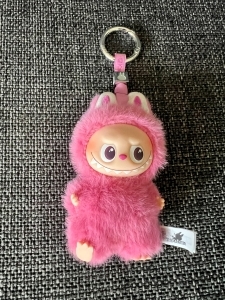
Pop Mart was founded in Beijing in 2010 by Wang Ning as a small boutique selling designer toys and pop-culture merchandise before pivoting exclusively to collectible figurines.
The company launched its U.S. real estate presence with a 2021 pop-up store at South Coast Plaza mall in Costa Mesa, California, before expanding to its first full-scale retail store in 2023 at the American Dream mall in New Jersey. The firm has quickly expanded to California, Texas, Illinois and other major markets. In Los Angeles alone, Pop Mart has multiple locations in high-profile malls, including Westfield Century City and Glendale Galleria.
Brown said the company now bills itself as more than a toy seller to include media content and partnerships as it further expands in the U.S. The new office represents "a new vision for their headquarters presence in Los Angeles," Brown said.
Pop Mart’s primary headquarters remain in Bejing; the company does not operate any other U.S. offices, according to CoStar data.
The lease is a vote of confidence for the greater LA office market, where vacancy hovers around 16%, roughly 200 basis points above the national average; Culver City’s rate is significantly higher at 30%. Hybrid work patterns and pullbacks in tech and entertainment have weighed on leasing, even as premium creative campuses continue to draw interest.
National office demand is recovering to pre-pandemic levels, but that demand is split, with employers favoring modern, well-located properties over outdated ones that lack amenities.
Culver’s creative cluster
Pop Mart is the latest creative brand drawn to Culver City’s location in West LA and history as an entertainment hub. The city is home to dozens of high-profile corporations, including HBO, Amazon, Nike and video game company Scopely.
“This is an example of an innovative company looking at the market, understanding what kind of environment supports their culture and growth, and making a deliberate decision,” Brown said.
Pinterest, the San Francisco-based company that invites users to make digital pinboards reflecting their lives, this year opened its first LA office outpost in Culver City.
Apple has also been active in the neighborhood, assembling and planning a major office campus totaling more than 500,000 square feet to accommodate thousands of employees and a studio for its Apple Music division. Swedish furniture chain Ikea in the past week announced plans to open one of its first U.S. city-center store formats in the former Helms Bakery complex.
“The location is very strategic. You’ve got multiple points of access from both the east and west sides of L.A., proximity to transit, and a critical mass of creative and media companies that have planted flags here over time,” Brown said. “That brand density really matters — it accelerates the evolution of a market.”

Pop Mart will be based in the 90-acre Hayden Tract, once a fading industrial pocket of Culver City that has transformed over decades into an architecturally significant and experimental office hub in Los Angeles County. The Slash building, with its angular glass and cathedral-like interiors, was built in 2021 as part of that transformation.
The Hayden Tract’s story begins in the 1940s as a utilitarian industrial district supporting postwar manufacturing and Culver City’s film economy. By the 1980s, much of it had fallen into disuse before a gradual reinvention led by developers Frederick and Laurie Samitaur Smith together with architect Eric Owen Moss.
The Smiths and Moss transformed aging warehouses into angular, experimental office buildings that attracted media, advertising and design firms looking for something different from traditional high-rises. By the 1990s, the tract had become a dense ecosystem of avant-garde structures that helped redefine creative office in Los Angeles, according to real estate professionals familiar with the area.
“When companies tour Los Angeles, they may see a lot of office product and uninspiring vacant spaces. But when they come through the Hayden Tract, there’s a different story — and they listen,” Brown said.
Blind box empire
Pop Mart popularized the blind-box concept, selling sealed packages that conceal which character is inside, creating scarcity and a treasure-hunt mentality among fans. It created the Labubu figurine as part of a 2019 partnership with artist Kasing Lung; the toys are often used as key chains for purses.

The company went public on the Hong Kong Stock Exchange with a multibillion-dollar valuation in 2020. Its growth has since accelerated internationally, with the United States emerging as a primary expansion target. Pop Mart operates hundreds of global stores and thousands of automated “Roboshop” vending machines, including more than 100 in the U.S.
Executives have signaled the potential for Pop Mart to operate up to 200 locations nationwide over the next decade.
But “they’re not just a toy company,” Brown said. “They’re a multifaceted technology and entertainment company with ambitions that go well beyond retail.”
For the record
In addition to JLL’s Brown, Josh Bernstein and Alexa Delahooke of Cushman & Wakefield represented the landlord in the deal. Hayden Clegg and Suzanne Lee of Newmark represented Pop Mart.