
Italy once again took the top tourism spot in Europe this summer even as hotel performance waned with the conclusion of the busy season.
In July, Italian airport passenger volume achieved the best July on record, with a 7% year-on-year increase in traffic to 25.5 million visitors, according to the Associazione Italiana Gestori Aeroporti, or Association of Italian Airports.
Overnight hotel stays in Italy are at their peak, said Manfredi Paluzzi Monti, senior consultant at Rimini-based tourism and hospitality analytics firm Thrends, which hosts the Italian Hospitality Investment Conference this week in Milan.
Italy is “at the top of Europe for 2025 with more than 535 million roomnights,” he said, referring to data from Eurostat that counts both hotel and nonhotel accommodations.
In 2025, Italy's hotels reported demand equivalent to 535.46 million roomnights, ahead of beating Spain (512.89 million) and France (471.64 million), Paluzzi said.
But Italy's luxury hotels are spearheading the charge, he added.
“We noticed that in the last few years, beyond the main four cities of Rome, Milan, Venice and Florence, some secondary cities are growing faster, such as Verona, Turin and Bologna, as well as the lakes, and Lake Garda more than Lake Como,” he said.
Hotel supply in Italy is in line with most of Europe’s major markets, with Milan, Rome and Sicily projected to see a 3% increase in hotel room numbers if all current development projects in the pipeline are completed, according to CoStar hospitality data. Rome has 1,271 hotel rooms in its pipeline; Milan has 1,121, and Sicily has 1,107, according to CoStar data. Turin, Italy, has 1,074 hotel rooms in its pipeline, which leads Italy for the highest number of rooms in development as a percentage of its existing supply at 9%.
Italian hotel performance has remained resilient with growth driven more by rate than occupancy, said Rory McDonald, associate account director, hospitality data and benchmarking for South Europe at STR, CoStar’s hotel analytics division.
“This is not only a luxury story,” he said, despite that segment recording the strongest revenue per available room growth at 13.6%, supported by a 14.3% increase in average daily rate.
RevPAR grew across every other hotel class segment in Italy, with upper upscale and upscale increasing by approximately 8.6%, upper midscale and economy increasing by approximately 4.9% and midscale increasing rising by approximately 3.3%.
In 2025, Milan hotels reported a 2.2% year-over-year occupancy to 73%, with average daily rate up 2% to €213.45 ($240.90) and RevPAR up 4.3% to €155.91, according to CoStar hospitality data.
Hotels in Italy’s capital saw higher increases in ADR and RevPAR a year ago, despite Rome's occupancy in the same period falling 0.2% to 72.8%. Full-year 2025 ADR in Rome increased 3.1% to €243.53 and RevPAR increased 2.9% to €177.29.
Milanese slopes
Milan’s August 2026 numbers were always likely to see declines year over year due to the city hosting the Winter Olympics in February. For the month, hotel occupancy in Milan fell 7.5% year over year to 57.9% and RevPAR declined 7.1% to €98.81, according to CoStar data. ADR in that period saw a slight uptick, up 0.4% to €170.74.
Rome, meanwhile, reported hotel occupancy decreased 5% year over year to 65.1% in August. RevPAR dropped 4.8% to €134.80 while ADR rose just 0.2% to €206.98.
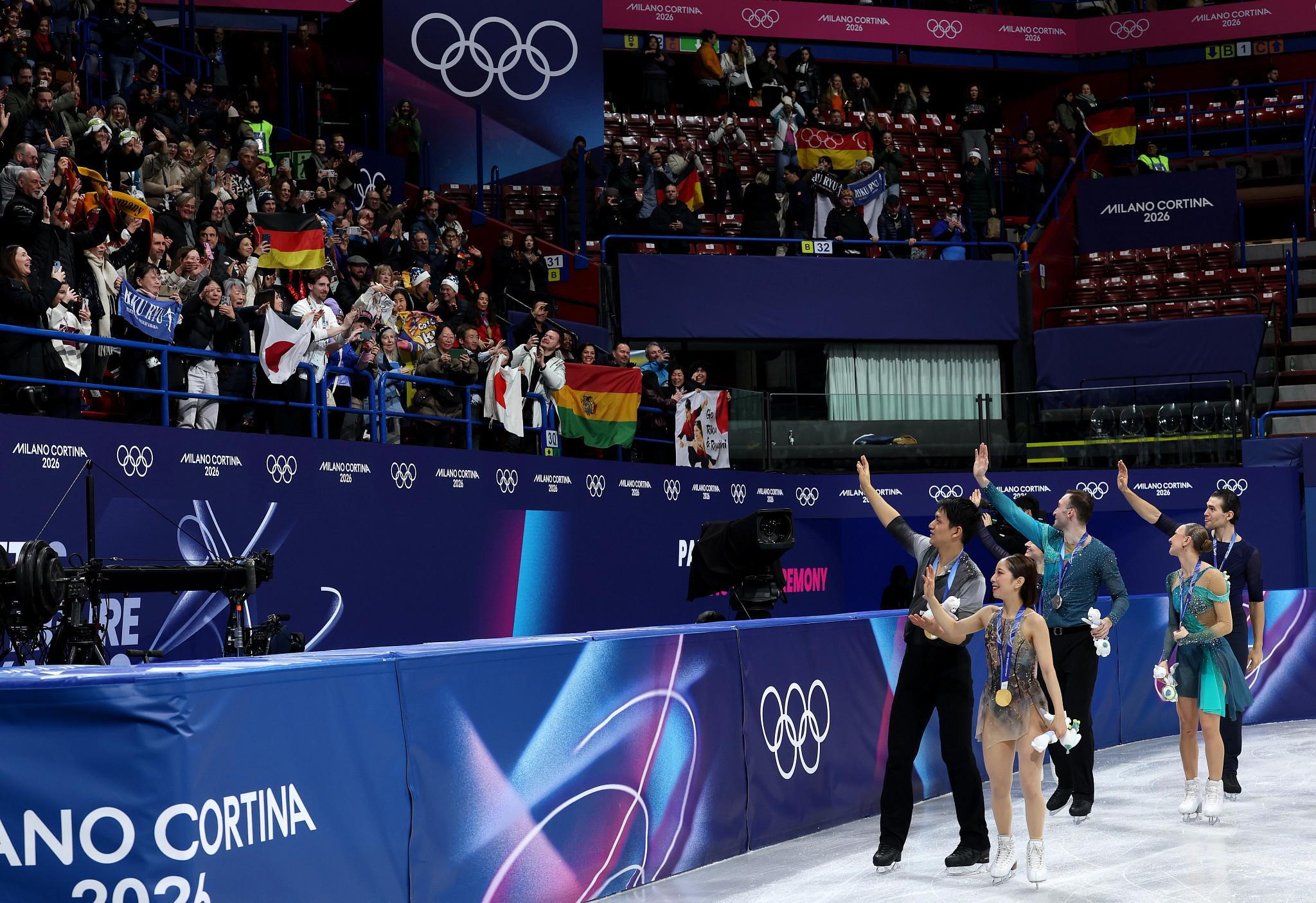
McDonald agreed the Milano Cortina Winter Olympics provided a major boost earlier, particularly to occupancy and pricing during February.
U.S. travelers have continued to take international trips to Italy, although maybe not to Rome in August.
“Rome’s occupancy in August 2026 was below both 2024 and 2025 for almost the entire month. The biggest difference came at the start. On Aug. 1, occupancy was 69.4% in 2026. It was 78.4% in 2024, and 75% in 2025,” he said.
The poor performance could be an indicator of slowing demand as the summer travel season winds down, McDonald added.
“Rome’s year-to-date occupancy was slightly softer, down 1.3%, but 3% ADR growth kept RevPAR positive at 1.7%,” he said. “August was notably subdued, with occupancy running below both 2024 and 2025 throughout the month, suggesting that Rome continues to face a pronounced summer slowdown despite its broader pricing resilience.”
Hotel demand and rate growth are growing beyond Italy’s major cities, however.
“Leisure destinations continue to command the highest rates, led by Sardinia at €391, Campania at €374 and Tuscany at €327,” McDonald said. “There were also some notable occupancy-growth surprises, particularly Italy Central at 8.4%, Mestre and Venice at 5.7% and Turin at 3.6%.”
Italy's hotel deals landscape
Italy remains a constant hub for hotel investment activity. The first six months of 2026 saw 30 hotel transactions in Italy with a combined value of €794.5 million, said Jacopo Testa, Thrends’ senior consultant.
“Activity was lower than in [the first half of] 2025 but the average ticket remained high at €26.5 million, with capital increasingly concentrated on larger, higher-quality assets,” Testa said.
Hotel investors that show interest in Italy are clearly focused on premium assets, Testa said. In the first six months of this year, upscale, upper-upscale and luxury hotels represented around 90% of the number of transactions.
Operating hotels remain the core of the market, although conversion and repositioning opportunities continue to attract significant interest, particularly in strong locations, he said.
On the sell side, there was no single seller profile, Testa said.
“We are still seeing many single-asset transactions involving private or family ownership, particularly in leisure destinations and secondary markets, alongside disposals by funds and institutional owners. Large portfolios are less common,” he said.
One notable transaction in the first half of the year was Covivio's €217 million acquisition of four hotels from Invest Hospitality.
“That was the largest transaction in [the first half of 2026]. The top 10 transactions alone represented around 73% of total H1 investment volume, showing how concentrated the market has become,” Testa said.
Independent hotels — some acquired with a view to renovation, repositioning and subsequent branding — still account for the majority of transactions by number, Testa said. But branded hotels attract more capital: Independents represented 59% of deals, while branded hotels accounted for 64% of transacted volume.
But hotel investors active in Italy haven't branched out much from Milan and Rome, Testa said.
“Lombardy [Milan's province] accounted for 40.9% of H1 volume and Lazio [Rome's province] 28.3%, but investors are also looking selectively at established leisure destinations,” Testa said. “More recently, the Lake Como Edition transaction at €230 million, [which is] another strong example of the depth of demand for trophy leisure assets.”