
President Donald Trump recently issued an executive order directing the reclassification of marijuana as a less dangerous drug. The move could be a first step toward attracting new investments with wide-ranging effects in real estate and the broader U.S. economy.
Cannabis companies and trade groups hailed the decision as one of the most meaningful drug policy changes in decades, but reactions were mixed as to whether it would lead to a sweeping transformation of what is a tightly regulated industry with rules that vary from state to state.
Still, Trump’s order might eventually help break down barriers in lending, real estate zoning and property leasing, according to professionals. The most immediate positive effect for legalized cannabis sellers could be a significant decrease in taxes, they said.
That alone could add billions of dollars in profits annually. Industry analysts have widely cited high taxes as a significant drag on growth in the legal cannabis sector.
"I do think this is monumental and will lead to loosening of certain restrictions around cannabis businesses," said lawyer Brian Vicente, founding partner at Vicente, a Colorado law firm specializing in cannabis law. "It will lead to interest in new funding coming in from even traditional institutions like banks or folks who have been more hesitant to touch this."
His firm worked on the reclassification push with the Biden and Trump administrations.
"I think there'll be a bit of a real estate boom," Vicente said. "I do think we'll have landlords more willing to lease now that the federal government has said, 'Hey, there's medical value here.'"
Cresco Labs and other retailers such as Curaleaf and Trulieve have opened thousands of dispensaries across the country, establishing the image of the legalized marijuana shop with a modern look and consultants to provide guidance or personalized recommendations to customers.
Executive order
Earlier this month, Trump directed Attorney General Pam Bondi to expedite switching marijuana from a Schedule I drug to Schedule III. That moves marijuana out of the grouping it shared with narcotics such as heroin and into the same category as ketamine and anabolic steroids.
Schedule III drugs are considered to have accepted medical uses, meaning the change could open the door to new research and use in treatment of medical conditions.
But Trump's order does not federally legalize marijuana, and in announcing the rescheduling he spoke against the recreational use of marijuana while commenting on potential medical uses. The legality issue has led banks to resist providing basic financial services to state-authorized cannabis retailers that often only accept cash.
"People shouldn't come away from this thinking it's legal federally, and this doesn't allow interstate commerce," said industry lawyer Vince Sliwoski, managing partner at Harris Sliwoski.
"In reality, some states will be easier operating environments, as they are today," said Sliwoski, who is based in Portland, Oregon. "It's still going to be a state-by-state game, but now the margins will be better."

Chicago-based Cresco lauded the Trump administration's action.
"For the estimated 450,000 people working in the regulated cannabis industry, rescheduling is the first domino to fall, paving the way for cannabis to be normalized, respected and finally treated like any other U.S. industry," Cresco CEO Charlie Bachtell said in a statement.
"It will remove cannabis companies’ unfair tax burden, allowing operators to reinvest in new infrastructure and job growth in the communities we serve," Bachtell said. "It also lays essential groundwork for progress on banking reform and access to U.S. capital markets, critical steps toward aligning federal policy with the scale and sophistication of this industry."
Real estate deals
More guidance would be needed from the federal Justice and Treasury departments for major lenders to consider changing their policies, which in turn could simplify real estate deals, Sliwoski said
Because lenders are cautious not to run afoul of federal law, cannabis companies long have struggled to sign retail leases or even office headquarters deals with landlords that have loans on their buildings from traditional banks.
"There's no direct benefit from being on Schedule III from a commercial lending perspective," Sliwoski said. "If we get helpful guidance from the Treasury Department on how marijuana companies can work with institutions, that could make a big difference for real estate lending because banks would be in the game.
"Until marijuana gets off schedule, banks are going to be circumspect at the very least. There would need to be very specific guidance for large financial institutions to be involved."
Moving marijuana to Schedule III could lead to some relaxing of local zoning regulations regarding dispensaries, Vicente said. For example, some municipalities have tight restrictions on where cannabis dispensaries can be located, like having to be a certain distance from schools and churches.
Vicente said that "with the lessening of the federal restriction, we could see a lot of landlords looking at this through a different lens," and now considering deals with cannabis dispensaries.
Tax implications
One immediate effect of rescheduling is expected to be massive tax savings for state-approved dispensary operators.
The reclassification would nullify Section 280E, a statute of U.S. tax code that prohibits cannabis sellers from deducting most ordinary business expenses — such as rent, payroll and utilities — meaning they pay 70% or more in taxes compared with the standard 21% corporate rate.
A study by Whitney Economics, a cannabis industry consulting firm, found cannabis operators paid $2.3 billion in excess federal taxes in 2024 compared with ordinary businesses. Prior to Trump's order, the Section 280E tax structure was said to keep many businesses marginally profitable or unprofitable.
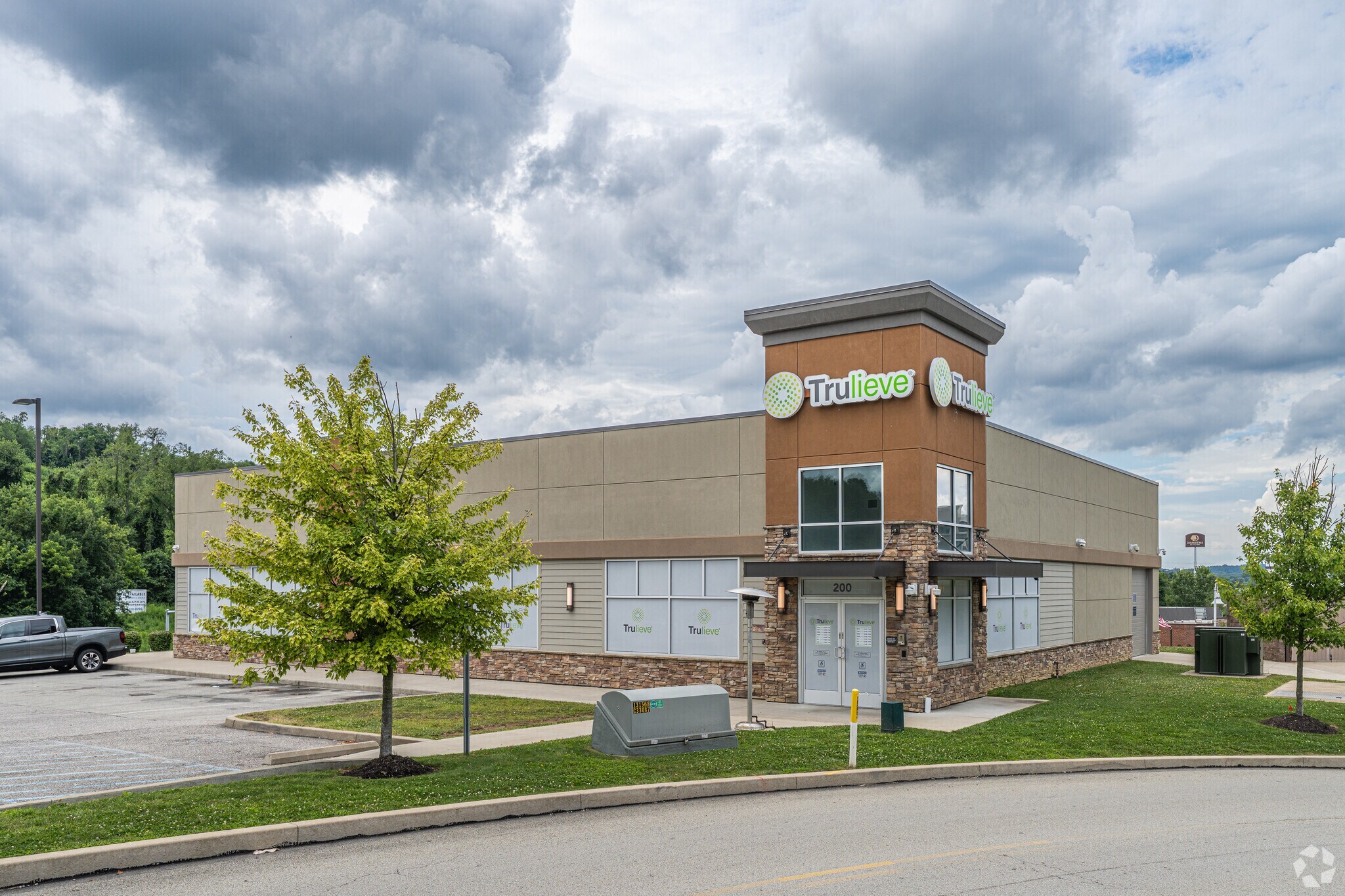
Tallahassee, Florida-based Trulieve has been in a high-profile dispute with the IRS over its Section 280E liabilities. The company currently operates 232 retail dispensaries and has over 4 million square feet of cultivation and processing capacity in the United States.
"Reclassification of marijuana to Schedule III does not legalize marijuana, but it is an important first step in achieving practical common sense cannabis reform," the company said. "Moving marijuana to Schedule III opens the door for more robust research of medical marijuana, removes the punitive tax burden imposed by Section 280E of the tax code and retains flexibility for law enforcement to target and punish illicit operators."
In its statement, Trulieve said that Section 280E was implemented to prohibit drug traffickers selling Schedule I or Schedule II substances from taking tax deductions for ordinary business expenses.
"The adoption of Section 280E preceded state legal marijuana programs and thus did not explicitly differentiate between drug traffickers such as foreign cartels and licensed operators subject to strict oversight by state regulators," Trulieve said. "By definition, Section 280E does not apply to Schedule III substances. Removing the 280E tax burden effectively supports state legal operators who provide patients and adults tested, labeled and age-gated cannabis products."
Trulieve has publicly challenged the legality of Section 280E and has not paid taxes based on its higher rate, thereby receiving tax refunds the IRS is challenging. It remains to be seen if the reclassification will be applied retroactively, meaning the government would not be able to claw back past disputed tax refunds to Trulieve.
Trulieve didn't respond to an email from CoStar News seeking comment.
Industry reactions
The National Cannabis Industry Association said it took part in the Drug Enforcement Administration's public hearings on rescheduling earlier this year "where we emphasized the importance of supporting state-licensed cannabis programs and the small businesses that form the backbone of this industry, which employs hundreds of thousands of workers and contributes billions of dollars to the economy."
According to the trade group, "Moving cannabis to Schedule III will finally lift the crushing burden of [Section] 280E, allowing operators to reinvest in their employees, strengthen compliance and allow them to continue delivering safe, regulated products to consumers."

Stamford, Connecticut-based Curaleaf called the Trump administration's action the most impactful federal cannabis reform of the past 50 years. As of August, Curaleaf had 153 U.S. retail locations in 17 states.
"Moving the plant from Schedule I to Schedule III acknowledges what has been known for thousands of years, that the cannabis plant has medicinal properties," Boris Jordan, Curaleaf's chairman and CEO, said in a statement. "This policy shift by the United States government sets a precedent for how cannabis should be viewed globally."
Rescheduling cannabis "is a meaningful step toward destigmatizing the plant by opening avenues to federally funded clinical research, supporting veterans, expanding patient access and more," according to Curaleaf. "It also eliminates onerous tax penalties and creates opportunities for expanded investment into state programs that will create jobs and tax revenue for local communities."
Verano Holdings, a Chicago-based cannabis company, said the rescheduling will pave the way for a potential shift in medical research, banking and taxes relating to marijuana.
With the action, the industry will be able "to finally reach its full potential by serving patients, creating jobs, unlocking economic growth and reversing decades of harmful prohibitionist policies," Verano founder and CEO George Archos said in a statement.