SAN FRANCISCO—A $210-million investment fund that closed in January has KHP Capital Partners ready to further expand its portfolio of boutique and lifestyle hotels.
|

Mike Depatie, KHP |
“We’re looking to place it in the 24 months; however, we do have a longer period of time to place if needed,” said Mike Depatie, KHP’s managing partner, during a phone interview. “We’re looking at major gateway markets, select secondary markets and major resort markets.”
The KHP IV fund, which was generated from institutional investors and each of KHP’s management team members, is the latest step for the firm formed after InterContinental Hotels Group acquired Kimpton Hotels & Restaurants. Depatie was the former CEO at Kimpton before the acquisition was finalized in January 2015. While there, he spearheaded the raising of more than $700 million through four funds. The funds and investments that had not been sold followed Depatie to KHP when the Kimpton acquisition was completed.
The funds Kimpton started as far back as the 1990s have provided a 20% internal rate of return over the years, Depatie said.
KHP’s operating model
The San Francisco-based real estate private equity firm has 19 properties in its portfolio. It pursues a controlling equity position in its acquisitions and targets investments of between $10 million and $40 million, Depatie said. KHP’s playbook includes leverage of up to 65% for its acquisitions.
Depatie is one of three managing partners at KHP—Joe Long and Ben Rowe are the others.
There is no urgency to make immediate acquisitions as a new group of hotels could come up for sale as the economic environment slows, according to Depatie. Timing and the hotel’s status are important elements for KHP.
“We’re certainly later in the cycle,” Depatie said. “We’re value-add investors in that we buy something that’s got something broken about it, put capital in and substantial change it to provide long-term financial returns. We want good location and supply characteristics, and good value compared to replacement costs.”
The Kimpton, Thompson and Viceroy brands are of particular interest to KHP—as are some soft brands, including Hyatt Hotels Corporation’s new Unbound Collection, he said.
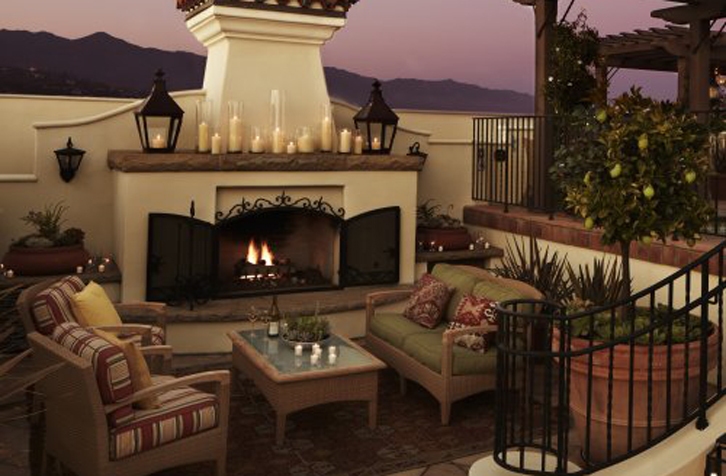
The Spanish-style Canary Hotel in Santa Barbara, California, is one of 19 hotels in KHP Capital Partners’ portfolio. (Photo: KHP Capital Partners)
KHP acts as a one-stop shop for its acquisitions in that it buys an asset, engages contractors to do the repositioning work as necessary, hires designers, and then hires the third-party managers or brand to operate it.
“We do entertain brand managers, but our initial thought is that’s not likely where brands excel,” Depatie said.
The third-party management angle is something the KHP team had to learn after the sale of Kimpton to IHG because Kimpton typically managed its own assets.
“We’re kind of new at hiring third-party managers, but we know who is good and we’ve done due diligence on five or six of them,” Depatie said. “Once you’re not in brand business anymore all you’re really concerned about is financial performance.”
The idea behind repositioning assets is to create a special place where people want to eat and sleep that ultimately provides long-term financial returns, Depatie said.
“We’re going to be a little broader in our thinking than some managers … we’re not quarter to quarter or week to week,” Depatie said.
Moving forward
The company eventually will start raising another fund, Depatie said.
“We’re always raising the next fund by doing well in the current fund,” Depatie said. “When you get to 65% to 70% of your fund invested then you go to raise the next fund.
“Investors are betting on the record that we’ve made money for them in different cycles and they’re betting on the boutique niche we’re in,” he added. “There’s certainly demand for this kind of product—that’s why everyone wants to get into it. It’s still the early days in terms of how big this segment is going to be.”
While Kimpton was an independent company and brand, it was the largest developer of adaptive reuse projects, according to Depatie. It’s a skill that hasn’t been forgotten as KHP brought those specialists with it when Kimpton became a part of IHG. Office buildings, department stores and warehouses are primary targets for such projects, Depatie said.
For example, Depatie cited The Kimpton Gray Hotel, a property being developed in Chicago in an office building that was built in 1894.
“We love those kinds of opportunities, but they’re hard to find,” he said.
KHP will consider selective new-development projects, such as its current projects in Hollywood and West Hollywood and an addition of a tower at its South Beach hotel.