
A wave of major commercial real estate deals are incorporating financing that lets owners spread energy conservation costs across long-term property tax payments, a practice that is gaining acceptance from more state governments across the country.
Developers, lenders and local elected officials are seizing on commercial property assessed clean energy financing, known as C-PACE, thrusting it into the heart of U.S. commercial real estate. They say the tool has moved from niche alternative to standard practice in a convergence that rarely happens quickly in commercial real estate finance.
C-PACE lets commercial property owners finance energy efficiency, renewable energy, water conservation and resiliency improvements in a fixed-rate assessment paid through taxes rather than the borrower's balance sheet. Financing is often priced at about the 10-year Treasury rate plus 3%, with repayment spanning up to 30 years and transferring in a property sale, eliminating refinancing risk for lenders and cutting upfront costs for owners.
Legislation enabling C-PACE financing is now active in 40 states plus Washington, D.C., with Georgia and New Jersey among the latest to launch. Efforts are also underway in Arizona to enable the financing. That's according to PACENation, a nonprofit organization supporting the funding arrangement nationwide.
"In 2025, C-PACE shifted from niche to mainstream," Rafi Golberstein, CEO and founder of PACE Loan Group, one of the nation's first direct C-PACE lenders, told CoStar News. "Originations grew significantly, reaching a record $3.5 billion by most industry estimates, as awareness expanded among owners, lenders, and institutional investors. Deal sizes increased materially, with financing sizes frequently exceeding $100 million."
Other industry professionals contacted by CoStar News estimated 2025 C-PACE lending volume at even higher levels.
The numbers reflect a tool that has outgrown its origins in the municipal or state financing of solar panels and energy retrofits to become useful for backing real estate developments more broadly. Deals now span resorts, senior housing, hotels, office conversions, ground-up luxury residential projects and data centers — a range that would have been unthinkable for C-PACE a decade ago.
How C-PACE works
The capital the program generates is cheaper than other forms of financing that carry greater risk for investors but offer higher returns, such as a combination of debt and equity or preferred equity. C-PACE offers lower fixed interest rates, ranging from 5% to 8% compared to 10% to 14% for riskier financing that typically requires bringing in equity partners, according to professional services firm Citrin Cooperman.
Lower interest rates, combined with the need for less equity, help lower the overall weighted average cost of capital, according to Olivia Lueckemeyer, a director at Lone Star PACE, the Texas statewide program administrator.
The increased adoption of C-PACE isn't universal. Lueckemeyer noted that year-over-year transaction volume in Texas was slightly muted, attributing the slowdown to a cautious approach among developers navigating monetary policy uncertainty, geopolitical concerns and questions about the impact of tariffs on construction costs.
"The combination of these factors kept many in a wait-and-see mode, which delayed the closing of several deals," Lueckemeyer said.
Still, Eric Alini, CEO of the CounterpointeSRE affiliated with MassMutual that deals with C-PACE, framed the structural advantage plainly: "For building owners, C-PACE delivers long-term capital priced lower than mortgages or construction loans. By pairing with a construction mortgage, property developers are able to reduce the overall cost of capital on projects compared to a construction-only" financing arrangement.

Filling the gap when senior debt falls short
C-PACE commands attention because it solves one of commercial real estate's most persistent problems: how to fund large-scale capital improvements when senior debt is constrained and equity is expensive. When interest rates are elevated for a sustained period, the program has filled financial gaps that have derailed otherwise viable projects.
"With long-term rates elevated and banks hesitant in lending for construction and transitional assets, borrowers need reliable alternative capital," said Jared Schlosser, head of originations and C-PACE for Peachtree Group. "C-PACE offers flexible structuring that aligns with business plans, and that versatility is driving demand."
In Las Vegas, Peachtree closed a $176.5 million retroactive C-PACE loan for Dreamscape Cos.' recently renovated 2,520-room Rio Hotel and Casino — the largest credit transaction in Peachtree's history and one of the largest C-PACE deals ever completed nationally.
The deal "reflects both the growing acceptance of C-PACE and its ability to solve complex capital stack challenges in today's market," Schlosser said.
Golberstein described property financial restructurings, or recapitalizations, as one of the most consequential emerging use cases.
"Owners are using it to restructure existing capital stacks, refinance properties, and reduce senior leverage as traditional debt remains constrained," Golberstein said. "Lenders are utilizing PACE to refinance their exposure to a borrower or an asset class."

Record-breaking deals signal institutional arrival
C-PACE's ascent is evident in several significant deals in 2025. Nuveen Green Capital originated what became the two largest C-PACE deals ever closed.
The first was a $465 million C-PACE financing for The Geneva, an office-to-residential conversion in Washington, D.C. — a deal called the largest C-PACE transaction in U.S. history. Mavik, a credit-oriented investment firm, provided an accompanying $110 million senior loan, bringing total project financing to $575 million.
The project, sponsored by Philadelphia-based developer Post Brothers, is set to transform a 604,000-square-foot office complex in an affluent part of Northwest Washington into a 15-story residential building with 429 market-rate units, 42 extended-stay rentals and 61 affordable housing units, plus 57,000 square feet of commercial space.
Months earlier, Nuveen Green Capital closed a $290 million C-PACE loan for Pendry Hotel and Residences, a new 38-story mixed-use luxury condominium and hotel tower in downtown Tampa, Florida's Riverwalk District. At the time, it was touted as the largest U.S. C-PACE transaction and the first ever in Tampa. The project combines a 220-key Pendry Hotel with 200 luxury residential condominiums.
"2025 was an extraordinary growth year for C-PACE, with Nuveen Green Capital originations alone topping well over $2 billion," said Aaron Kraus, managing director and head of market development and strategy at Nuveen Green Capital. "While these large-scale transactions signal that C-PACE has achieved mainstream adoption, we continue to finance projects across asset classes and finance plenty of smaller and medium-scale projects as well."
The industry has evolved beyond explaining what C-PACE is to clearly demonstrate how it can benefit property owners and developers as a key component of their capital stack, Kraus added.
"The lender community has grown in comfort with the C-PACE structure, and the relative novelty and newness of the financing has given way to broad acceptance and understanding," he said.
New geographies, asset classes
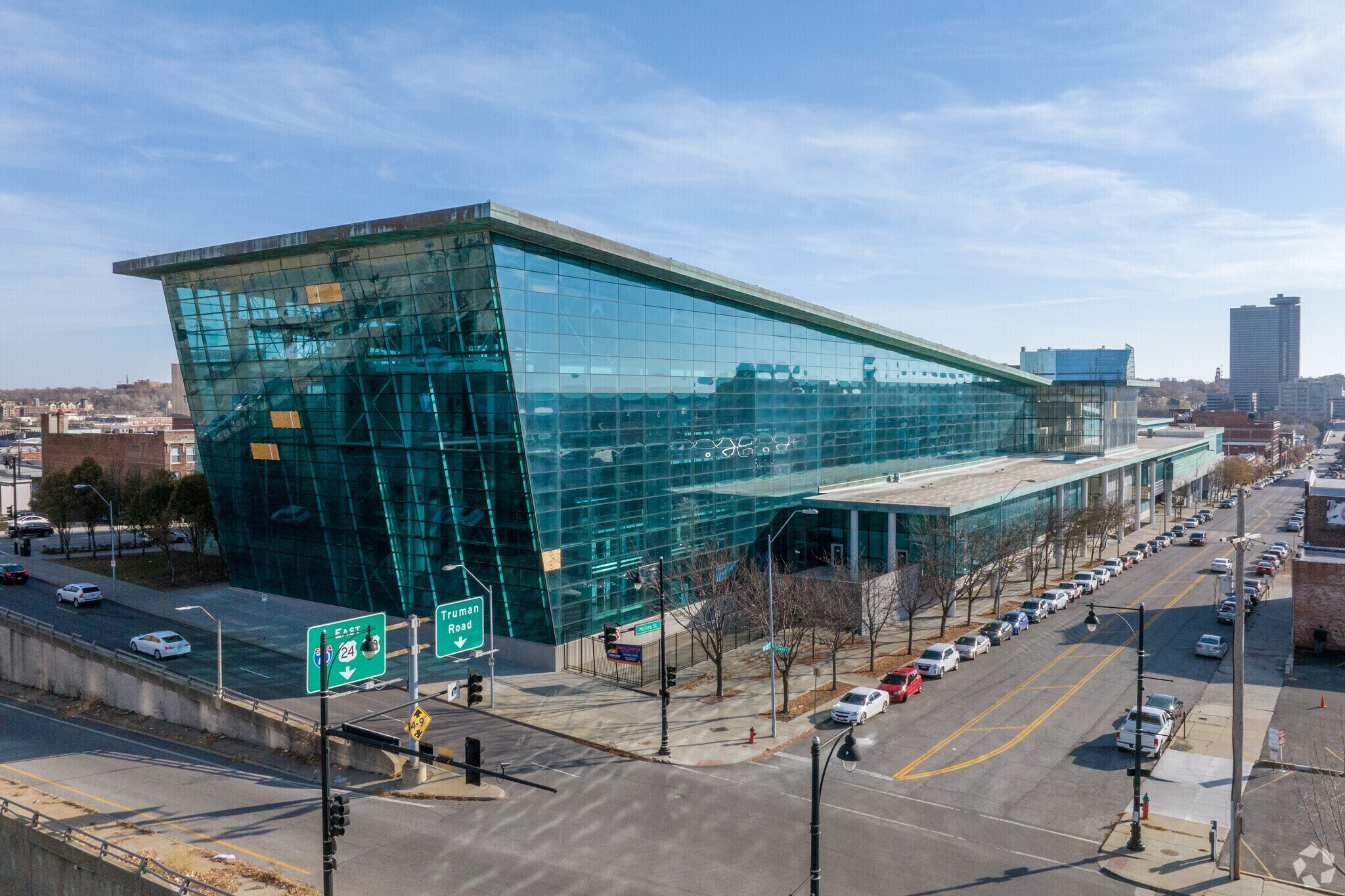
The expansion of C-PACE by geography and property type has been equally striking. In Kansas City, Missouri, Patmos Hosting, a provider of internet infrastructure and data center services, secured a $100 million C-PACE loan from PACE Loan Group to continue converting the former Kansas City Star building into a 421,112-square-foot multiuse office campus aimed at artificial intelligence firms.
When infrastructure upgrades are completed this spring, the facility is expected to feature 35 megawatts of power capacity for high-density, high-performance computing. One megawatt can power roughly 700 houses, depending on the climate.
Patmos Hosting CEO John Johnson said conventional financing was simply not adequate for the project's ambitions.
"Conventional bank financing hasn't yet caught up to an understanding of AI campus value," he said. "But nobody had tried C-PACE for this purpose, so we knew it would be a fit for Patmos. We're proud to have built the first assessed clean energy AI campus in the world, and it certainly won't be the last."
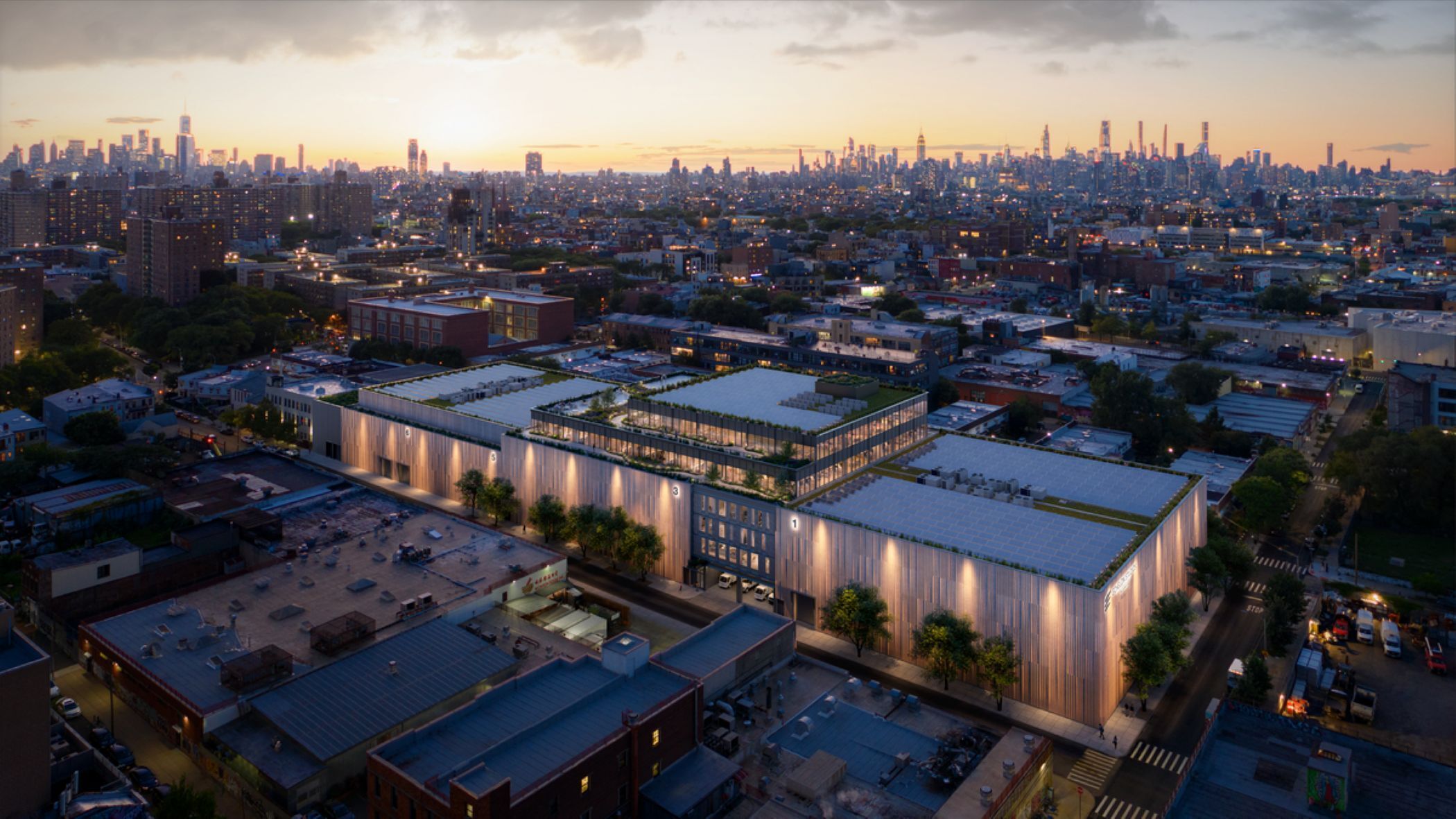
In New York, CounterpointeSRE made history by closing the city's first-ever new-construction C-PACE financing: a $156 million loan to Bungalow Projects and Bain Capital Real Estate for Echelon Studios, a purpose-built production hub with 10 soundstages for episodic film and digital content, designed to meet Ultra Low Energy Building standards — a drastic reduction in energy consumption up to 90% better than code.
New Jersey's C-PACE program, launched over the summer, also notched its inaugural transaction. Island Waterpark at Showboat — a 120,000-square-foot water park and entertainment complex adjacent to Bart Blatstein's Showboat resort in Atlantic City — secured a $45.5 million C-PACE loan through PACE Loan Group to recapitalize the construction debt used to build the facility.
In Arizona, state Rep. Chris Lopez is leading legislative efforts to establish C-PACE, one of just a handful of states that have yet to implement the financing.
Senior lenders move from skeptics to partners
Perhaps the most consequential development of 2025 was not any single deal but a structural shift: senior lenders moving from cautious acceptance of C-PACE to active collaboration around it.
Barings, one of the world's largest diversified real estate investment managers, teamed with CounterpointeSRE to provide $113 million in senior construction financing alongside $60 million in C-PACE to Pearl Properties for Harper Square, a 267-unit luxury apartment development in Philadelphia's Rittenhouse Square neighborhood — at the time, the largest C-PACE financing in Pennsylvania.
"I think Barings and CounterpointeSRE have done a really great job of combining C-PACE and mortgage capital into a product that approximates a single-source execution but achieves a better cost of capital for our borrowers while delivering strong returns to our clients through a more efficient capital structure," said Justin Preftakes, Barings' head of construction lending. "We expect to see continued demand as the market becomes aware of the efficiency of this product."
A similar integrated approach played out in Celina, Texas, north of Dallas, where Aquarian Real Estate Partners provided senior construction financing alongside $23.5 million in C-PACE from PACE Equity — an independent provider in which Aquarian holds a strategic investment — for JPI's Jefferson Ownsby complex, a 436-unit, Class A, garden-style multifamily development.
For JPI, a national multifamily firm with more than 35 years in the business, the deal was a first.
"Previously, we had struggled to find senior lending partners who were open to utilizing C-PACE financing in the capital stack, so finding a turnkey solution with Aquarian and PACE Equity was very attractive to us," said Aaron Douthit, JPI's vice president of development. "We expect to utilize C-PACE financing in more of our developments going forward and are actively reviewing terms on multiple deals right now."
The road ahead: more records, states, use cases
Industry observers point to several factors sustaining C-PACE momentum. Large-balance deals that once attracted skepticism from senior lenders are now closing with lender consent in place. State legislatures continue to authorize new programs and broaden existing ones. And developers facing a constrained debt market increasingly view C-PACE as a primary component of the capital stack rather than a last resort.
Some states are actively expanding the tool's flexibility. Florida recently amended its rules to allow C-PACE proceeds to fund improvements dating back to a project's inception.
"We are very optimistic about the trajectory of this year," Lone Star PACE's Lueckemeyer said. "The rate cut in December of 25 basis points, plus signals from the Fed that there could be two additional rate cuts this year, have instilled a level of confidence among developers. We are already expecting to see half of the volume we did last year completed in the first quarter of 2026."
Peachtree's Schlosser offered a blunt summary of why the momentum is unlikely to slow: "The main factors behind demand are still in place. Long-term rates are still high, banks are cautious about lending, and a lot of debt will soon mature. These conditions mean there will be a steady need for capital and flexible financing options."