
A group in San Diego working to restore one of architect Irving Gill's most praised works is looking to raise funds to add public features to the building.
The La Jolla Recreation Center, owned by the city of San Diego, is a prominent example of Gill's early version of modernism and a precursor to the midcentury modern style that pervades Southern California. Its breezeways — with arched openings, off-white concrete exterior walls and a lack of ornamentation — are hallmarks of the work of Gill, who died in 1936 in Carlsbad, California, at 66.
The recreation center project would involve repairs to damage caused by decades of deferred maintenance, as well as the addition of features such as a splash pad for children, an expanded outdoor play area, new athletic courts, rooftop deck and more indoor meeting space.
In a 1916 article, Gill described his personal design style as a return to "the source of all architectural strength — the straight line, the arch, the cube and circle," according to the Society of Architectural Historians.

Gill, a native of Syracuse, New York, who later moved to California, worked under architects Frank Lloyd Wright and Louis Sullivan. Gill was known for a style that combined elements of the Arts and Crafts movement, Spanish Mission Revival and minimalism.
'Reacting against the Victorian age'
Gill believed in whittling excess ornamentation, said Trace Wilson, a La Jolla architect who created the master plan for the renovation.
"He was reacting against the Victorian age, and gingerbread houses and dust-collecting shelves," Wilson said.

Although most of his work was for single-family houses, Gill also designed commercial buildings, including car dealerships, office buildings, hotels, an auditorium for music performances, train stations and the George H. Scripps Memorial Marine Biological Laboratory on the campus of the University of California, San Diego. The Scripps lab is now used as office space for the Scripps Institution of Oceanography.
The La Jolla Recreation Center is one of several buildings designed by Gill within a block radius in La Jolla, an unincorporated community of about 47,000 people that's within the San Diego city limits. Gill's other works there include a boutique hotel that was originally a private residence, several buildings on the campus of an Episcopal school for grades six through 12, and the meeting house for a local women's social club.
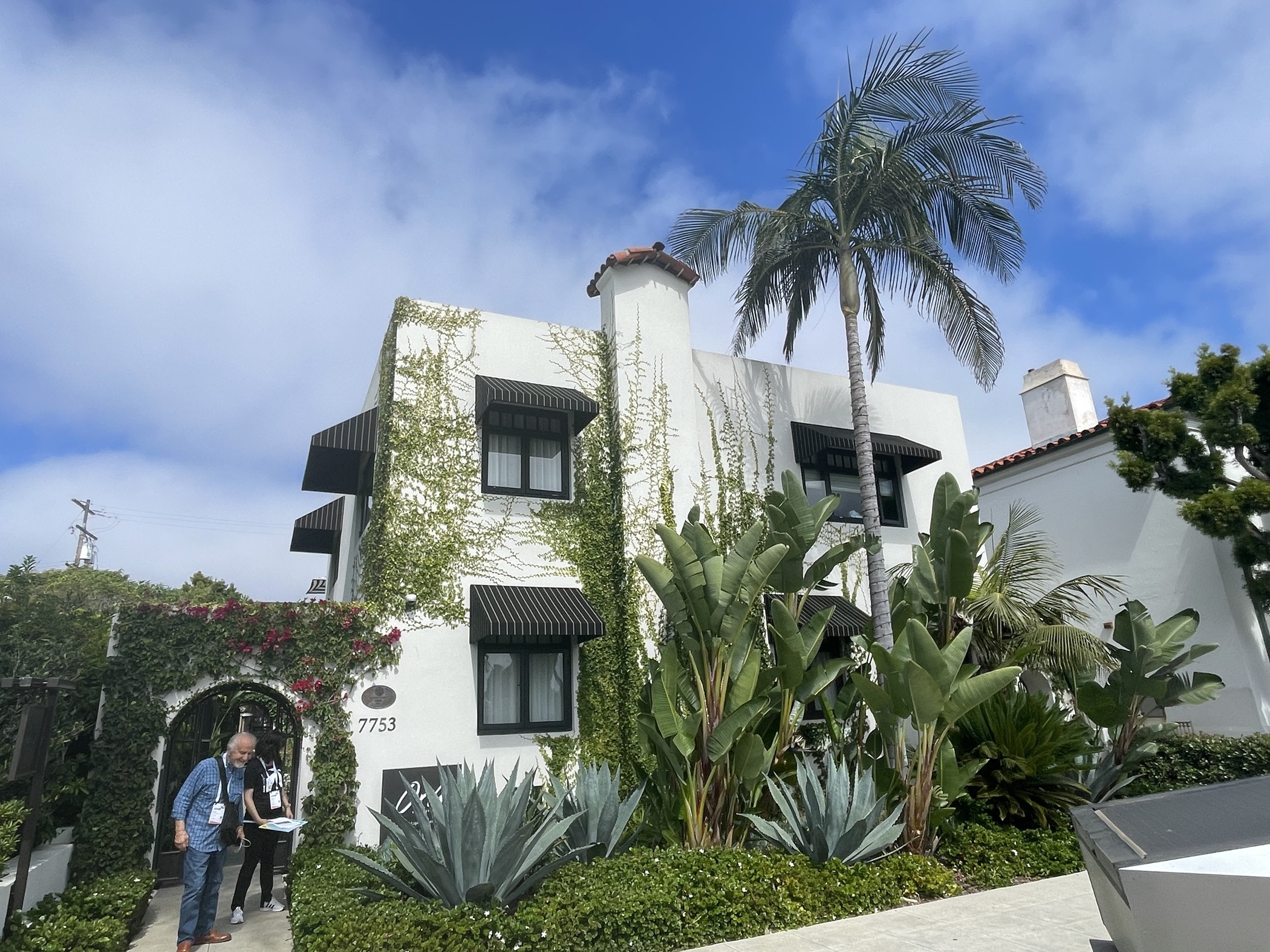
The recreation center opened in 1915 and was commissioned by California philanthropist Ellen Browning Scripps. It stands in the middle of La Jolla and, because of its prime location and original purpose, should reclaim its place as central to the community, said Wilson, the La Jolla architect.
"The community needs a lot of new park space," Wilson said.
Shortage of funds
Friends of La Jolla Recreation Center estimates the project will cost about $45 million. The city of San Diego has said it doesn't have funds for the proposed renovation or for ongoing operations.

The advocacy group is also waiting on the results of an effort by the community of La Jolla to secede from the city of San Diego and become its own city. That would make it easier for community groups to control the recreation center, Wilson said.
The community's detachment effort could be placed on local election ballots within the next two years, he said.
A modernized recreation center, along with Gill's other designs in La Jolla, could help raise the architect's profile and spotlight his influence on modernism, said Heather Crane, an architectural historian at Hennebery Eddy Architects.

"There is no doubt that Gill's minimalist designs … influenced his contemporaries," as well as future design trends such as the International Style and post-modernism, Crane told CoStar News.
Crane led a guided tour of Gill's designs in La Jolla in June as part of the American Institute of Architects' annual conference, held this year in San Diego.
B U I L D I N G D A T A
Building Name: La Jolla Recreation Center
Building Size: 9,100 square feet
Owner: City of San Diego
Architect: Irving Gill
Location: San Diego
Opened: 1915
Distinctive buildings have their own stories. Snapshots is an occasional feature showcasing one or more of them.