
LOS ANGELES — The hotel transaction market actually has some things going for it, but there's one crucial factor left: better hotel performance.
In an interview at the Americas Lodging Investment Summit, Jon Bortz, chairman and CEO of hotel real estate investment trust Pebblebrook Hotel Trust, said improved hotel performance, on top of other positive market developments, will create a much more active transaction environment.
“It feels like that’s the trigger people are waiting for,” he said.


The factors at play
From a consumer perspective, the lowered interest rates are helpful, Bortz said. If consumers are paying less on any of their debts, that’s more money in their pockets. For businesses that borrow on a short-term basis, that’s beneficial as well.
“On the transaction market, because a lot of the buyers in the market borrow on a short-term basis — in fact, probably the vast majority of buyers buy using short-term debt. They may swap it or fix it or whatever, but it’s going to be based upon where it is. I think it’s helpful to the transaction,” he said.
But 2025 was a crazy year because of the varying flip-flops of hotel buyers being risk-on and risk-off, which slowed the market dramatically, Bortz said. If there’s less uncertainty paired with lower interest rates, those two factors alone should help from both a buyer and seller perspective.
“But I think the key to the transaction market, and sort of narrowing any gap that there might be between buyer and seller, is you need a increasingly better performance at the bottom line in the industry,” he said.
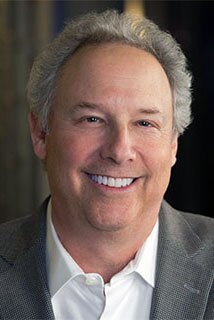
Hotel revenue per available room needs to stay out of the negative, Bortz said. December was a good indicator of moving in a positive direction, with leisure business looking good during the year-end holiday periods. It looks like the U.S. hotel industry is re-correlating with the gross domestic product, and January, February and March were lining up similarly.
If U.S. hotels can accelerate rate of growth in which it can improve bottom lines, buyers are more willing to buy into that environment because they know the intermediate to long term is favorable because of the lack of supply growth, he said.
“You have that protection where occupancy can build, and as occupancy is built, rates can increase,” he said. “You can look at almost any cycle and see that, and you can easily get up to mid- to high-single-digit RevPAR growth in that part of the cycle.”
Until the U.S. hotel industry gets that first step in the right direction, there will continue to be a gap between buyer and seller values, he said. Lowered interest rates will help narrow that gap, but it doesn’t eliminate the gap for enough players.
If 2026 plays out as hotel owners hope, that gap will narrow and have buyers more excited about it, Bortz said.
“They need to move now before values start to go up, because they’re at historically low levels,” he said, referencing Pebblebrook’s December 2025 sale of the 725-key Westin Michigan Avenue Chicago for $72 million. “The property traded for under $100,000 a key. The replacement cost for that property is probably $600,000 per key. That’s a big discount.”
The strategy forward
At the moment, Pebblebrook’s path forward is taking advantage of the major disconnect between the underlying real estate value in its hotel portfolio and the public company’s valuation, Bortz said. The REIT is trading at a large discount, arguably about 45% to 50%. That means it’s not time for pruning or balancing its hotel portfolio; instead, it’s about taking advantage of the public-private disconnect to arbitrage that into value creation.
“We do that by selling properties and using the proceeds to buy back our stock,” he said.
Pebblebrook’s preferred stock has been trading anywhere from 20% to 25% discount to par, so that’s an automatic savings, he said. The common stock is anywhere from a 40% to 50% discount to the underlying value.
As long as that opportunity exists, Pebblebrook will continue to shrink itself, he said.
“That's why we've told people, look at the end of the day, everything's for sale, because we can buy our own remaining assets back at such a big discount,” he said. “It's highly accretive to cash flow per share, and it's highly accretive to value per share.”
The public investment community has changed dramatically in the decades since Bortz got involved in commercial real estate, both in the private and public market sides, he said. The biggest change that has occurred over the last five to 10 years is that the public investor has become short-term-oriented.
“It's funny because they used to complain that companies were short-term-oriented because we look at quarterly earnings, and that people used to say, ‘Oh, you're managing your corporate your quarterly earnings and we're long-term investors,” he said.
Now, these investors have their money evaluated monthly by their capital sources, Bortz said. They’re looking for growth, and the lodging industry outside of the brand companies isn’t a growth industry.
“It's a pretty mature industry, and we've always tried to create growth through buying underutilized, under-positioned assets, investing in them and having a vision that we think allows you to create value based upon what the customer wants to buy and what they're willing to pay for,” he said.
Value investing in any industry hasn’t worked in about 15 years in the public markets, he said. It doesn’t work in lodging. At best, Pebblebrook is a cyclical growth company, and at worst it’s not a growth company at all.
“[REITs are] just a value play, right?” he said. “There's a disconnect between what we are and what the public investment community wants.”
This message seems pretty clear: It doesn’t work well in the public markets, he said. It’s not the best place for this business, so over time, there will be fewer lodging REITs, along with other types of REITs, in public markets. The ones that are working are in growth industries, namely data centers, industrial and residential.
It’s the newer areas that has secular growth fundamentals where the public market investors are happy to go to, he said. Those that aren’t growth companies will shrink in number dramatically in the public market.
“There may be consolidation on the public side, but I almost tend to think you're going to see a lot of, ultimately, say public to private,” he said. “And I think also, if that doesn't work in bulk, you'll see it split up.”
So, what does that mean for the future of Pebblebrook? Bortz said it’s not his decision. The company has a board of directors. There’s no reason that Pebblebrook would be any different than the other lodging REITs over the long term, but things could change.
“The world could change. The investment community could change. But I think it would need for it to make sense,” he said. “You could be public forever. Nobody makes you go out of business other than your own operating business.”
In the end, people don’t want to take too much risk, Bortz said. Those who have been cautious lately took the correct approach as those who bought hotels early haven’t done particularly well.
“Again, I come back to everything is waiting on operating performance getting better, and it starts at the top line, and it starts with demand,” he said. “Got to have demand growth.”