
Detroit has floated a new proposal for part of the Packard Plant site, one of the city's largest industrial ruins dating back to the heyday of the U.S. auto industry.
Plans include the city's first indoor skate park, 42 affordable housing units, a music museum and about 2 acres of indoor and outdoor public space.
The city signed a letter of intent with two local developers to remake the southern half of the 28-acre Packard Plant site into workforce housing, light manufacturing and recreational spaces, according to a statement from the city of Detroit.
The multibuilding complex sat vacant for decades, and its brick structures are in extremely poor condition. The property has restricted access because of safety risks posed by crumbling roofs and walls.
Several proposals emerged in recent years to either demolish the Packard Plant or restore it, with none coming to fruition. But downtown Detroit has experienced a major revitalization in recent years with the conversion of blighted structures into offices, apartments and hotels. Detroit officials are now trying to extend renewal efforts to other parts of the city.
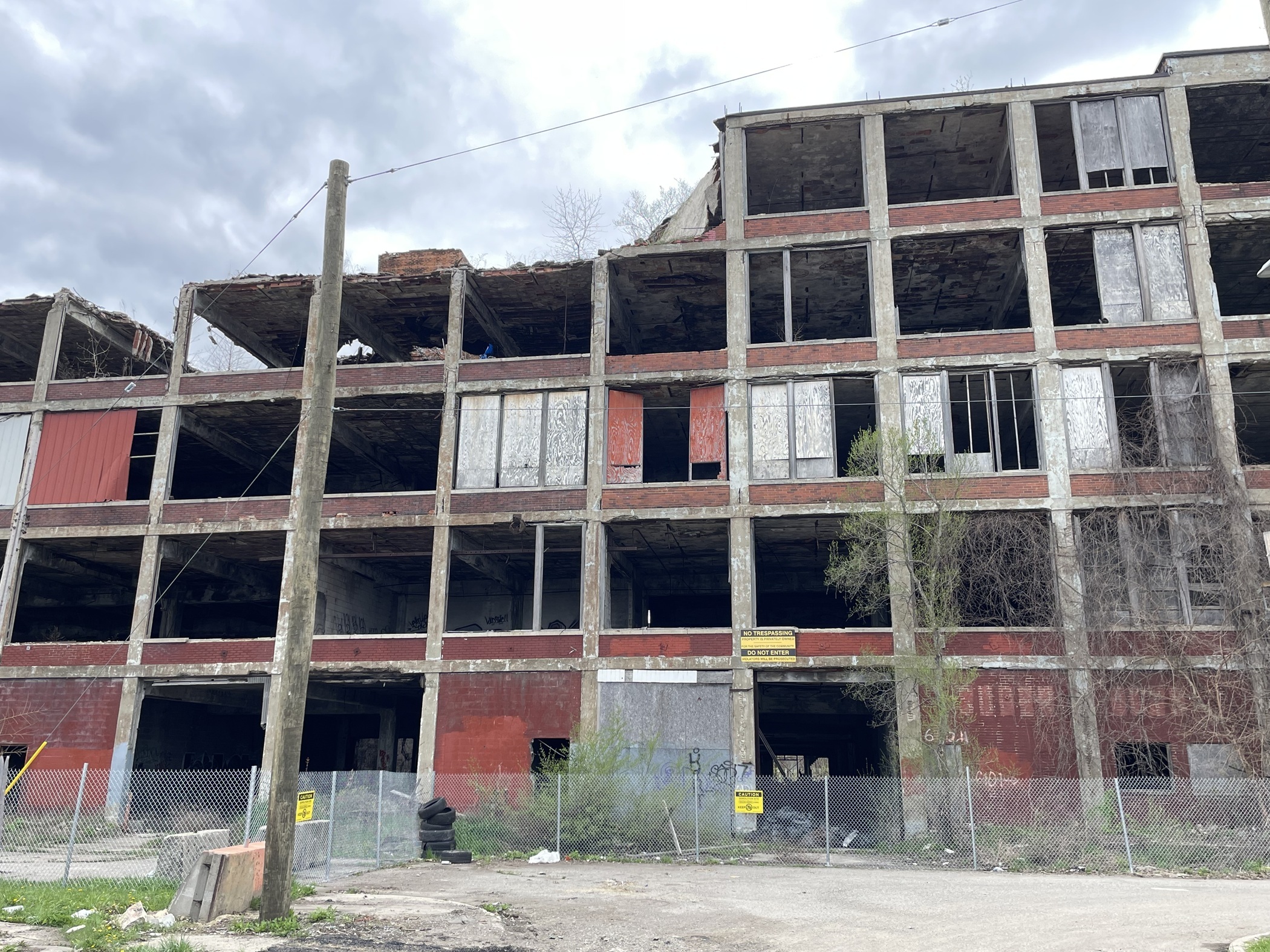
The Packard Plant is "Detroit's most iconic ruin, continuing to drag down the surrounding neighborhood," Mayor Mike Duggan said in the statement. The city now owns title to the property.
Local support
In the latest attempt to restore the Packard Plant, the city of Detroit reached a preliminary agreement with local developers Oren Goldenberg and Mark J. Bennett, in partnership with the Detroit Regional Partnership, Detroit Economic Growth Corp. and the Albert Kahn Legacy Foundation.
Nuveen Green Capital, SB Friedman and BWE are expected to be involved in financing the project, according to Crain's Detroit Business.

Additional funds for the $50 million project will come from "a layered financing capital stack, including equity investment, commercial debt, philanthropy and various tax credits, along with state and local economic development tools," according to the city. Construction is expected to be completed by 2029.
According to the proposal, the developers would construct a new 393,000-square-foot building for industrial uses and restore a historic 117,000-square-foot structure for "community, culture, housing and creative uses," according to the release.
The structure to be preserved and converted into housing and recreational uses was designed by brothers Albert and Julius Kahn, who pioneered the use of concrete as a building material for automotive factories.

The Packard Plant opened in 1903 to manufacture automobiles, though it made war materials during World War II. Located in the Gratiot Town district, Packard's manufacturing operations ceased in 1958.
Since the plant's closure, tenants have also abandoned other nearby buildings, such as the Packard Motel and an apartment building at 7007 Medbury St. One of a small number of adjacent properties that remains open is a Quality Behavioral Health drug-treatment clinic at 6821 Medbury St.
The city has already demolished portions of the Packard Plant site, although many of the original structures remain standing.
For the record
John Boyd and Joe Stack at Signature Associates are leasing agents for the project. Albert Kahn Associates, based in Detroit, is the design architect. Honigman LLP and Miller Canfield are legal counsel to the city on the development.