
The owners and backers of the Pfizer Building conversion in New York that has had buckling beams and sagging floors may have avoided a far costlier outcome because of what appears to be limited damage. Experts say a full demolition of a Manhattan tower could cost over $100 million.
Construction workers discovered the problems with the columns and floors at the former Pfizer headquarters in midtown Manhattan at 219-235 E. 42nd St. on Tuesday, forcing the evacuation of the construction project and neighboring properties and the installation of shoring materials to stabilize the structure.


Developers MetroLoft and David Werner Real Estate Investments will “fully rebuild” the area of the building where the problems arose, according to MetroLoft. The problem is confined to a “small fraction of the building” and affects fewer than 30 apartments out of 1,600 planned units, MetroLoft said in an emailed statement.
MetroLoft’s initial assessment revealed that two columns in the northwest corner of the building had not been properly installed and reinforced. That led to the support columns buckling and the floor sagging.
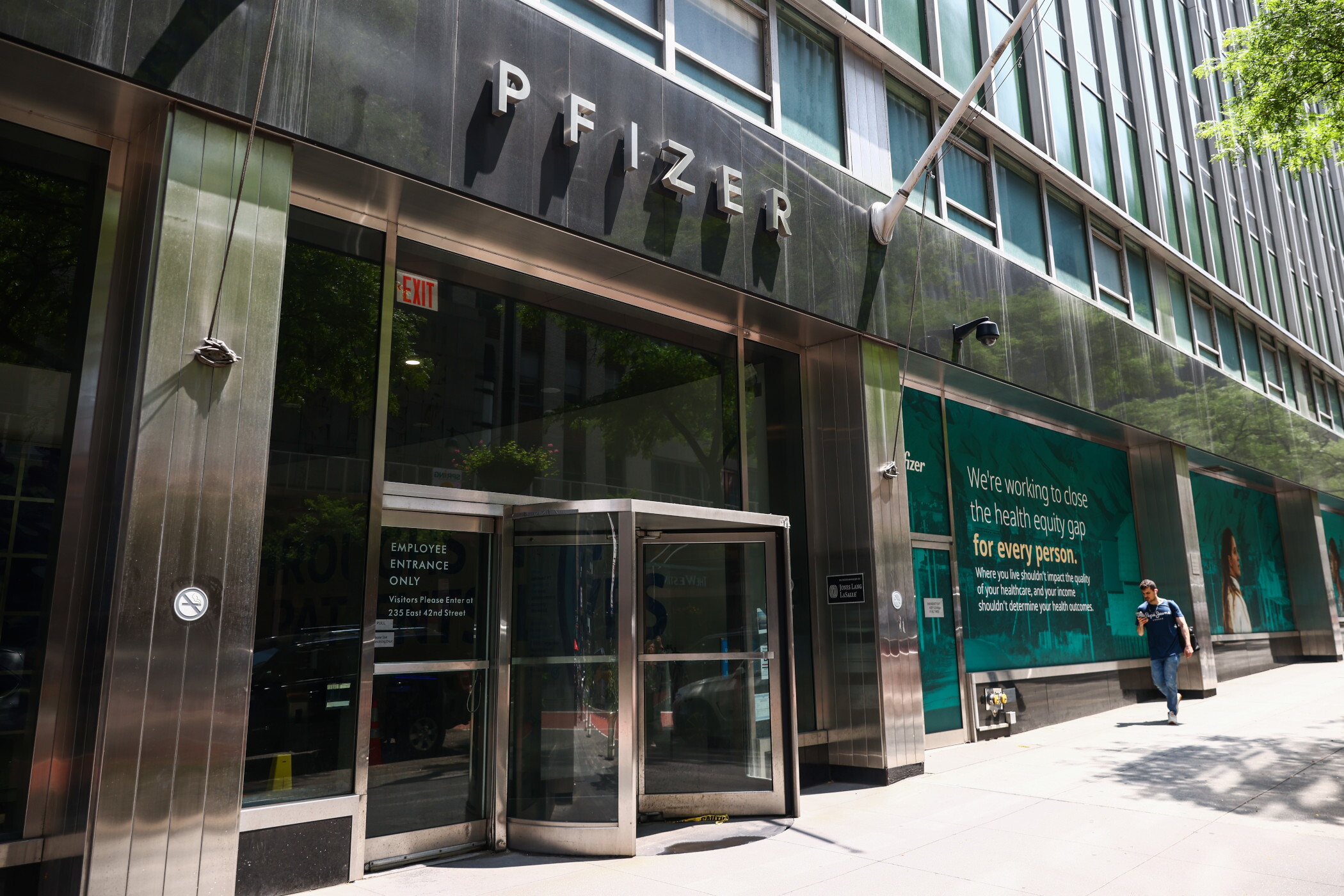
While not much time has passed for analysis after the problem was discovered, MetroLoft may have made an accurate assessment of the building in a short period, said Jeff Gans, an attorney at Pillsbury Winthrop Shaw Pittman who advises owners and contractors on commercial development projects.
“It sounds like they got a good structural team into the building to identify and isolate the cause and to design a remediation solution,” Gans told CoStar News. He’s not involved in the project.
“I would be surprised if they can’t find a way to save it,” Gans said.
High demolition cost
The leveling of a high-rise building in midtown Manhattan could cost at least $100 million, said Scott State, an engineer and CEO of New York-based NorthStar Group Services, which handles large building demolitions.
However, if subsequent forensic examinations of the structure identify other problems, the building could still be condemned and razed, State said. More time is likely needed before MetroLoft can determine with confidence that the problems can be fully remediated.
“I’ve seen the developer suggesting that they’ve” determined the extent of the problem, “which is not possible” in such a short period, State told CoStar News. NorthStar is not involved in the project.

MetroLoft did not respond to a request for a response to State’s comment.
The demolition of a high-rise in Manhattan would not involve explosives, State said. Instead, tall buildings in a densely developed neighborhood must be deconstructed starting from the top and moving down.
“It’s the reverse of constructing a building,” State said.
Inspectors and engineers from the city of New York’s Department of Buildings “will remain on site [on Wednesday] to monitor the progress of ongoing work and continue their investigation into the structural failure,” the department said in a statement. The evacuation order for some nearby buildings remained in place as of Wednesday afternoon.
More inspections expected
Even though MetroLoft has said it can fix the problem and the project’s estimated opening won’t be delayed, engineers and construction personnel still have a long list of areas to examine, said Eugene Gurevich, a principal and structural engineer at Rand Engineering & Architecture in New York.
“The extent of permanent structural damage and the appropriate long-term repair strategy will ultimately be determined through the forensic investigation,” Gurevich told CoStar News. Rand is not involved with the Pfizer Building project.
It’s probably too soon to ascertain the extent of damage to other parts of the building, said Roberto Leon, a professor of civil and environmental engineering at Virginia Tech.
“Much will depend on whether the damage is localized [to only two or three columns] or if it has affected the region between the added floors and the existing structure,” Leon told CoStar News.
It also remains likely that some parties connected to the project, such as developers, lenders, contractors, subcontractors and insurance companies, will sue to recover financial losses, Gans said. Gans’ experience includes the drafting and negotiation of design and construction documents on large building projects.
“It’s hard to imagine that some litigation would not arise,” Gans said.
For the record
Gensler is design architect and architect of record. CCM is construction manager.