
The groups and partners building and championing a series of mixed-use real estate developments around Baltimore's waterfront are aligned in their vision for the area as several major projects progress, according to an economic and civic organization that promotes the region.
There is cooperation between those leading efforts around the city's Inner Harbor as office tenants seek workplaces that feature a higher concentration of amenities, the Greater Baltimore Committee told CoStar News in a series of interviews.
This month, CoStar News reported on the future of the Inner Harbor, the realities of the city's office market and how various development projects aim to address what employees, residents and shoppers want to see in them.
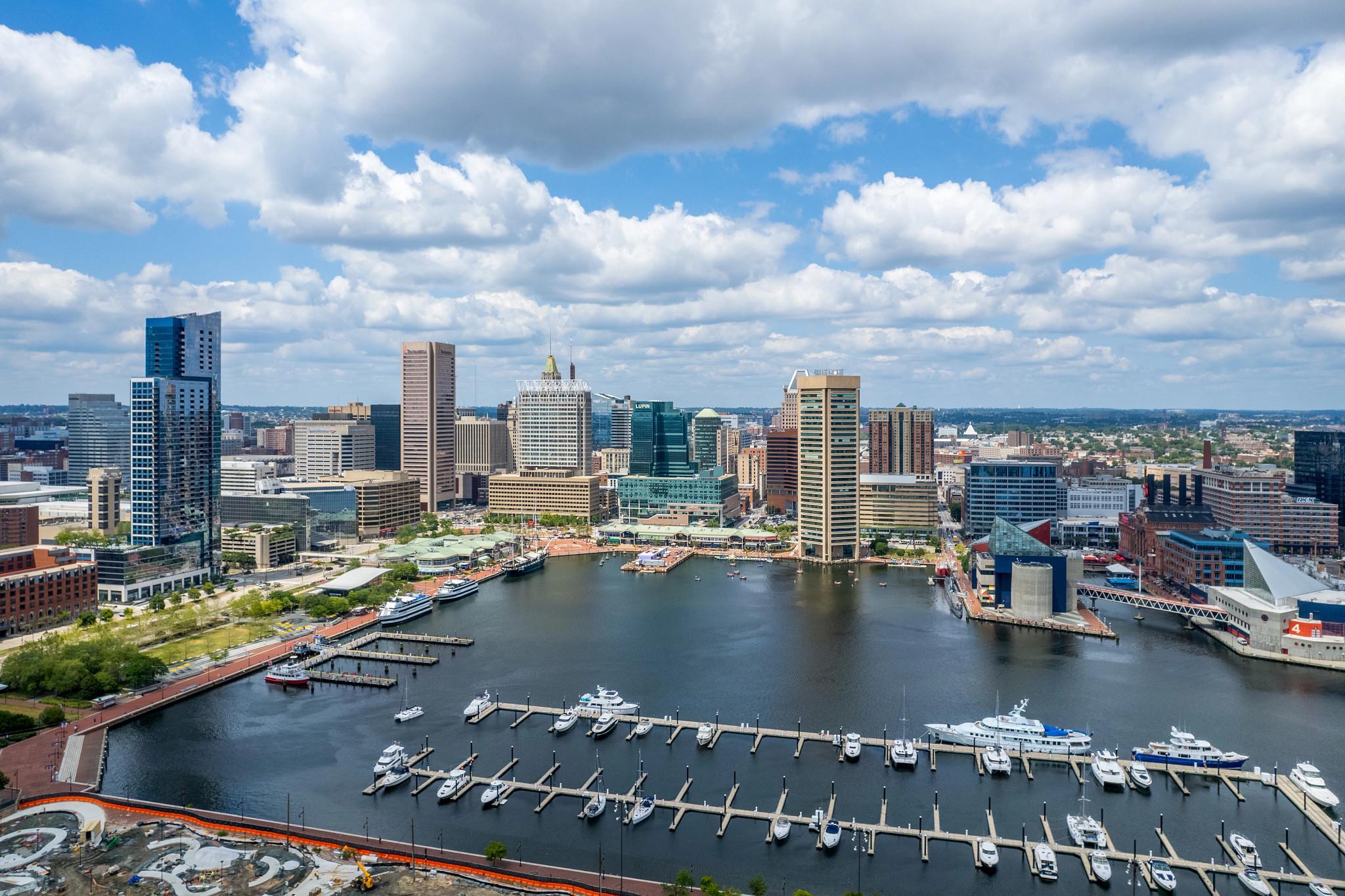

"What I see every day is deep collaboration and real camaraderie among the stakeholders shaping Baltimore's waterfront. The coordinated work stretches for miles and reflects a unified strategy," Mark Anthony Thomas, president and CEO of the GBC, said in a statement.
The following email interview with the Greater Baltimore Committee outlines the overall scope and strategy for the city's waterfront from the organization's perspective. The following email interview has been edited for length and clarity.
What is the long-term strategy for the waterfront region?
Baltimore is executing a deliberate, coordinated reinvention of one of the most recognizable urban waterfronts in the United States. The strategy is anchored by two complementary, contemporary master plans: the Inner Harbor 2.0 Master Plan, which reimagines the waterfront itself, and the Downtown Rise Master Plan, which guides the renewal of downtown streets, public spaces and economic activity that surround it.
These plans are not stand-alone efforts. They are reinforced by aligned initiatives, including the Middle Branch Master Plan, the citywide promenade work and major public-realm investments such as Rash Field. Together, they reflect a single, integrated approach: reconnecting neighborhoods, restoring public access to the waterfront and positioning downtown Baltimore as a modern, mixed-use urban core that competes nationally and internationally.
For a global audience, what matters most is this: The Inner Harbor is not simply a local redevelopment effort. It is one of the Baltimore region's most important economic assets. Its success strengthens the regional economy, reinforces Maryland's competitiveness and sends a clear signal that Baltimore is investing in long-term, globally relevant urban growth.
What is the relationship between the stakeholders in and around Inner Harbor?
What distinguishes Baltimore's waterfront transformation is the level of alignment across stakeholders. This is not a fragmented set of projects. The Inner Harbor, Harbor East, Harbor Point and the central business district form a contiguous, connected waterfront, linked physically by the promenade and strategically by shared planning frameworks.
The development community, public sector and civic institutions are operating with a common understanding: Individual projects succeed when the waterfront succeeds as a whole. Developers are actively engaged in master planning processes, and there is broad consensus that this reinvestment is essential to the city's and the region's future.
For investors and peer cities, this alignment is critical. It reduces risk, shortens timelines and ensures that capital is deployed within a clearly articulated, regionally supported vision.
What is the state of the Baltimore office market, and how do these projects address it?
Like many U.S. and global cities, Baltimore is navigating structural changes in office demand driven by evolving workplace patterns. The response has not been to overbuild traditional office space but to reposition demand toward amenity-rich, mixed-use districts that support how companies and talent operate today.
Waterfront redevelopment has been central to that strategy. These districts integrate office space with housing, retail, cultural amenities and high-quality public spaces, creating environments that attract employers and retain talent.
For a national and international audience, the takeaway is straightforward: Baltimore is not chasing outdated office models. It is aligning development with contemporary market realities.
What can other cities learn from the ongoing transformation?
The most important lesson is the value of alignment between public leadership, private capital and civic institutions around a shared, long-term vision.
Many cities around the world are grappling with aging downtowns and legacy waterfronts that no longer serve their original purpose. Baltimore's approach demonstrates how cities can respect the history of these places while reimagining them for a new economic era, strengthening communities, attracting investment and enhancing global relevance in the process.