
Los Angeles soundstages have long catered to feature films and network television series with large crews and specialized lighting on custom-built sets that occupy stages for months at a time. Now they are evolving, thanks largely to the smartphone.
A slowdown in production, combined with rising demand for a new category of digital entertainment for small screens, is prompting some studio owners to make their properties more flexible to attract more use from nontraditional entertainment producers.
In an early sign of that real estate shift, Sunset Studios, a division of entertainment and office landlord Hudson Pacific Properties, is creating prebuilt sets in Hollywood that include common settings — such as a courtroom, restaurant and an apartment living room — to entice these new shows. They are professionally produced and scripted, while shot in a portrait orientation for viewing on a smartphone rather than a traditional television or movie screen.
“These standing sets are about removing friction from the production process. Creators can walk onto a fully built, fully lit set and start shooting right away.”
It’s still too soon to tell if producers will adopt these soundstages for this form of entertainment. Episodes typically run one to two minutes and are distributed through apps such as ReelShort and DramaBox, where viewers consume dozens of episodes in a single sitting.
They are sometimes called mobile-first series, referring to the lack of a stationary screen, or vertical dramas, a nod toward the shape of the device on which they’re often watched.
The camera-ready sets also work for making commercials or more traditional productions seeking turnkey film sites. These already-built sets come with their own permits in hand for filming, letting producers avoid the time and expense of applying anew.
“These standing sets are about removing friction from the production process,” Sean Griffin, senior vice president of sales at Sunset Studios, said in a statement. “Creators can walk onto a fully built, fully lit set and start shooting right away.”
Soundstage use slows
The launch comes as Los Angeles soundstage occupancy has slipped into the low-60% range, down from roughly 90% at the peak of streaming that was accelerated by the pandemic, according to nonprofit industry tracker FilmLA.
Investors are now exploring different sources of entertainment demand to keep production real estate in use as major studios spend more cautiously, said Nicole Mihalka, a CBRE broker who represents studio properties across Los Angeles.
Hudson Pacific Properties CEO Victor Coleman, whose firm owns Sunset Studios, has framed vertical, or mobile, dramas as a potential new asset class.

Unlike a traditional television drama that might spend weeks constructing a custom hospital wing or apartment interior, vertical productions prioritize speed and efficiency partly because budgets — and screens — tend to be smaller. They still need practical filming locations such as courtrooms, offices, hospitals and living rooms, but they need them quickly, cheaply and often on compressed shooting schedules.
For productions using the facility, the appeal extends beyond the sets themselves. Filmmakers can work on a permitted studio lot with access to parking, production offices, support space, an on-site café and other amenities while avoiding many of the logistical challenges associated with filming on location.
Sunset Studio’s new sets are being developed with Los Angeles-based production company Knockout Shorts, which specializes in creating short-form vertical dramas for mobile platforms. It will occupy an 8,000-square-foot certified soundstage and include a courtroom, apartment, bar and restaurant, hospital and office.
A new production model
One popular example of the vertical format is “The Double Life of My Billionaire Husband,” a short-form romantic drama distributed through the ReelShort app that became a fixture on TikTok and Instagram. The series drew hundreds of millions of views and helped introduce many American viewers to the mobile-first genre.
Short-form vertical series “are going to be a whole new asset class, and we think that could be somewhere around a $10 or $11 billion business annualized in the United States,” Coleman said at an investor conference in March.
The move reflects a broader shift in the production market. Traditional scripted television remains below peak levels, while lower-budget, mobile-first formats are multiplying, creating new ways to keep stages active with a wider mix of short-term users.
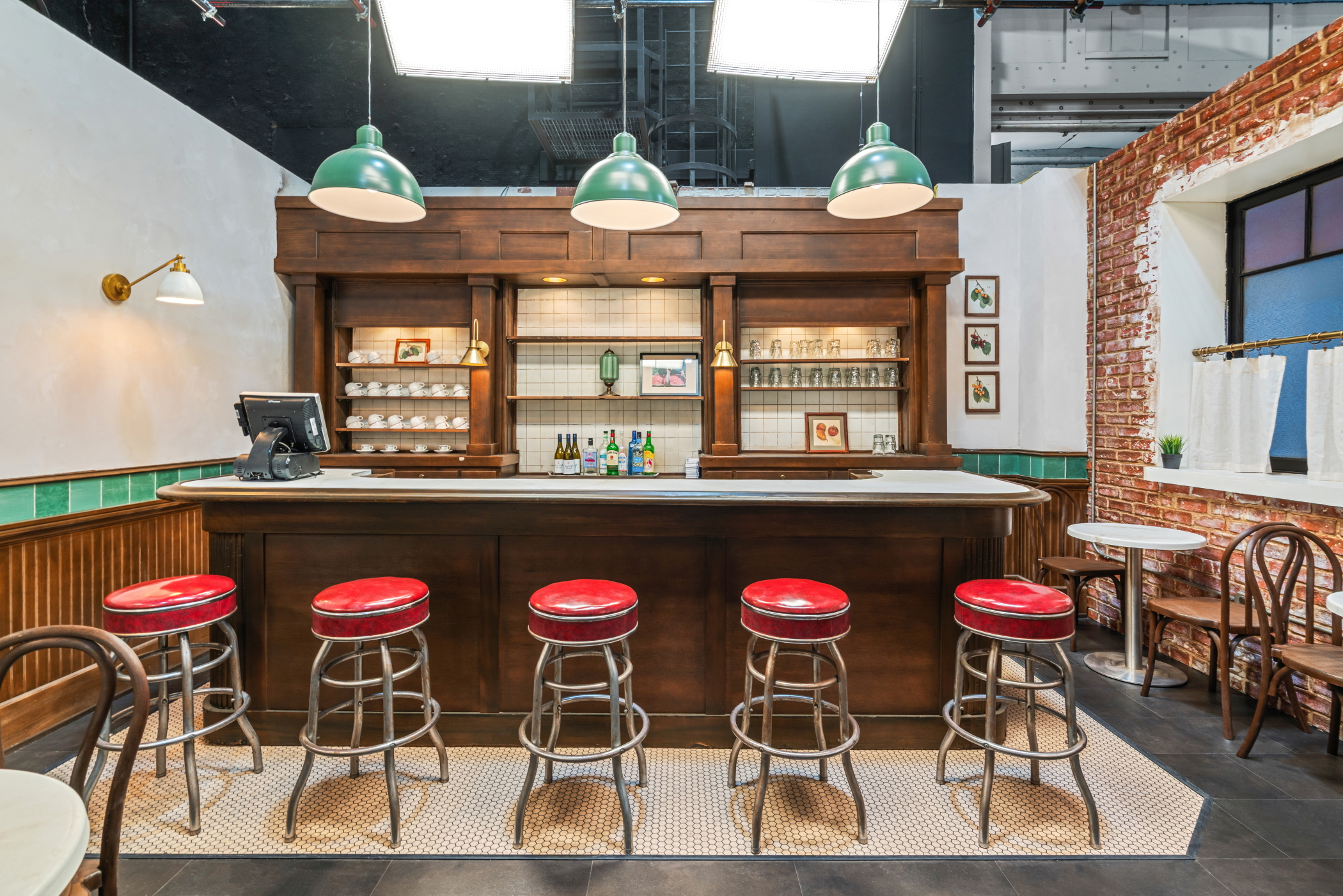
The strategy builds on a long-standing industry playbook. Tyler Perry Studios in Atlanta maintains permanent environments that include a replica White House, Oval Office, courthouse and neighborhood streets, while Los Angeles Center Studios has long relied on standing urban streetscapes and interior locations to reduce construction costs and speed up filming.
Vertical dramas take that logic further. These short, scripted series are designed specifically for smartphone viewing and built around fast-moving plots, compressed production schedules and dozens of brief episodes rather than a handful of hourlong installments.
The same infrastructure can also accommodate commercial shoots or traditional productions needing quick pickup scenes, broadening the pool of potential tenants.
That flexibility matters as production demand becomes less predictable. Los Angeles remains the world’s largest soundstage market, but occupancy is still well below peak streaming-era levels, according to tracking firm ProdPro.
A bet on flexible demand
Coleman has pointed to vertical content as one of several emerging demand drivers that could help offset that weakness. The format requires operational changes, but the underlying premise is simple: a shorter production still generates rent.
City officials are also watching the trend. Los Angeles has explored a $5 million support program for vertical dramas, including potential grants and faster approvals, though it has not been formalized.
Many of these productions are too small to qualify for traditional tax credits and can easily move to cheaper markets, increasing pressure on local studios to lower costs.
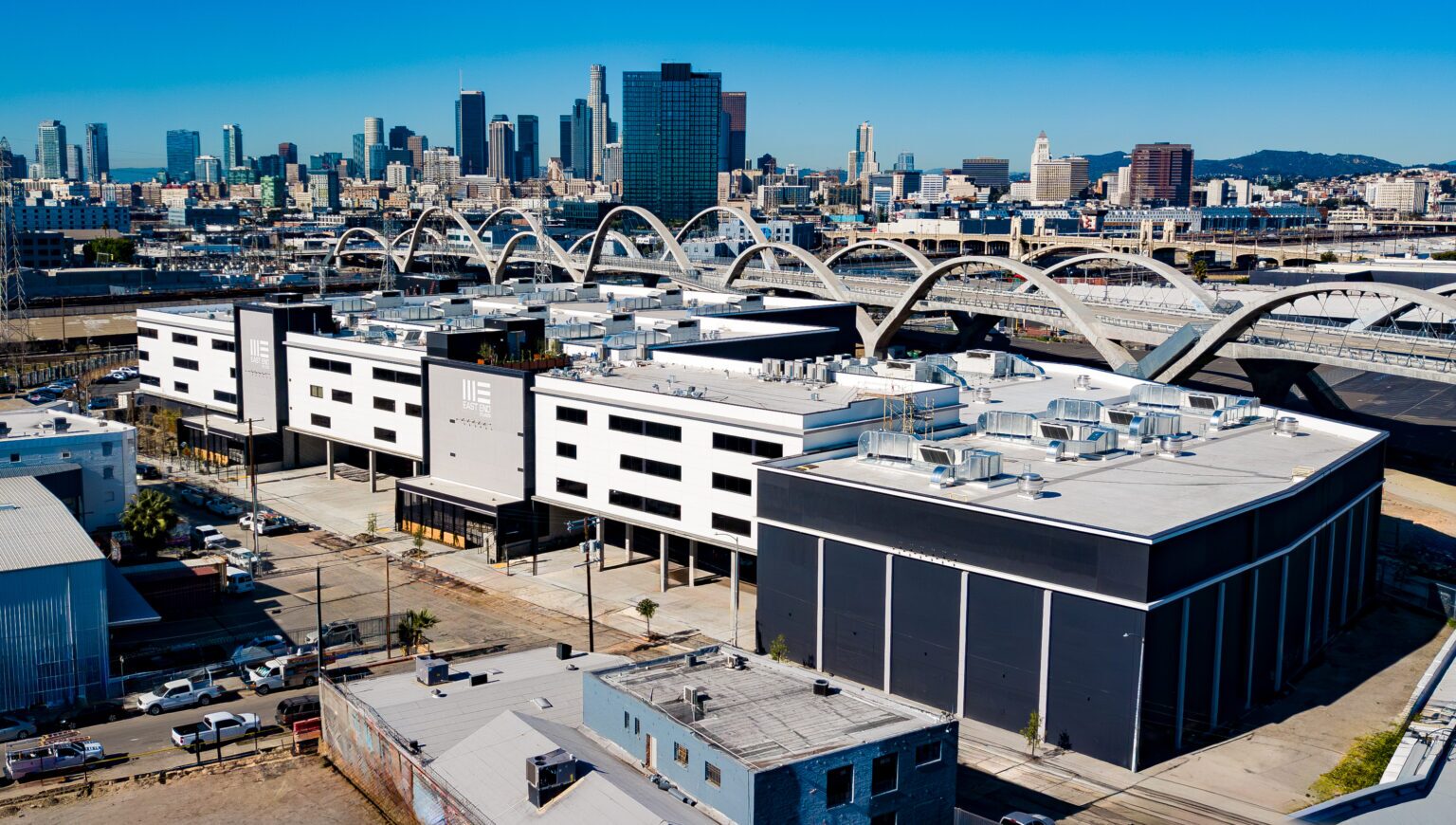

Studios are increasingly serving a wider mix of tenants, from reality productions and commercials to influencer content and concert rehearsals, said Carl Muhlstein, a Burbank-based broker who has worked on some of Hollywood’s biggest soundstage deals.
Shorter-form productions may not anchor long-term leases, but they can help keep stages active between larger bookings.
The goal, at least in Los Angeles, is also more immediate: keeping smaller productions from leaving altogether.
“The new sets will help incentivize more lower-budget productions to stay in LA and continue to grow the local economy,” Knockout Shorts co-founder Chris Crema wrote in a LinkedIn post.