
It's become a familiar challenge for architects these days: Robin Bellerby sought to create something distinctive while finding a way to cut costs for Aster & Links, an apartment development she was designing in Sarasota, Florida, for client Belpointe.
The chief architecture officer and her team at Humphreys & Partners Architects found their answer in a preexisting parking garage that was part of One Main Plaza, a shopping mall previously on the site. They designed the residential part of the 10-story structure around the remaining garage.
“We were able to use the existing infrastructure to help that project get penciled” out financially, Bellerby told CoStar News. The decision freed money for other design facets, such as metallic stucco coating as a visual accent on a tower and rooflines as well as canopy-covered entrances for retail space in the award-winning project.
Like Bellerby, architects are seeking ways to cut costs for multifamily projects as some developers pursue new construction despite obstacles. For one, years of overbuilding in some markets created a supply glut. That has led to a pullback in new multifamily construction this year, according to CoStar data. And financing can still be hard to get because of elevated interest rates.
“Lowering construction [and design] costs can certainly help at the margin, especially in today’s environment where deals are often close to breakeven” financially, said Grant Montgomery, CoStar’s national director of multifamily analytics.
Other factors that have slowed multifamily development are persistent inflation and a weakening job market, according to Christine Cooper, chief U.S. economist and managing director at CoStar. Renter demand has dropped in some markets, such as Philadelphia; Kansas City, Missouri; and Indianapolis because of the economic slowdown, according to CoStar data.
A reduced supply of affordable rental units is also making it hard for developers to launch new construction, as the number of potential renters remains depressed.
“There are still a lot of young folks who are still living at home and haven’t come into the renter pool,” Scott Underwood, a partner at Charleston, South Carolina-based Woodfield Development, told CoStar News. Woodfield has developed multifamily properties in the Southeast and the mid-Atlantic.
Not all developers are looking to cut corners in building apartment projects. And some multifamily developers are still pursuing new development, talking with architects about design changes to facilitate project launches. They’re also taking another look at projects gathering dust on the shelves.
“We have projects coming off hold” that had already received their mandatory building permits and environmental approvals and sat for a couple of years, said Greg Faulkner, president emeritus at Plano, Texas-based Humphreys & Partners.
Cost cutting with prototypes
Even so, expenses are so important that Humphreys & Partners has created building prototypes, marketed as its Signature Designs product line, to help developers cut costs with techniques such as including more units. The more space that can be rented, the higher the projected revenue, said Bellerby with Humphreys & Partners.
“We’re just trying to reduce the amount of unrentable space,” said Bellerby, whose team won two Aurora Awards last year from the Southeast Building Conference on the Astor & Links project: best mixed-use project and best multifamily housing community.
Bellerby stressed that Signature Designs prototypes still must obtain approvals from local authorities before construction can begin. The process of applying for and receiving permissions from municipalities or other local government entities can be one of the most time-consuming portions of multifamily development, she said.
Signature Designs are “not off-the-shelf ready to be permitted” on the first day, Bellerby said.

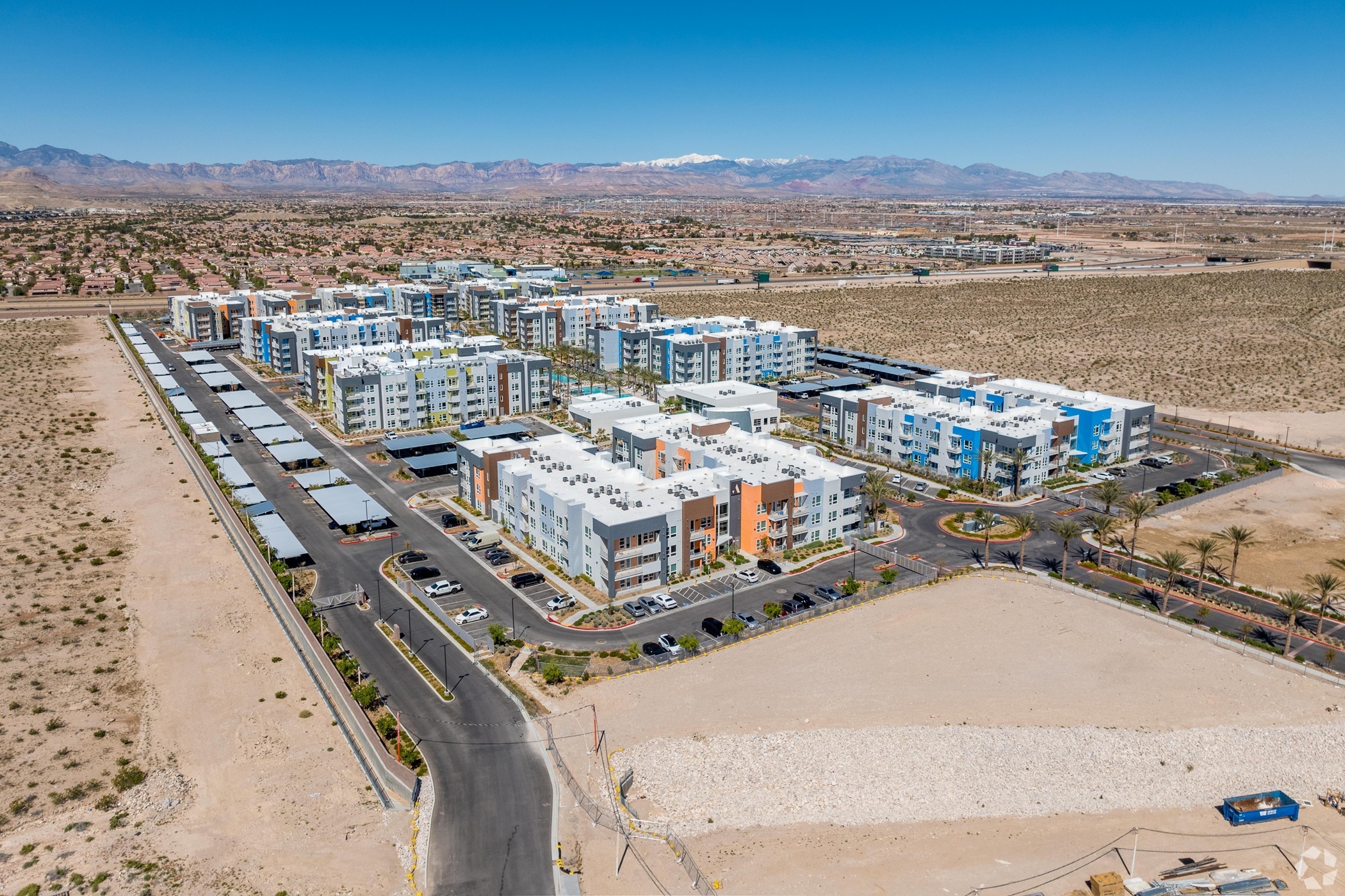
One package in the Signature Designs series, called the e-Urban, promises that 86% of a building’s gross square feet can be used as rentable space, compared with the industrywide average of 60%. More than three dozen multifamily properties have opened using the e-Urban package, including the Ariva in Las Vegas; the Crossings in Sacramento, California; and Echo Park at Perry Crossing in Plainfield, Indiana.
Architects are also tinkering with the mix of units in an apartment complex to generate higher rent levels, such as adding more three-bedroom units, Bellerby said. However, there’s not a uniform standard for unit mix that can be applied to all properties located anywhere.
Dwell Design Studio, an Atlanta-based architecture firm, developed a product line called RAD: Residential Affordability by Dwell. The prototype comes in three-story and four-story models that can be altered based on the shape of a site and its topography, with a design that allows for more residential units per acre. With more density, the prototype can generate “22% cost savings on heated net rentable area and average savings of $2.4 million in vertical transportation costs,” Dwell said.
“There is so much overindulgence of designing [multifamily] buildings on behalf of the architects as well as developers,” said Jason Shepard, CEO at Dwell, in a recent podcast about multifamily design.
Multifamily developer and investor Crescent Communities has used Dwell’s RAD product line to design properties under its Render brand of lower-priced apartments, Shepard said. Crescent opened a new Render property last year in Stockbridge, Georgia, an Atlanta suburb.

Existing apartment complexes need to keep up with competitors to win new residents and retain existing ones, said Genevieve Van Duyne, director of client relations at Smart Build, a provider of construction services to multifamily landlords.
Renovation or construction?
To save money in the current economy, landlords are eschewing major construction projects and tinkering with properties instead.
“I can’t see an owner coming to me with a new build request” right now, Van Duyne told CoStar News. “I only see repurposing of spaces,” such as taking a clubhouse furnished with a pool table and converting it to flex-work space or a “quiet garden area.”
Smart Build, headquartered in Boston, has performed renovation work for multifamily developers and investors such as Equity Residential, Greystar Real Estate Partners and AvalonBay Communities.
Some developers have decided to jettison spaces that are frequently empty and don’t generate revenue, Bellerby said.
“Developers are becoming more conscientious on what they’re going to provide,” Bellerby said. “They’re deciding they need fewer big rooms that they have to furnish for meetings or gatherings but are usually empty.”

While costs are important, some multifamily developers can offer extensive amenities. Woodfield Development this month opened the 354-unit Merritt Apartments complex in Huntersville, North Carolina, with some units that feature private fenced yards, mudroom-style entrances, built-in shower benches, smart thermostats, 9-foot ceilings and spaces that can serve as a den or a study.
Woodfield Development avoids “cookie-cutter type” builds that sacrifice design quality or remove amenities, Underwood said.
“We try to build to the top of the market,” said Woodfield Development's Underwood.
Other Woodfield Development projects feature unusual amenities, such as Margaux Midtown in Nashville, Tennessee, where the main lobby has duckpin bowling lanes featuring smaller balls and pins.
But for the largest architecture firms that work in multifamily, it remains a top priority to remove costs in order for the developer to start construction, Bellerby said.
“We’re looking at things like, what rating of sprinkler do you need for fire protection in a building while still meeting local codes,” Bellerby said. “These are situations where you are over budget and you need to decide how to take $2 million, or whatever amount it is, out of the building.”