
Paragon Commercial Group is widening its net in the hunt for retail deals with the help of a new hire who has spent decades shaping one of the country’s most prominent shopping center portfolios at Federal Realty.
Los Angeles-based Paragon has hired Jeffrey Berkes as chief investment officer to lead its next phase of growth, as it expands its search for investments from Southern California through the Bay Area and up to Seattle, while also pushing east into Phoenix, Salt Lake City and Colorado’s Front Range.
The expansion is backed by an unnamed institutional investment partner looking to increase its exposure to steady, necessity-driven retail income rather than office or other retail properties more tied to discretionary splurges, Berkes said.
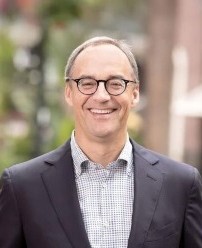
“We’re focused on buying great locations and then reworking the real estate,” Berkes told CoStar News, adding that he'll be looking for "the place where you spend your time when you’re not at home, whether that’s shopping for food for dinner or working out, or grabbing a cup of coffee or dropping off your dry cleaning, or picking up light bulbs and nails from the hardware store."
Berkes brings more than three decades of retail real estate experience to that mission, including 24 years at Federal Realty, where he helped grow the company’s portfolio from 13 million square feet of shopping centers to 27 million square feet of retail and mixed-use properties.
Over that time, he rose from chief investment officer to president and chief operating officer, giving him a front-row seat to multiple real estate cycles.
His move to Paragon comes at a moment when improving fundamentals, limited new construction and renewed investor appetite are reshaping the retail investment landscape — conditions Berkes describes as “retail’s day in the sun.”
Many owners paused sales during the height of interest-rate volatility, but with greater clarity in capital markets, Berkes said he thinks pent-up selling pressure will begin to surface. That combination, he said, should create a more active deal environment in 2026.
Redeveloping retail
Paragon was founded by former Regency Centers executive Erwin Bucy and Mark Harrigan, who along with Jim Dillavou built the firm around acquiring and repositioning open-air retail centers across California.
From the outset, the company leaned into value-add strategies — identifying well-located properties and unlocking their potential through redevelopment and leasing, Berkes said.
Among its more notable Los Angeles investments: a former auto showroom in Manhattan Beach that the firm repositioned into a fully leased center anchored by a Gelson’s grocery, and a $50 million transformation of a long-vacant store in Studio City into a Sprouts Farmers Market-anchored retail complex.
Last year, the firm launched a venture with an institutional investor seeking lower-risk, stabilized properties. The shift called for a different kind of acquisition engine, Berkes said.
“Paragon needed somebody that was a little bit more experienced in high-volume acquisitions and experienced on the lower end of the risk spectrum of properties,” Berkes said, describing the mandate that brought him aboard.
He is now based in the firm’s Bay Area office alongside Patrick McCoy, a former Home Depot representative and Terranomics broker, and Spencer Van Meter, a longtime third-party shopping center management expert.
Institutional capital
Berkes said shopping centers currently offer a safer harbor for capital than offices.
The pandemic reduced long-term demand for traditional workplace space, while retailers that survived the shutdown are leaner and more adaptable.
“The pandemic cleaned out a lot of the retailers that didn’t have a good business plan and a good balance sheet," Berkes said, adding that the landscape has been bolstered by a lack of new supply.


That dynamic has kept competition for high-quality centers intense, with bidders ranging from private operators to public real estate investment trusts and pension-backed investors. Well-located, grocery-anchored and service-oriented centers continue to draw multiple offers, Berkes said.
Policy headwinds, including transfer taxes in Los Angeles, factor into underwriting but are not deal killers, Berkes said. Paragon evaluates those variables as part of a long-term view rather than allowing them to derail otherwise sound investments.
Ground-up development, meanwhile, remains largely cost-prohibitive. Construction expenses and financing costs are still too high to pencil new projects in most markets, pushing Paragon toward redevelopment and leasing up existing centers where rent growth can justify the capital.
For Berkes, the strategy is less about chasing the next trend and more about returning to fundamentals: buying and renovating properties in strong locations to bring in retailers that meet everyday needs.