
Saks Global, rebranded as Exemplar Luxury Group, successfully navigated a complex bankruptcy where it dramatically slashed debt and real estate while settling disputes with some vendors. But its next chapter may be even more challenging, retail analysts and real estate professionals say.
The parent of Saks Fifth Avenue, Neiman Marcus and Bergdorf Goodman emerged from Chapter 11 last month saying its debt was down nearly 75%, its brick-and-mortar presence had been optimized, its balance sheet was cleaned up and it had $500 million in exit financing. The conglomerate plans to focus exclusively on luxury retail and invest heavily in customer service, laying out aggressive growth projections roughly five months after seeking bankruptcy protection.
But retail industry and financial analysts have been questioning those plans. It is common for retailers to exit bankruptcy after shedding debt and unveiling turnaround plans only to end up in court again in what's known as Chapter 22, a second bankruptcy. Their long-term strategies were either weak or not executed well.
In this case, Exemplar's competitive pressures haven't eased. If anything, they have intensified. Luxury brands are investing in larger, more elaborate flagships, pulling customers away from department stores. And competitors Bloomingdale's and Nordstrom appear to have benefitted from Exemplar's woes.
New York-based Exemplar disputes the concerns raised by skeptics about its future. The company said it is financially positioned to drive profitable growth for itself and its partners in the years to come. The company points out that Exemplar's stores allow fashion houses to reach new upscale shoppers beyond those that may visit a label's own dedicated stores.
Challenging path ahead
"We have a strong foundation of deep relationships and customer loyalty, which positions us to strengthen our role as the leading luxury destination for our customers across the U.S., and the premier gateway to this customer for our brand partners," Exemplar said in an email to CoStar News. "We have a retention rate of 90% from top customers — resulting in sustained growth and strong brand momentum."

Exemplar is projecting roughly 7% annual revenue growth from 2027 to 2030.
"There should be a great deal of skepticism over it because this is not a robust market overall," Neil Saunders, a retail analyst and managing director at GlobalData, told CoStar News. "There's still a lot of goodwill they need to rebuild back. So, actually, all of the odds generally are stacked against them. And that makes, for me, that makes failure more than a distinct possibility."
Saunders voiced the concerns that several other retail and financial pros expressed about Exemplar.
"Going through bankruptcy and coming out the other side does not provide a guarantee of success because we've seen the cycle too often," Saunders said. "People come out of bankruptcy. They trade for a couple of years and then they're back in bankruptcy again."
But Rudy Milian, a retail consultant with Woodcliff Realty Advisors, in an email, said there's "almost no chance" that Exemplar will end up in bankruptcy court again. He described it as "a much leaner company" not burdened by debt that's "aggressively hacked away at its physical footprint to ensure maximum productivity."
Its trio of chains "have a century-old reputation with the luxury consumer as three retail entities selling high-quality merchandise," Milian added.
David Silverman, a senior director at Fitch Ratings, was also optimistic about Exemplar's prospects.
"Saks and Neiman's we believe are truly unique retailers and truly important customers for the luxury brands that are looking to grow, that are looking to gain credibility in the eyes of consumers," he said. "We would say that this is one of the turnarounds that has more likelihood of being able to succeed longer term."
Promise of a luxury powerhouse
What was then Saks Global filed for bankruptcy protection in January, a little over a year after its December 2024 merger with Neiman Marcus Group, aiming to create a luxury retail powerhouse. Following the $2.7 billion acquisition, Saks Global found itself financially strained and unable to pay either its debt service or some vendors, which then stopped shipping merchandise.
The luxury conglomerate emerged from Chapter 11 as Exemplar, with a significantly reduced debt load. Its new owners are private equity firms Pentwater Capital Management and Bracebridge Capital.
That alone has raised eyebrows in the retail world, where private equity has piled debt on retailers it acquired, putting those companies in financial straits.
"The ownership is now with the lenders," attorney Mark Brutzkus, partner and chair of the consumer products practice at Stubbs Alderton & Markiles, said of Exemplar. "I always get concerned when you get the lenders making business decisions."
BJ Feller, a Northmarq managing director, described private equity as "the retail graveyard." That's somewhat misleading, she noted, because many retailers are acquired by private equity firms after they have already begun struggling.
But private equity owners sometimes saddle retailers with a heavy debt load in order "to extract as much capital as possible," which can ultimately contribute to a chain's demise, Feller said.

Exemplar used its bankruptcy as a vehicle for closing stores, shuttering about two dozen Saks Fifth Avenue and Neiman Marcus locations. It now has 15 Saks Fifth Avenue stores and 33 Neiman Marcus locations.
But two of the latter's stores are also set to close: a flagship Neiman Marcus in downtown Dallas is scheduled to shut in September, while a store in Plano's Willow Bend area is slated to close in January.
Saks Off 5th shutdowns
Exemplar CEO Geoffroy van Raemdonck, who replaced Richard Baker when Saks Global filed for Chapter 11, is a veteran of Neiman Marcus. Exemplar's store closings left it with about twice as many Neiman Marcus locations as Saks Fifth Avenue stores. The rebranding also removes the emphasis on Saks as the company's sole namesake.
Even with the store trimming, Saks Fifth Avenue and Neiman Marcus are "well represented in some of the finest centers and shopping districts in the country," according to Silverman.
Milian said he anticipates improved performance at Exemplar's remaining stores.
"I expect that we will see stabilization of existing locations, increase in same-store sales, and ultimately footprint growth in the future," Milian said. "In closing stores, [Exemplar] primarily targeted underperforming B-market locations and redundant footprints. For example, it closed Saks stores in secondary luxury markets like Columbus, Richmond, Birmingham and Tulsa. But it did shutter the Neiman Marcus in Boston, presumably because it was considered redundant."
But Exemplar's most sweeping downsizing of its store fleet was its decision to close roughly 60 of its Saks Off 5th off-price stores. Only 12 locations remain, serving as liquidation outlets. Exemplar said its strategy is to focus on full-price luxury goods.
Several retail analysts said that Exemplar's Saks Off 5th chain represented a poor execution of an off-price strategy. At the moment, the off-price sector is flourishing as financially strapped consumers seek bargains, with T.J. Maxx, Marshalls, Burlington Stores and Ross Dress for Less seeing consistent sales growth. Some retail pros wondered why Exemplar didn't make a greater effort to revive the business, which van Raemdonck told The New York Times was not profitable.

Feller said she was surprised that Exemplar didn't try to sell the Saks Off 5th chain to another off-price retailer, such as TJX Cos., parent of T.J. Maxx.
Seattle-based Nordstrom isn't opening new upscale department stores, but it's growing by rolling out more locations of its off-price chain, Nordstrom Rack.
Bloomingdale’s gains share
Milian said it was "a mistake in the long run" for Exemplar to have closed the majority of its Saks Off 5th stores, but he understands that off-price wasn't the company's area of expertise.
"TJX and Nordstrom Rack succeed because they have incredibly sophisticated, massive off-price supply chains and buying networks," he said. "Saks Off 5th lacked that scale and experience, making it less of a profitable powerhouse and more of a financial drain during a period when the parent company desperately needed liquidity."
Some retail analysts said Nordstrom and Bloomingdale's, owned by Macy's, have gained market share amid Exemplar's struggles.
"I do think, fundamentally, the biggest winner coming out of all this is Bloomingdale's," Feller said.
Bloomingdale's has been on a roll. In the first quarter, it posted a 10.2% comparable sales increase, reaching the highest first-quarter sales volume in the chain's history. In several interviews, Macy's CEO Tony Spring has said that "disruption" in the marketplace — an apparent reference to Saks Global's bankruptcy — was giving Bloomingdale's a boost and emphasized the company's strong vendor relationships.
After the company missed payments to some vendors prior to Chapter 11, it is crucial that Exemplar repair its relationships with key vendors, several retail industry watchers said.
"The critical point here is going to be vendor relationships," Brutzkus said. "Without premium product, a luxury store doesn't mean anything."
Luxury brands go direct to shoppers
Exemplar must also contend with a growing phenomenon: Luxury brands are more frequently opening up their own stores, providing new places for shoppers to buy upscale goods beyond department stores. In one recent example, Tiffany & Co. debuted a reimagined 15,000-square-foot flagship on June 30 at South Coast Plaza in Costa Mesa, California.
"The trend is still that the luxury shoppers are going more direct to the luxury retailers, and I don't think that's changed at all," said David Swartz, a senior equity analyst at Morningstar. "I still see these stories about these luxury brands opening up new stores and putting gigantic amounts of money in new stores — expanding them, expanding services, which, of course, Neiman and Saks do, too."
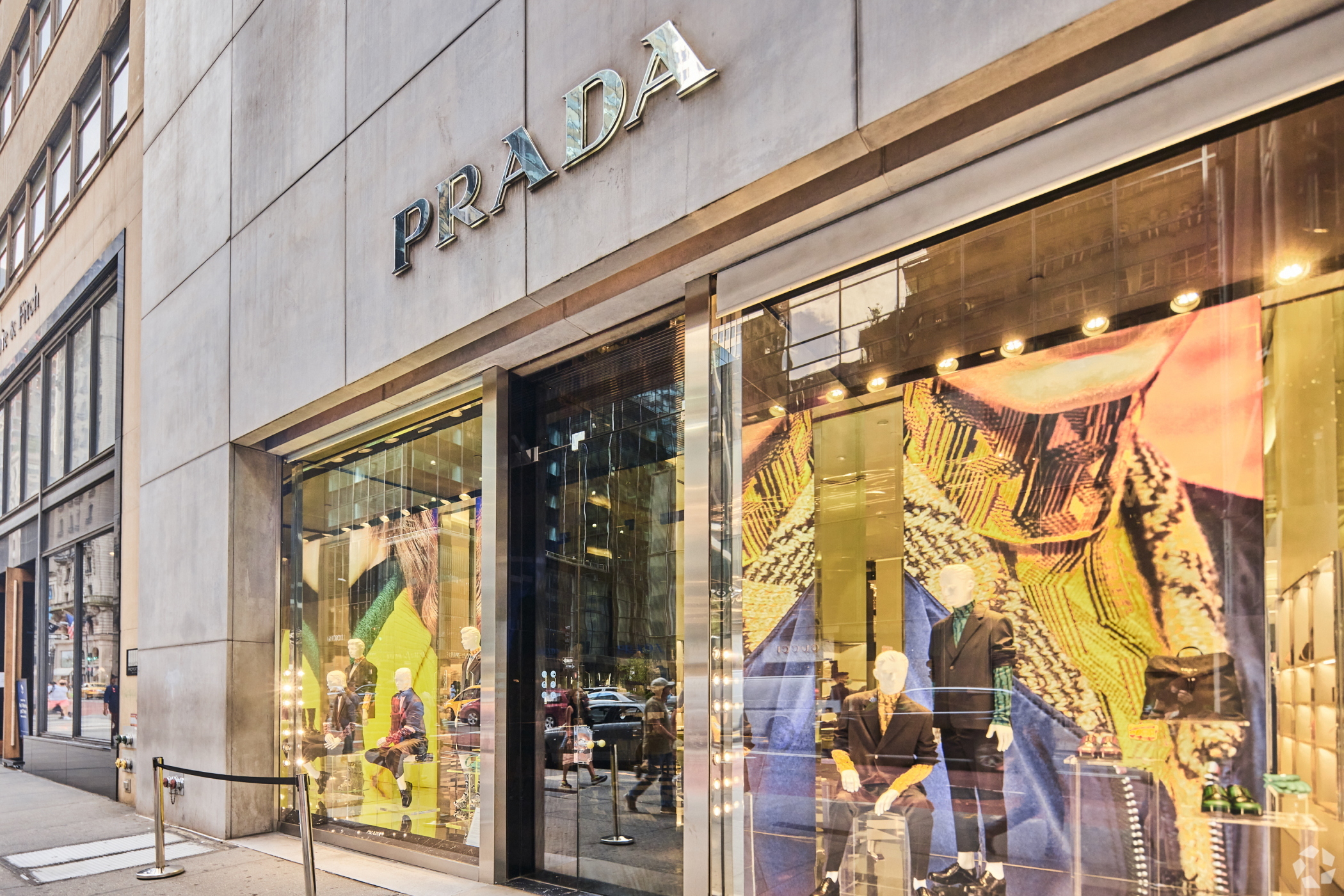
But those two luxury chains may not have that advantage anymore because the Louis Vuittons and Hermès of the world are opening their own stores "cutting out the middleman, which is the department store," according to Swartz.
And some luxury retailers, such as Kering and Prada, are buying the real estate they occupy to guarantee store locations on urban High Streets.
But Exemplar doesn't see a problem or conflict. It describes itself as offering a multibrand retail environment, one that complements rather than competes with luxury brands' own standalone stores.
"The customer overlap in each channel is small, demonstrating the opportunity to serve different customers in each channel, based on their individual preferences," Exemplar said. "Based on our experience, we believe that this coexistence can drive growth for the overall market, rather than taking away from one."
Exemplar said it offers high-end brands a way to reach "a new audience of luxury customers through our deep relationships with luxury shoppers," apart from their own namesake stores.
Premium service
The luxury conglomerate also touted its ability to deliver white-glove service to its affluent customers, with service a major priority and a tool to drive sales.
"We have more than 1,500 sales associates who sell at least $1 million per year and in aggregate deliver more than $2.8 billion of revenue," Exemplar said. "Our selling associates have some of the strongest and most valuable relationships in the industry. These relationships are a powerful catalyst to drive growth within our existing customer base."
Saunders said he wondered who Exemplar's shoppers will be in the long run. Saks Fifth Avenue and Neiman Marcus are higher end with a smaller customer base than Bloomingdale's and Nordstrom. The latter two chains also attract middle-income shoppers, so they have a broader customer base to fall back on, according to Saunders.
"It's just a lot more defensible and a lot more sustainable," he said. "And the thing that concerns me about Neiman Marcus in particular, maybe a little bit less for Saks, is Neiman Marcus does make this thing about, 'Hey, we have a super loyal customer base,' and 'yes, they spend an awful lot of money with us.' Yes, they do, but they're also dying off, to put it bluntly. And you're not really replacing them ... because the younger people certainly aren't coming in."
But in a positive sign for U.S. upscale retailers, the luxury market is expected to rebound this year, according to Coresight Research. After declining about 3% to 4% in 2025, the sector is projected to grow by roughly 3% to 4% this year, said John Harmon, the firm's managing director of technology research.