
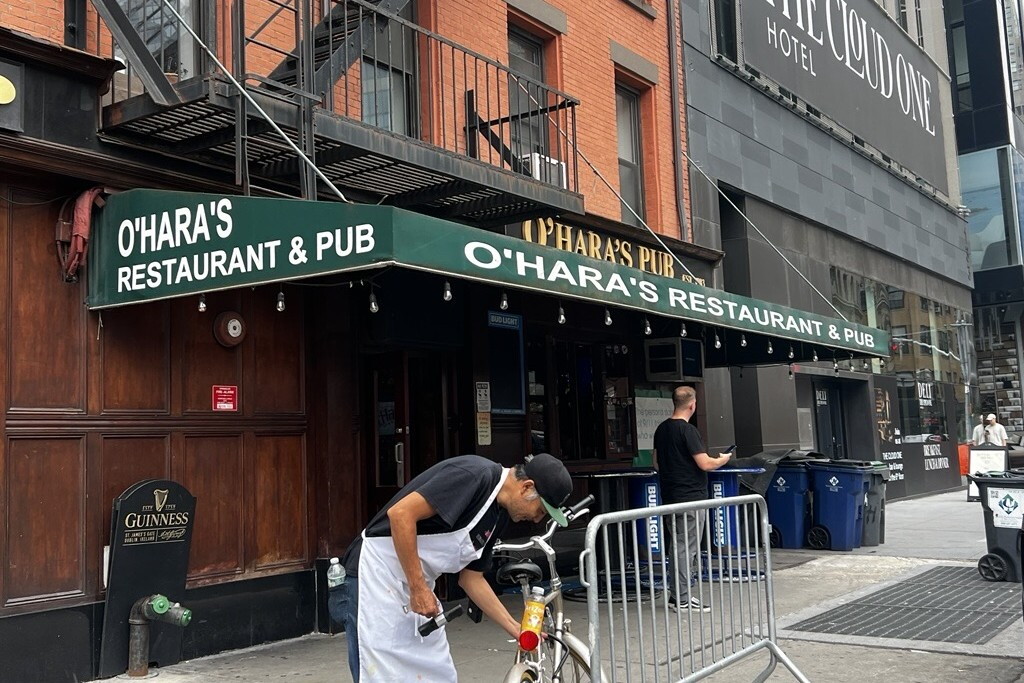
When O'Hara's Restaurant & Pub reopened in April 2002, after the nearby Sept. 11 terrorist attacks left the Lower Manhattan bar heavily damaged, Paul Mackin remembers a harsh reality: Nobody came.
"We opened up and there was nobody here. Buying food, throwing it out. It was a ghost town,” said Mackin, 62, who began working at O'Hara's as a bartender in 1987 and became a co-owner in 2005. “We might as well have been closed. The first two weeks, not a soul came in."
On the 25th anniversary of 9/11, O'Hara's, just outside the World Trade Center complex at 120 Cedar St., has become something its owners never intended: a gathering place for first responders, military members and visitors from around the world.
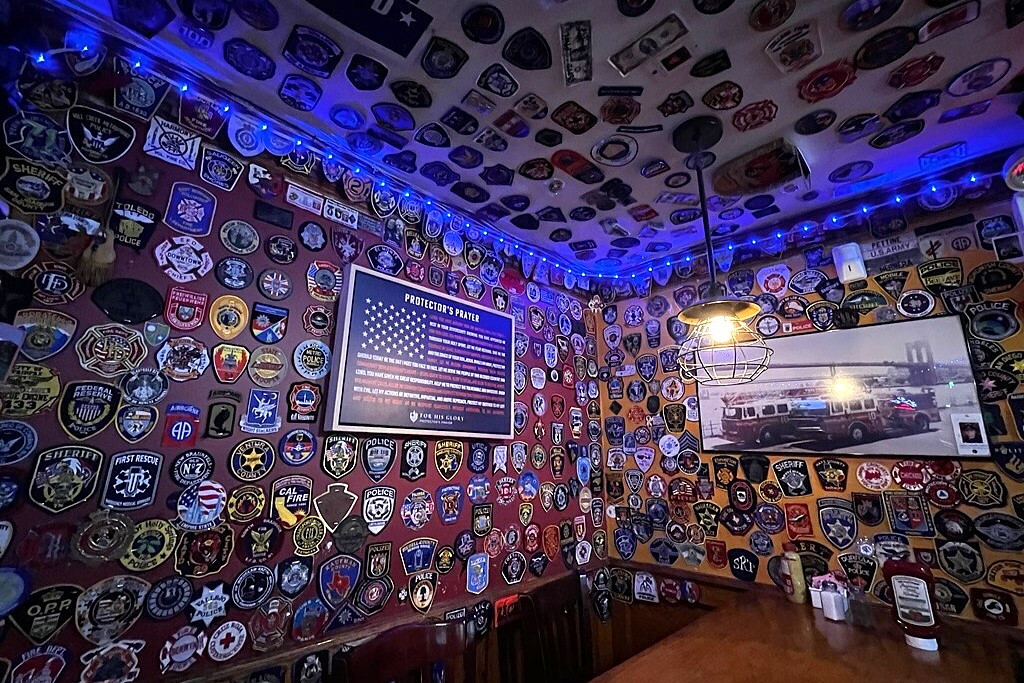
Their patches, insignia and memorabilia now cover nearly every inch of the roughly 2,200-square-foot pub, from the ceilings and walls to the doors and windowsills. Some visitors ask to see one of two scrapbooks documenting the bar's story through photographs taken after the attacks, newspaper clippings and letters from customers.


On a recent evening, a group of five firefighters from Germany searched for an empty spot on the ceiling where they could staple their patch, joining more than 7,000 patches from first responders and military units around the world, from New Zealand to Afghanistan.
The pub, opened in 1983 and named after Scarlett O'Hara from "Gone With the Wind," has evolved into an unofficial memorial to the attacks and a symbol of Lower Manhattan's resilience and recovery. The attacks killed 2,753 people at the World Trade Center site, including 343 firefighters.
“People think this is a police and firefighter bar,” Mackin said. “It's not. This is an Irish pub that survived 9/11, and the community supported us, and we supported them right back. That's pretty much how it went.”
Mackin spoke with CoStar News about how a struggling post-9/11 bar became an institution, the transformation of Lower Manhattan, and the loyalty of customers who helped keep O'Hara's alive. His comments have been edited for length.
What was this part of Lower Manhattan like before 9/11?
People don't understand that 9/11 changed this neighborhood forever because it became a residential neighborhood. We were strictly a Monday-through-Friday business prior to 9/11. Saturday and Sunday we were closed. St. Patrick's Day on a Saturday? We'd be closed. Nobody lived here. This was strictly financial commuters in and out. Busy lunch, busy happy hour, a little dinner business, then closed by 11 or 12 o'clock every night.
You’ve said that when O'Hara’s reopened in April 2002, there wasn’t a soul around for the first two weeks. What made you decide to reopen despite that uncertainty, and when did you start to notice the neighborhood beginning to come back?
We thought, "What are we doing here? There's no one here.” All the office buildings that supported your business were empty. Nobody worked here, nobody lived here, and nobody wanted to be down here. We opened back up, but I didn't come back to work here until 2003 because there wasn't enough work. I had to get another job in New Jersey.
But you can't quit. Winners don't quit.
We didn't open on weekends until around 2005. Construction guys were complaining nobody was open on the weekends for them. They were working six days a week. When they started to build housing, that brought residents, and we started opening on Saturdays. We didn't get any tourism until 2008 or 2009. They built seven new hotels down here, so that helped us a little bit.
How did O'Hara's become known for the patches covering its walls and ceilings?
It started on the first anniversary of 9/11.
There was a Verizon worker named Big John who spent two weeks on the pile after the attacks. On Sept. 11, 2002, people were passing around a jug marked "343" to honor the fallen firefighters.
John took a sip, put the jug down, walked up to Ten House, the firehouse next door, tore the patch off a uniform and put it on the ceiling, started banging on the ceiling and chanting, “USA, USA, USA.” The place went crazy. Firefighters and others began cutting patches off their dress uniforms and putting them up. The first 250 patches came right off uniforms that day. That was also the first day we realized we might survive as a business, because we struggled up until then. It was the first day we were busy after 9/11. They just kept coming after that.
Did you ever imagine this would become part of O'Hara's identity?
It started all by accident. We didn't ask for any of this.
We were blessed post-9/11, by the police, military, EMS. They were the first groups to come in and support us, and then everybody else came after them.
We just became a refuge for people. Most people visit the 9/11 memorial and museum and see what happened at Ground Zero, and they need a drink when they finish because it's that emotional for some people. They come in, sit down and have a drink and ask, "What happened here?” I get that question every day. And you tell the same story. Before that, this was strictly a Wall Street bar.
Now it's an institution with a completely different identity.
O’Hara’s survived disasters including Hurricane Sandy, but you said the pandemic was harder than 9/11. Why?
The pandemic was harder than all of them. We were closed for six months and still had to pay rent. It was a struggle. Then we spent another six months dragging tables and chairs outside every day for outdoor dining.
After 9/11, people eventually came back. After COVID, many people started working from home. A lot of customers you used to have here five days a week are here three days a week. They don't come Monday. They don't come Friday. That was the difference between COVID and 9/11.
We stayed open seven days a week till 4 o'clock in the morning until the pandemic. We changed that too. People go out earlier and they go home earlier. The pandemic changed their mindset.
What has surprised you most since O’Hara’s reopened after 9/11, and how has that experience changed you personally?
The loyalty of the customers, the repeat business from people who've already been here. They respect the fact we stuck it out and rebuilt our business and didn't run away. Now these people that hang patches up, every time they're in New York, you know where they come? Here. It's a badge of honor for them that they came here to pay their respects.
Living people make a living museum. You're only as good as the people who come through your door. You have good people: You have a good business.
It taught me the world is a good place. I’ve met strangers from all over the world. Some of them didn't speak English, and they looked at this photo album and cried about what happened here.
They came here to pay their respects to people they never met across the street, 3,000 of them, and that told me the world's a good place.