
This story was reported by Brannon Boswell, Candace Carlisle, Andy Peters, Joshua S. Andino, Randyl Drummer and Rachel Scheier.
SpaceX is launching the largest initial public offering on record, with an approximately $1.7 trillion valuation. Looking ahead, the rocket company's real estate holdings give a sense that there's no ceiling in sight for the firm looking to build data centers in space.
That's a long way from where the business created by billionaire and Tesla co-founder Elon Musk got its start. The high-flying firm began in a nondescript, roughly 3,000-square-foot Southern California warehouse in 2002, where a group of roughly 12 people dreamed up rockets that could send humans to Mars.
The property signaled how the company would shape its real estate around its goals: targeting cities with existing property networks and talent related to what are now its three core business lines: space, internet access and artificial intelligence.
The company is "building the integrated hardware and software infrastructure of the future," SpaceX said in a regulatory document filed on May 20. The company added that it's looking to unify its business lines with the goal of creating "orbital data centers," or AI networks in space.
The company's aerospace operations are concentrated in hubs home to the U.S. Air Force and NASA as well as aircraft makers like Boeing and Northrop Grumman, spanning cities in California, Texas and Florida. Its internet access, or connectivity, business is largely based in Redmond, Washington, a growing satellite production hub that's also drawn in Amazon's satellite project, Leo, and Blue Origin, a rocket company founded by Jeff Bezos, also the creator of Amazon. SpaceX also designs and makes its satellites in Bastrop, Texas, about 30 miles outside of Austin.
Palo Alto, California, is the corporate home for SpaceX's AI aspirations through its subsidiary xAI, launched by Musk in 2023 and merged with SpaceX earlier this year, granting the firm close access to Silicon Valley's tech talent pool. XAI's industrial real estate networks currently feeding these AI dreams are taking root in Memphis, Tennessee, partly due to the region's land and power availability.
SpaceX even created the area that now holds its headquarters: Starbase, Texas. SpaceX relocated its headquarters to South Texas from California in 2024. SpaceX first selected Boca Chica, a remote coastal town on the Texas border with Mexico, more than a decade ago and started building a spaceport to launch next-generation rockets.
At the time, SpaceX engineers lived in Airstream trailers and campers as they laid the groundwork for the rocket operations. In 2025, local voters approved changing the name of Boca Chica to Starbase, which now operates as an official Texas municipality with its own mayor: Bobby Peden, who has worked at SpaceX since 2013 and is also the company's vice president of testing and launching in Texas.
All told, SpaceX owns and leases miles of real estate holdings across the nation. This existing footprint will serve as a launching pad for what's to come, with the company buying, building and hiring in the markets where it already has a presence.
Still, SpaceX's full ambitions have yet to be tested. The firm itself calls its goals unprecedented — putting data centers into space is an unproven frontier — and those risks "could adversely affect our business," according to the firm's IPO filing. Meanwhile, the main driver of SpaceX's future growth hinges on AI, a segment that has yet to deliver a profit.
While SpaceX wants to eventually colonize Mars — the company's S-1 filing mentions Mars more than 60 times — and move data centers to space, here's a location-by-location breakdown of its real estate footprint on Earth now and in the next couple of years:
Starbase, Texas

Size: 960 acres and growing
Primary business: Rockets
Property types: Office, manufacturing, launchpad, research, homes, schools
The nitty-gritty: The Starbase complex in Cameron County in South Texas is home to Starfactory, a manufacturing facility designed to produce its Starship rockets at scale, as well as a big office with engineering and production workers. It is home to several hundred SpaceX employees and their families with homes and schools built by the company. SpaceX is spending $250 million to build a so-called Gigabay vertical integration building at Starbase to support its Starship and Super Heavy rockets, according to a state work permit. There are no businesses or amenities at Starbase that are open to the public, but SpaceX's presence has created a tourism boom over the years for people wanting to see rocket launches. However, Starbase's rocket launches have drawn environmental concerns over the years.
"It’s a company town like no other, one where building humanity’s path to Mars is a neighborhood and community endeavor," according to Starbase's website. For example, SpaceX is currently hiring for a youth activities coordinator, a junior sushi sous chef and a hospitality supervisor for Starbase.
Hawthorne, California

Size: Approximately 580,000 square feet.
Primary business: Rockets
Property type: Research and development, advanced manufacturing and office space.
The nitty-gritty: SpaceX’s Hawthorne campus at 1 Rocket Road sits on the site of the redeveloped former Northrop Grumman aerospace complex where defense and aerospace vehicles were built for 70 years. It serves as the company’s engineering and manufacturing hub, where teams design and build much of the Falcon 9, Falcon Heavy and Dragon spacecraft while supporting mission operations and production. The facility occupies roughly 500,000 square feet at its flagship building — along with about 80,000 square feet across four buildings — and employs thousands of workers, with Hawthorne itself listing SpaceX as its largest employer at more than 6,000 employees.
SpaceX continues to invest in the campus. In April, the company bought a 6-acre vacant site at 12200 Wilkie Ave. in Hawthorne for $22 million from logistics firm Expeditors International for future development.
SpaceX has largely kept Hawthorne as the center of its mature rocket-production ecosystem while expanding newer business lines to other regions with existing infrastructure and specialized talent, making Southern California the engineering foundation of a broader national network. The company leases at least part of its Hawthorne footprint — including the main building — from Link Logistics, according to CoStar data. That gives it flexibility to scale as its operations evolve, according to Avison Young Vice President Paul Clark, a broker active in the South Bay region. The firm owns three warehouses on the campus totaling about 40,000 square feet and an office totaling 40,000 square feet.
McGregor, Texas

Size: Over 4,300 acres
Primary business: Rockets
Property type: Specialty use, rocket testing and development
The nitty-gritty: SpaceX's rocket engine complex about 100 miles north of Austin is the world's most active rocket development and testing facility, company executives said in the regulatory filing. It is the primary site for testing Merlin and Raptor engines with 15 specialized test stands. McGregor recently renewed its lease with SpaceX in a deal that comes with stricter noise ordinances and additional revenue for the city, local reports indicate.
Redmond, Washington

Size: 363,000 square feet
Primary business: Satellites
Property type: Office, industrial manufacturing and logistics
The nitty-gritty: Redmond, Washington, is the main design, engineering, manufacturing and testing hub for Starlink, the company's global satellite internet constellation. SpaceX opened offices in the Redmond Ridge business park in June 2015. After expansions at the property over the past few years, Starlink's operations now fill several buildings at the park totaling 165,530 square feet and employ about 2,000 workers. The Starlink facilities in Redmond churned out roughly 70 satellites per week from December to April — a rate of 3,640 per year, according to the firm’s recent IPO registration filing. Redmond is also ground control for the low-earth-orbit satellites and their network operations, according to SpaceX.
In April of last year, Starlink leased 197,552 square feet of warehouse space in a building at the LogistiCenter at 8131 W. Bostian Road in Woodinville, about 13 miles north of the Redmond campus. That facility is focused on logistics and manufacturing support, with machinists making satellite parts.
Bastrop, Texas

Size: Over 1,000 acres
Primary business: Satellites
Property type: Industrial
The nitty-gritty: The 1 million-square-foot plant, which opened in 2023, produces tens of thousands of Starlink Kits per day, SpaceX executives told investors. This year, SpaceX plans to more than double the size of its Bastrop plant, which will expand its design and manufacturing capabilities to support new Starlink products. Last year, Gov. Greg Abbott offered SpaceX a $17.3 million grant as part of the Texas Semiconductor Innovation Fund to expand the Bastrop facility in a $280 million investment, creating more than 400 new jobs.
NASA’s Kennedy Space Center, Florida

Size: 160 acres
Primary business: Rockets
Property type: Specialty use, launchpad
The nitty-gritty: SpaceX leases Launch Complex 39A, a historic launchpad that was home to the Apollo Moon and Space Shuttle missions, from NASA. SpaceX has launched its Falcon 9 and Falcon Heavy rockets from 39A for a decade but is transitioning the site to be the primary launch pad for its massive Starship, the company’s reusable super heavy lift rocket. The site is also home to SpaceX’s HangarX and X2 facilities, which process payloads, refurbish rockets and support launch operations. Next door along Roberts Road, SpaceX is building a 380-foot-tall integration facility called Gigabay that will have more than 40 million cubic feet of vehicle processing space as part of its $1.8 billion capital investment that is expected to create 600 full-time jobs on Florida's Space Coast by 2030.
Cape Canaveral Space Force Station, Florida

Size: 240 acres
Primary business: Rockets
Property type: Specialty use, launchpad
The nitty-gritty: SpaceX leases Space Launch Complex 37 and Space Launch Complex 40, referred to by some as Slick 37 and Slick 40, alongside landing zones 40 and 2. Historically, Slick 40 has served as a Falcon 9 launchpad while landing zones 40 and 2 serve as the landing pads for the reusable Falcon boosters ahead of their recovery and refurbishment for future missions. SpaceX is expanding Slick 37 to serve as another Starship launch site that will host two orbital launch pads, including up to two towers, by the end of 2027.
Vandenberg Space Force Base, California

Size: SpaceX operates launch networks at designated facilities rather than occupying the entire base, which occupies 156 square miles including 16 launch facilities and hundreds of support buildings.
Primary business: Rockets, satellites
Property type: Launch pad operations
The nitty-gritty: The company’s presence at Vandenberg Space Force Base is all about getting those products into orbit. SpaceX leases and operates Space Launch Complex 4 East, the launch pad used for Falcon 9 missions, and also controls the adjacent Landing Zone 4, where reusable boosters return to Earth after launch, while the company recently added Space Launch Complex 6 to expand its California launch capacity.
Because Vandenberg is an active military installation, SpaceX’s footprint there isn’t measured in publicly disclosed square footage or employee counts the way a traditional office or industrial campus would be. Instead, its value lies in providing the company with a dedicated West Coast gateway for Starlink deployments, national security payloads and commercial missions that require polar and sun-synchronous orbits.
SpaceX is also one of several major launch providers operating from the base. Companies including United Launch Alliance and Firefly Aerospace also maintain launch facilities there, making Vandenberg one of the country’s most important hubs for both commercial and government spaceflight.
Memphis, Tennessee

Size: 785,000 square feet
Primary business: AI
Property type: industrial, data center
The nitty-gritty: The first of three data centers named Colossus, the Paul R. Lowry Road data center in Memphis is located in a former Electrolux appliance factory. The data center will handle processing for Grok, the AI chatbot owned by the xAI subsidiary of SpaceX. The company acquired the data center building last month for $185 million from Phoenix Investors. A second data center on Tulane Road in Memphis is also part of the Colossus initiative. The Colossus data centers will be used to feed information to the Grok AI chatbot, allowing it to learn and integrate information. That process is known as “training,” according to a SpaceX IPO regulatory filing. Community groups have sued xAI for powering the data centers with gas turbines without legal permits. In fact, SpaceX is currently hiring for a communications lead in Memphis to "get the public excited about how artificial intelligence will help and support SpaceX and its affiliates' positions as a positive impact in the community," according to its website.
Southaven, Mississippi
Size: 114 acres
Primary business: AI
Property type: land
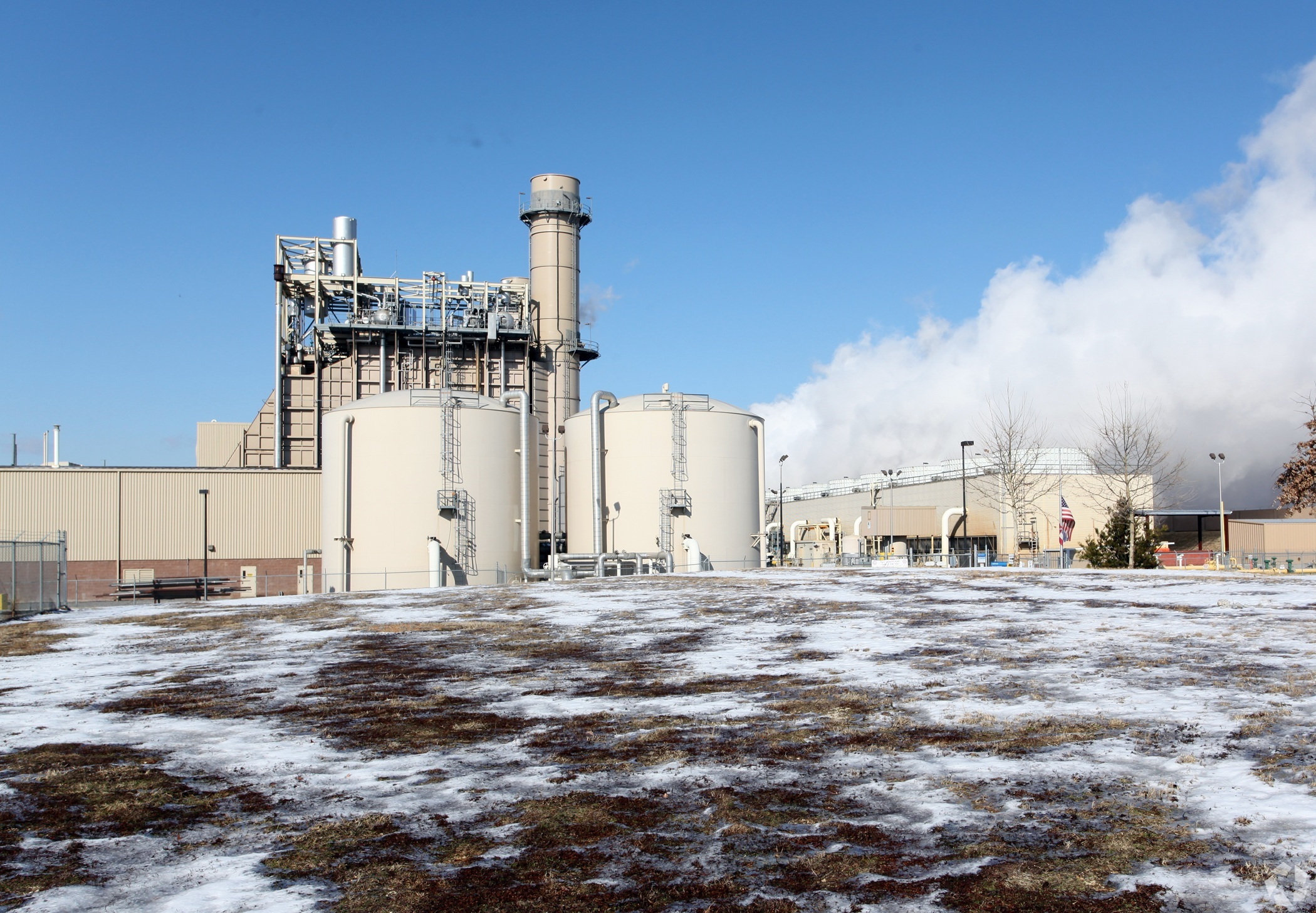
The nitty-gritty: Just across the Tennessee state line from Memphis, xAI acquired property in Southaven, Mississippi, to build a data center to serve as the third component of the Colossus initiative. The land will also be used to build an electric substation to supply power to the xAI data centers. XAI chose the site because of its location next to a Tennessee Valley Authority natural gas power plant.
Grimes County, Texas

Size: Over 22,000 acres surrounding Gibbons Creek Reservoir
Primary business: AI
Property type: Land, industrial, manufacturing
The nitty-gritty: SpaceX expects to invest an initial $55 billion into a multiphase, next-generation chipmaking and advanced fabrication plant it is calling a Terafab that is capable of producing 1 terawatt per year of hardware through a collaboration with Tesla and Intel. At full build-out, SpaceX could invest a total of $119 billion, officials told Grimes County commissioners. Grimes County, a rural county near Texas A&M University with about 34,000 residents, has approved tax incentives for the proposed plant, despite local opposition. SpaceX has been offered a 100% tax abatement in a 10-year period from 2027 to 2036, as well as pay in lieu of taxes with a lump sum of $10 million. The company is also seeking incentives from the local school district.
Palo Alto, California

Size: Approaching 200,000 square feet
Primary business: AI
Property type: Office
The nitty-gritty: Musk has quietly grown the home base of his artificial intelligence company, xAI, in an office park in Palo Alto, California, since late last year.
In February, SpaceX acquired xAI in a deal that valued the megacompany at $1.25 trillion to “form the most ambitious, vertically-integrated innovation engine on (and off) Earth, with AI, rockets, space-based internet,” Musk wrote in a blog post.
The rocket company’s offering statement filed last month listed Palo Alto, the “birthplace of Silicon Valley,” as home to SpaceX’s “advanced AI research, development and engineering teams” strategically situated there “to attract and retain top AI research talent.”
In the run-up to SpaceX’s IPO, Musk is increasingly leaning into AI, which the company calls its biggest segment. The firm promotes xAI’s computing power as an asset, demonstrating that it can be turned into revenue through deals to sell “compute” to Anthropic and Google. Musk's comments about using SpaceX to put data centers into space show how the technology could help power xAI’s models and generative AI features.