
The expansion of Plant Vogtle in Georgia — the largest U.S. nuclear plant — was plagued by delays and cost overruns. Mechanical issues like vibrating pipes and coolant pump failures, a contractor's bankruptcy and disputes over financing pushed completion of its two new reactors seven years past schedule.
The project ultimately cost $30 billion, more than double the original estimate, but when the two newest reactors opened in 2023 and 2024, they became the first new U.S. nuclear units in 30 years and the nation’s largest source of carbon-free energy.
After decades when U.S. nuclear plant development was put on ice, the energy source is now expected to play a major role in meeting the projected explosion of power demand from the mega data centers sprouting up like weeds across the U.S. due to the artificial intelligence boom. However, critics highlight nuclear energy's safety risks, waste challenges and long construction timelines.
“Nuclear is very expensive to put in place and takes a lot longer to build,” Clifton Lowry, vice president of planning and investor relations at utility company Tennessee Valley Authority, told CoStar News. “If you’re thinking about what can serve a data center, you need a different time horizon than nuclear.”
In the meantime, natural gas is expected to be the fastest-growing power source for data centers, while solar, wind and battery storage are seen as quicker, lower-risk solutions.
“Except for plugging into the grid, the next lowest-hanging fruit is gas,” Raul Saavedra, vice chair and head of data center advisory services at Colliers, told CoStar News.
Plant Vogtle delays
Nearly two years ago, utility Georgia Power noticed that some pipes were vibrating in a cooling system during the expansion of Plant Vogtle (pronounced VOH-gul) near Augusta. The vibrations weren’t supposed to be happening.
The two new reactors had yet to begin operations and were already behind schedule and over budget. But Georgia Power was forced to halt required testing on the reactors to fix the pipe vibrations, according to an annual report of its parent, Southern Co., adding yet another delay to the project.
The vibrating pipes were far from the only issue that popped up during a construction project that started in 2013. Other mechanical problems, like the failure of a motor inside a reactor coolant pump that was found in October 2023, also slowed the project. So did disputes over cost sharing with smaller utilities that were helping Georgia Power pay for construction. More delays were caused when the project’s main contractor, Westinghouse, filed for bankruptcy in 2017.

But when the reactors opened in 2023 and 2024, albeit $16 billion over budget, Vogtle became the largest generator of energy in the U.S. that does not produce carbon emissions, according to the Municipal Electric Authority of Georgia. Nuclear is considered a clean energy source because, unlike fossil fuels such as coal and gas, it does not create carbon emissions that can damage the environment. Nuclear energy is also considered more reliable than windmills and solar farms because it isn't affected by weather.
But long-standing concerns remain about the safety of nuclear plants and the disposal of nuclear waste. Those concerns make "nuclear power a uniquely dangerous energy technology for humanity," the Sierra Club, an environmental protection advocacy organization, says in a statement on its website. "Nuclear is no solution to climate change."
Furthermore, nuclear projects are notoriously difficult to complete. Colliers' Saavedra is skeptical that nuclear is a viable solution to the power shortage for that reason.
"The thing with nuclear are all the regulatory hurdles,” Saavedra told CoStar News. “And a whole other question is how much power can nuclear deliver?”
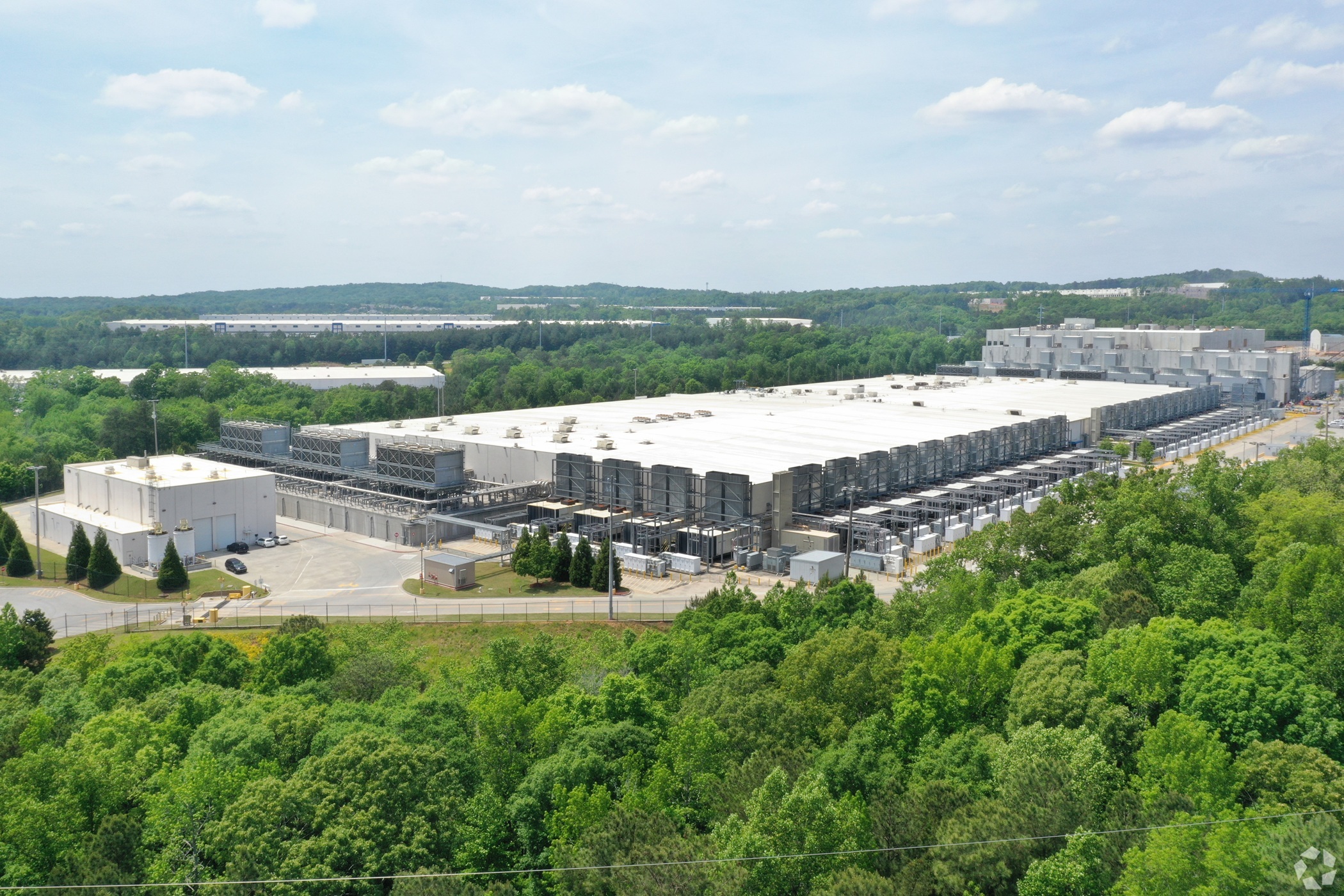
The rise of AI usage has led tech companies and real estate investment trusts to embark on multibillion-dollar data center projects, including the Stargate project in Abilene, Texas, led by OpenAI and Oracle, as well as campuses across the country by Amazon, Google, Meta, Microsoft, Prologis, Vantage Data Centers and XAI.
As a result, U.S. data center power demand is forecast to increase 165% over the next decade, reflecting the larger sizes of the centers being built, according to data from BloombergNEF. While some owners, developers and users of data centers are counting on nuclear, they’re also racing to find alternative sources of power, especially natural gas, solar and wind.
Alternative options
As an alternative to building traditional nuclear plants from the ground up that might have delays and cost overruns like Vogtle in Georgia, data center owners and utilities are exploring different paths. Amanda Sowells, a Southern Co. spokesperson, declined to comment on Vogtle’s construction timeline or cost overruns.
Those alternatives include recommissioning older nuclear plants, like Microsoft is doing at Three Mile Island in Pennsylvania, and using small modular reactors, a technology still in the early stages of development. Modular reactors are expected to be cheaper and faster to build, but also less powerful, than traditional nuclear plants.
Neither option is a sure-fire bet, though. It takes years to obtain needed regulatory approvals to restart mothballed nuclear plants. And no small modular reactors have opened yet, though many data center projects are counting on them.
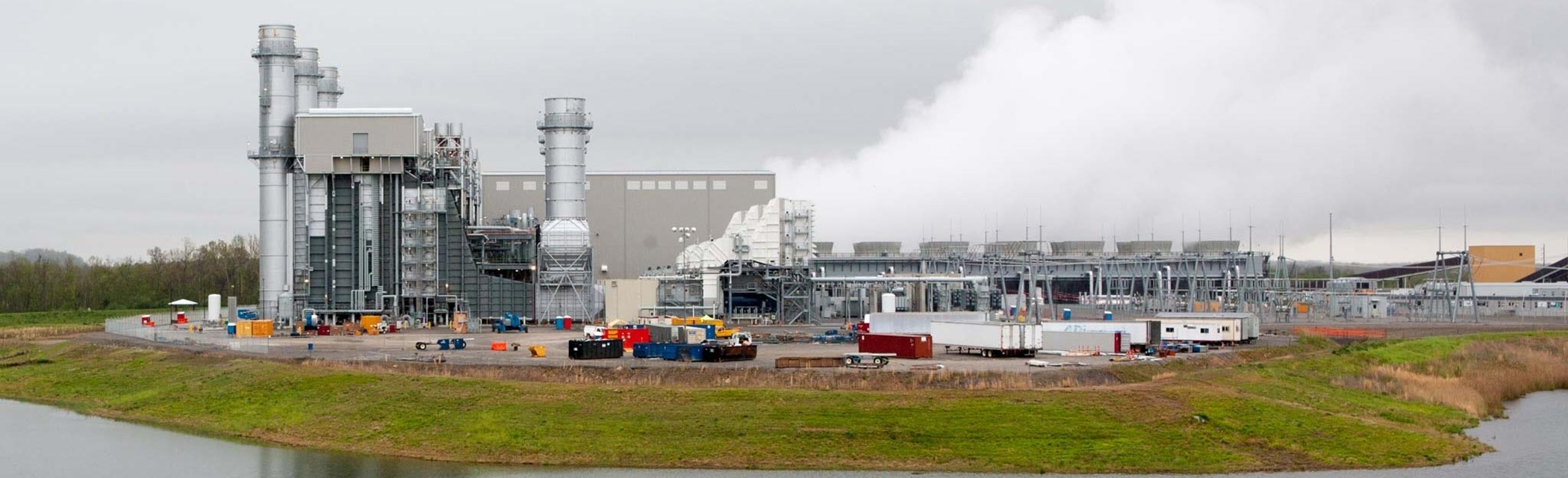
Natural gas use is expected to grow the fastest over the next decade to meet data center demand, according to a report by the International Energy Agency, a global intergovernmental association.
The agency projected natural gas use will increase 253% to 346 terawatt-hours from 2025 to 2035, as a source of electric power for data centers. The Paris-based agency estimates solar will grow 181% to 57.9 terawatt-hours in the same period, followed by nuclear, wind and coal.

The Stargate project in West Texas, one of the largest data center projects under construction in the world, is expected to use a combination of natural gas, nuclear and solar power, according to Certrec, a consulting firm to the energy industry.
Natural gas, however, is a fossil fuel like coal and has the same negative impact on climate change and public health, said Stephen Smith, executive director of the Southern Alliance for Clean Energy.
“Solar, wind and battery storage are the quickest to deploy, carry the least risk" and are less expensive options, Smith told CoStar News.
Quick and clean
For quick and clean energy solutions, utilities should prioritize the development of solar, wind and battery-storage facilities instead of natural gas and nuclear, Smith said.
“There is no nuclear power plant anywhere that will come online in the next five to seven years,” Smith said.
The Stargate project in Texas is expected to deploy small modular reactors "for establishing a stable baseload power supply” near its data center buildings, according to Certrec.
“The advanced reactors deployed near demand centers minimize transmission losses while providing stable baseload power needed for uninterrupted data center operations,” Fort Worth, Texas-based Certrec said.
Still, some utilities are pushing for new nuclear plants, hoping lessons from Vogtle can reduce costs and delays. Santee Cooper, a state-owned utility in South Carolina, in October reached an agreement with Brookfield Asset Management to study the possibility of restarting construction of two nuclear reactors near Columbia, South Carolina.
And the Tennessee Valley Authority, a utility that serves seven states in the Southeast, on Dec. 2 received a $400 million federal grant for its plan to install small modular reactors at its Clinch River nuclear site in Oak Ridge, Tennessee. Even the development of additional nuclear reactors that are the same scale as Vogtle isn’t off the table for the authority, despite the enormous cost overruns and construction delays at Georgia Power’s Vogtle.
“I would not rule out new gigawatt-scale reactors” that are similar in size to the reactors at Vogtle, the TVA's Lowry said. The utility "is looking at both large and small reactors. The key is to take lessons from previous builds to reduce costs and timelines.”